
Finance Bill 2026: Why Ruto Signing Marks Defining Moment For Economy & Households

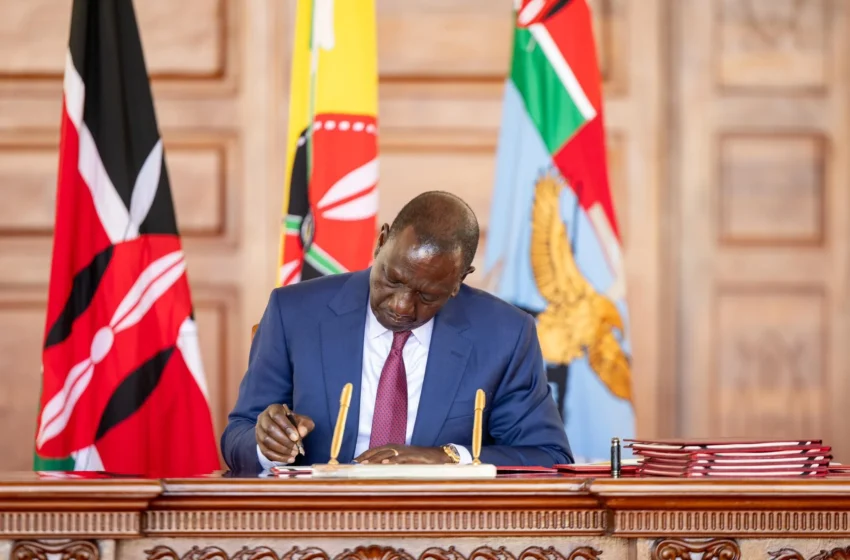
President William Ruto
Kenya is entering a critical fiscal moment as President William Ruto prepares to sign the Finance Bill 2026 into law on June 23, 2026.
The announcement confirms the final stage of a legislative process that has dominated national debate, shaped political alliances, and raised public concern over taxation and the cost of living.
The bill, passed by Parliament after intense debate, is more than a legal document. It is a blueprint that will determine how the government raises revenue, funds public services, and manages debt pressure in the coming financial year.
At its core, the Finance Bill reflects a balancing act between economic stability and public affordability.
What The Finance Bill 2026 Means For Kenya Economy
Fiscal Policy And Government Revenue Strategy
The Finance Bill is one of the most important instruments in Kenya’s budget cycle. It determines how the government collects taxes and adjusts revenue systems to match spending needs.
In 2026, the focus remains on:
-
Increasing domestic revenue collection
-
Supporting infrastructure and development spending
-
Managing public debt obligations
-
Strengthening compliance within the tax system
The government argues that without stable revenue expansion, essential services and development projects would face funding gaps.
Why The Bill Attracts Public Attention
Finance bills in Kenya often generate debate because they directly affect households and businesses.
Key concerns usually include:
-
Changes in Value Added Tax structures
-
Adjustments in income-related deductions
-
Increased cost of essential goods and services
-
Impact on small and medium enterprises
This explains why the 2026 version sparked strong reactions across political and social groups.
Parliamentary Approval Process And Political Division
How The Bill Passed Through Parliament
The National Assembly approved the Finance Bill 2026 after a structured voting process that reflected clear political alignment.
Lawmakers voted decisively in favour, while a minority opposed the legislation, citing concerns about affordability and economic pressure on citizens.
The approval process followed standard legislative procedure:
-
Committee review stage
-
Public participation submissions
-
Debate in the National Assembly
-
Final Third Reading vote
Parliamentary Vote Breakdown Table
| Category | Outcome | Political Interpretation |
|---|---|---|
| Votes in favour | Majority approval | Strong ruling coalition support |
| Votes against | Minority opposition | Cost of living concerns raised |
| Abstentions | None recorded | Clear political positioning |
| Final result | Passed | Legislative success for government agenda |
The absence of abstentions signals a highly polarized but decisive parliamentary outcome.
President Ruto And The Finance Bill 2026 Signing Decision
Executive Role In Kenya Fiscal Policy
In Kenya’s governance structure, the President plays the final constitutional role in approving or rejecting legislation passed by Parliament.
By confirming the signing date, President William Ruto has effectively moved the Finance Bill from political debate to legal certainty.
His remarks during a public event in Nairobi emphasized that the bill aligns with broader national commitments on development financing and resource allocation.
Political Messaging And Economic Direction
The President’s comments also reflect a broader political narrative: defending fiscal reforms as necessary for national progress.
Supporters of the bill argue that:
-
Government programs require stable funding
-
Infrastructure development depends on predictable revenue
-
Economic planning needs consistent tax policy
Critics, however, remain concerned about household affordability and economic pressure on lower-income earners.
How Finance Bill 2026 May Affect Kenyan Households
Everyday Economic Impact Channels
While the Finance Bill is a policy document, its effects are felt in daily life through pricing, wages, and services.
Potential impact areas include:
-
Cost of basic consumer goods
-
Fuel and transport pricing structures
-
Digital services taxation
-
Small business operating costs
These changes depend on how specific tax provisions are implemented after signing.
Household Impact Comparison Table
| Sector | Possible Effect | Short Term Outcome | Long Term Outcome |
|---|---|---|---|
| Food and essentials | Indirect tax pressure | Price sensitivity increases | Market adjustment over time |
| Transport | Fuel-related cost shifts | Fare fluctuations | Stabilization if subsidies apply |
| Small businesses | Compliance costs | Operational pressure | Formalization benefits |
| Salaries | Limited immediate change | Purchasing power concerns | Wage adjustments possible |
This table highlights why Finance Bills often trigger strong public reactions even before implementation begins.
How Kenya Economic Policy Depends On Finance Bills
Role In National Budget Execution
The Finance Bill is closely tied to the national budget. Without it, government spending plans cannot be fully implemented.
It ensures:
-
Revenue collection frameworks are legally supported
-
Tax agencies have updated enforcement tools
-
Budget allocations match available funding
-
Economic policy remains aligned with fiscal targets
This makes it a central pillar of economic governance.
Debt Management And Fiscal Stability
Kenya continues to manage significant public debt obligations. Finance Bills play a key role in ensuring repayment capacity and fiscal stability.
Key objectives include:
-
Strengthening domestic revenue base
-
Reducing reliance on external borrowing
-
Improving tax efficiency
-
Expanding compliance coverage
How Political Debate Shapes Public Perception
Finance Bills in Kenya often become politically charged because they sit at the intersection of economics and everyday survival.
Supporters view them as necessary reforms for long-term stability. Critics see them as short-term pressure on households.
This dual interpretation is what makes fiscal policy highly visible in public discourse.
Also Read: Famyard Enterprises Ltd Driving Structural Transformation In Mt Kenya Property Investment Sector
How The 2026 Finance Bill Fits Into Kenya Economic Future
Structural Reform Direction
The 2026 Finance Bill reflects a broader trend in Kenya’s fiscal policy toward:
-
Expanding tax base
-
Digital economy taxation
-
Improved revenue enforcement
-
Reduced dependency on borrowing
These structural reforms are intended to stabilize long-term economic growth.
Economic Outlook Comparison Table
| Policy Area | Previous Approach | 2026 Direction | Expected Trend |
|---|---|---|---|
| Tax collection | Narrow base | Expanded digital tracking | Higher compliance |
| Public spending | Debt-supported | Revenue-driven focus | Controlled deficits |
| Business taxation | Moderate enforcement | Stronger compliance systems | Formal economy growth |
| Budget planning | Borrowing heavy | Balanced revenue model | Fiscal stability target |
Why Finance Bill 2026 Is A Defining Economic Moment
The signing of the Finance Bill 2026 marks more than a procedural step in Kenya’s governance system.
It represents a shift in how the country approaches taxation, spending, and economic planning.
For households, the effects will be gradual but noticeable in prices and cost structures. For businesses, it introduces new compliance expectations. For government, it is a critical tool for sustaining development priorities.
As Kenya moves into a new fiscal year, the impact of this legislation will unfold not in speeches or parliamentary debates, but in everyday economic realities.

