Gikomba Market Blaze Exposes Longstanding Risks Facing Informal Trade Hubs

Nairobi’s sprawling Gikomba Market remains a vital source of daily income, employment, and survival for thousands of small business owners dependent on informal trade. Every fire that tears through the densely packed economic hub causes devastation extending far beyond charred stalls, directly crippling local supply chains, fracturing household livelihoods, and stalling the wider metropolitan economy.
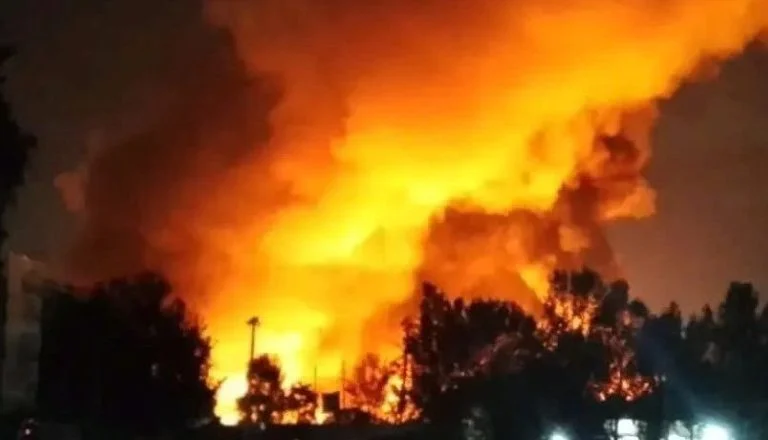
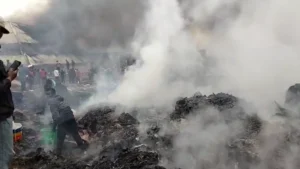
The latest blaze at Gikomba has once again left traders counting heavy losses after stalls and merchandise were destroyed in the early hours of the morning. Emergency responders worked to contain the inferno while investigations began into its cause, but for many business owners the immediate concern is rebuilding after another devastating setback.
The incident also revives broader questions about disaster preparedness, market planning, insurance uptake, and urban safety in one of East Africa’s busiest trading centres.
Also Read: How Enock Morrison Move To Al Merrikh Changes Gor Mahia Tactical Structure
Gikomba’s Importance To Nairobi’s Informal Economy
Located near Nairobi’s central business district, Gikomba Market has evolved into one of Kenya’s largest open-air commercial hubs. It attracts wholesalers, retailers, and bargain hunters from across the country, with many traders specializing in second-hand clothing, household goods, footwear, electronics, and food products.
Its economic significance goes well beyond Nairobi. Traders source products from Gikomba for resale in towns and rural markets across Kenya, making it an important link in national commerce.
Because many businesses operate with modest capital, even a single day of disruption can have significant financial consequences.
A Fire That Spread Rapidly
The blaze reportedly broke out during the early morning hours before quickly spreading through closely packed stalls.
By the time many traders reached the market, flames had already consumed sections of the trading area, leaving little opportunity to rescue stock or equipment.
Dense construction patterns, narrow access routes, and combustible materials commonly found in informal markets can make firefighting operations particularly difficult. These factors often allow fires to spread faster than emergency teams can contain them.
Authorities have indicated that investigations are underway to establish the origin and cause of the incident.
Economic Consequences Extend Beyond Individual Traders
When a market like Gikomba experiences a major fire, the losses ripple through multiple sectors of the economy.
Wholesalers lose inventory, transporters lose business, suppliers experience delayed payments, and customers may face temporary shortages or higher prices as traders rebuild.
Many enterprises operating within the market are family businesses that rely on daily cash flow rather than long-term reserves. As a result, destruction of stock often means immediate interruption of income.
Potential Impact Across Stakeholders
| Group | Immediate Impact | Longer-Term Challenge |
|---|---|---|
| Traders | Loss of stock and stalls | Rebuilding capital |
| Employees | Reduced working opportunities | Temporary unemployment |
| Suppliers | Delayed purchases | Cash flow disruptions |
| Customers | Limited product availability | Possible price increases |
| Local economy | Reduced commercial activity | Slower business recovery |
The wider effect demonstrates why fires at major markets become economic events as much as emergency incidents.
A Pattern That Continues To Raise Concern
One reason this latest incident has attracted widespread attention is that Gikomba has experienced multiple fires over the years.
Each occurrence renews discussion about infrastructure upgrades, fire prevention measures, and emergency preparedness. Yet many traders argue that recurring challenges remain unresolved.
Repeated incidents have prompted calls for better electrical safety inspections, improved market planning, and expanded access routes for emergency vehicles.
While investigators must determine the specific cause of each fire independently, the recurrence itself highlights the importance of investing in prevention alongside emergency response.
Also Read: What Starlink Subscription Means for Kenya’s Broadband Market & Digital Shift
Infrastructure Challenges In Informal Markets
Markets that develop organically over decades often face structural constraints that complicate safety management.
Among the issues frequently discussed by urban planners and disaster management experts are:
-
Congested layouts that limit access for emergency responders.
-
Closely spaced stalls that allow flames to spread rapidly.
-
Informal electrical connections that require regular inspection.
-
Limited fire suppression equipment available on site.
-
Heavy reliance on flammable construction materials in some sections.
Addressing these challenges requires coordinated planning between county authorities, traders’ associations, emergency services, and infrastructure agencies.
The Human Cost Beyond Financial Losses
Although discussions often focus on property damage, market fires also carry significant emotional and social consequences.
Many traders invest years building businesses with limited access to formal financing. Losing stock overnight can erase savings accumulated over decades.
Families dependent on market income may struggle to pay school fees, rent, healthcare costs, and supplier obligations while attempting to restart operations.
The psychological toll of repeated disasters should not be underestimated, particularly for entrepreneurs who have rebuilt after previous setbacks.
Insurance Remains A Difficult Option For Many Small Businesses
Business insurance could reduce financial losses after disasters, but uptake within informal markets remains relatively low.
Several barriers contribute to this reality:
-
Premium costs may be unaffordable for micro-enterprises.
-
Some traders lack documentation needed for coverage.
-
Many businesses operate with constantly changing inventory levels.
-
Awareness of available insurance products remains uneven.
As Kenya expands financial inclusion initiatives, increasing access to affordable micro-insurance could become an important tool for strengthening resilience among small businesses.
Disaster Preparedness Needs Long-Term Investment
Emergency response is only one component of urban resilience.
Experts frequently emphasize prevention measures such as regular safety audits, improved infrastructure, accessible hydrants, clear evacuation routes, and public awareness campaigns.
Modern market planning increasingly incorporates dedicated fire lanes, surveillance systems, and emergency communication networks that can help contain incidents before they escalate.
For high-density commercial centres like Gikomba, investment in prevention may prove significantly less costly than repeated reconstruction after disasters.
Building A More Resilient Trading Environment
Strengthening resilience requires collaboration rather than isolated interventions.
Possible areas of focus include:
-
Expanding fire safety education among traders.
-
Improving electrical infrastructure and maintenance.
-
Reviewing stall layouts to create safer access corridors.
-
Encouraging affordable business insurance products.
-
Enhancing coordination between emergency responders and market management.
While no system can eliminate risk entirely, these measures can reduce vulnerability and improve recovery capacity.
Also Read: Top Comoros Official Hospitalized in Nairobi Amid Rising Tensions in Moroni
Community Strength Often Drives Recovery
One notable characteristic of Gikomba has been the determination of its trading community to recover after adversity.
Previous disruptions have demonstrated the ability of entrepreneurs to rebuild businesses through cooperation, informal lending networks, and customer loyalty.
This resilience has helped sustain the market despite repeated challenges, reinforcing its position as one of Nairobi’s most important commercial centres.
However, resilience should complement—not replace—systematic investment in safety and infrastructure improvements.
Looking Ahead
The investigation into the latest fire will provide important information about its origin and circumstances. Equally important will be the lessons drawn from the incident and the willingness of stakeholders to implement lasting improvements.
As Nairobi continues to expand, protecting critical economic hubs like Gikomba becomes increasingly important for employment, commerce, and urban stability.
The goal should extend beyond rebuilding damaged stalls. It should focus on creating a safer environment where traders can operate with greater confidence that years of hard work will not disappear overnight.
What Happens Next
The latest Gikomba Market fire is a reminder of both the vulnerability and resilience of Kenya’s informal economy. While traders begin the difficult process of assessing losses and rebuilding their businesses, policymakers and urban planners face renewed pressure to strengthen disaster preparedness and market infrastructure.
Sustainable solutions will require investment, coordination, and long-term planning. Protecting markets like Gikomba is not simply about preserving buildings—it is about safeguarding livelihoods, supporting entrepreneurship, and ensuring that one of Nairobi’s most important economic engines can continue serving communities across the country.