
Explainer: Kenya Purple Tea Launch in France and Its Impact on Farmers Income

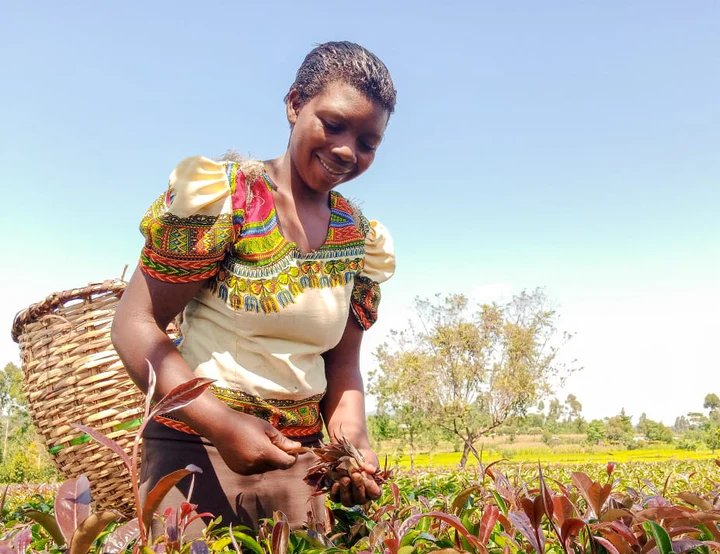
Kenya’s agricultural export landscape is undergoing a quiet but important transformation, driven by a shift from bulk commodity trading to high-value specialty products. One of the clearest examples of this shift is the recent entry of Kenya’s purple tea into the French market.
Unlike traditional tea exports that compete mainly on volume and global auction prices, purple tea is being positioned as a premium product aimed at consumers who value uniqueness, health benefits, and traceability.
The launch in Paris represents more than a product introduction. It reflects a growing effort to reposition Kenyan tea as a branded luxury agricultural product in global markets.
Also Read: How to Check Car Registration in Kenya Online Using NTSA And eCitizen
What Makes Kenya Purple Tea Different from Regular Tea
Purple tea is one of Kenya’s most distinctive agricultural innovations. It is grown primarily in Murang’a County and selected highland regions with suitable climatic conditions.
Unlike black and green tea varieties that dominate global trade, purple tea naturally contains anthocyanins, the same antioxidants found in blueberries, grapes, and purple cabbage.
These compounds give the leaves their unique purple tint and are associated with high antioxidant activity.
Key Characteristics of Purple Tea
- Naturally purple due to anthocyanin content
- Lower caffeine levels compared to black tea
- High antioxidant concentration
- Fruity and floral taste profile
- Grown in limited regions of Kenya
The tea is processed using methods similar to green tea, but its chemical composition sets it apart in both taste and nutritional profile.
Why Kenya Is Targeting the French Tea Market
France represents a strategic entry point for Kenyan purple tea because of its strong specialty tea culture and high consumer demand for premium beverages.
The launch event at the Hôtel de Crillon in Paris introduced the tea to experts, retailers, and consumers in the European luxury beverage space.
This move is not just about selling tea. It is about building a premium identity for Kenyan agricultural products in global markets.
The partnership involves key players such as:
- Gatanga Industries
- Palais des Thés
- Equity Group Holdings
These organizations are working together to strengthen branding, distribution, and market access.
From Bulk Tea to Specialty Tea Economics
Kenya has traditionally depended on bulk tea exports, where prices are determined in global auction markets. This system often limits how much farmers can earn, regardless of quality improvements.
The new purple tea strategy introduces a different model.
Comparison of Bulk Tea vs Purple Tea Model
| Factor | Bulk Tea Exports | Purple Tea Exports |
|---|---|---|
| Pricing System | Global auction pricing | Premium branded pricing |
| Farmer Income | Low to moderate margins | Higher value retention |
| Market Type | Commodity markets | Specialty consumer markets |
| Branding | Limited | Strong product identity |
| Growth Potential | Stable but slow | High expansion potential |
This shift is designed to give farmers better earnings by capturing more value within Kenya rather than exporting raw commodities.
Role of Equity Group in Agricultural Value Addition
Financial institutions are increasingly playing a role in agricultural transformation.
Equity Group Holdings has been actively supporting initiatives that help farmers transition into value-added agricultural production.
According to leadership within the institution, premium positioning of Kenyan tea could significantly improve farmer incomes while strengthening Kenya’s export competitiveness.
This model also supports smallholder farmers by connecting them to structured international markets instead of unpredictable commodity pricing systems.
France Distribution and the Role of Palais des Thés
A key driver of the French expansion is the involvement of a well-established tea retailer.
Palais des Thés operates more than 140 stores globally and has strong expertise in premium tea branding and distribution.
The company is expected to:
- Introduce purple tea to French consumers
- Position it as a luxury wellness beverage
- Expand distribution across European markets
- Build consumer awareness through retail experience
This partnership gives Kenyan tea direct access to high-end consumers rather than relying solely on bulk importers.
Global Recognition and G7 Exposure
Kenya’s purple tea has also gained visibility through international platforms.
At a recent G7-related event in France, chefs used Kenyan Grand Cru tea to create infused culinary products, including dark chocolate blends.
This type of exposure plays a critical role in positioning purple tea as more than a beverage. It becomes part of the global gourmet and wellness industry.
Such collaborations help strengthen brand identity and open doors for future product innovation.
Geographic Indication and Product Identity Protection
Kenya is also pursuing Geographical Indication (GI) status for purple tea.
This certification would legally protect the product’s identity by linking it directly to its place of origin.
Why GI Status Matters
- Prevents imitation in global markets
- Strengthens brand authenticity
- Increases export value
- Builds long-term consumer trust
If successful, GI certification could place Kenyan purple tea alongside globally protected products such as Champagne or Darjeeling tea.
Health Benefits Driving Global Demand
One of the key drivers of purple tea demand is its nutritional profile.
The tea contains anthocyanins, which are naturally occurring antioxidants known for their potential health benefits.
Reported Benefits of Purple Tea
- High antioxidant activity
- Potential support for metabolism
- Lower caffeine content
- Supports wellness-focused lifestyles
- Naturally plant-based and organic
These attributes make it attractive to health-conscious consumers in Europe, Asia, and North America.
Origin and Farming of Purple Tea in Kenya
Purple tea is grown mainly in Kenya’s highland regions, where climate and soil conditions support its unique development.
The crop is relatively new, first introduced in 2011 after agricultural research efforts identified its potential.
Unlike large plantation tea systems, purple tea is largely cultivated by smallholder farmers.
This structure ensures that:
- Rural communities benefit directly
- Farming remains community-based
- Income distribution is more localized
- Agricultural innovation spreads gradually
The rolling highlands of Kenya remain the only known major production zone for purple tea, making it a geographically unique agricultural product.
Also Read: How NTSA Licensing Suspension Is Changing Kenya Public Transport System
Economic Impact on Kenyan Farmers
The introduction of purple tea into premium markets could significantly change rural income structures.
By shifting away from bulk commodity pricing, farmers gain access to higher-value markets where branding and quality are rewarded.
Expected Economic Benefits
- Higher per-kilogram earnings
- Reduced dependency on auction volatility
- Improved rural livelihoods
- Increased export revenue for Kenya
- Greater investment in agricultural innovation
This model encourages farmers to focus on quality rather than volume alone.
Future of Kenya’s Specialty Tea Industry
The success of purple tea in France may serve as a blueprint for other Kenyan specialty exports.
If demand grows, Kenya could expand into:
- Specialty coffee
- Herbal teas
- Functional wellness beverages
- Organic agricultural products
The broader goal is to reposition Kenya as a global supplier of premium agricultural brands rather than raw commodities.