
How Sebastian Sawe Stride Length Gives Him an Edge Over Marathon Rivals

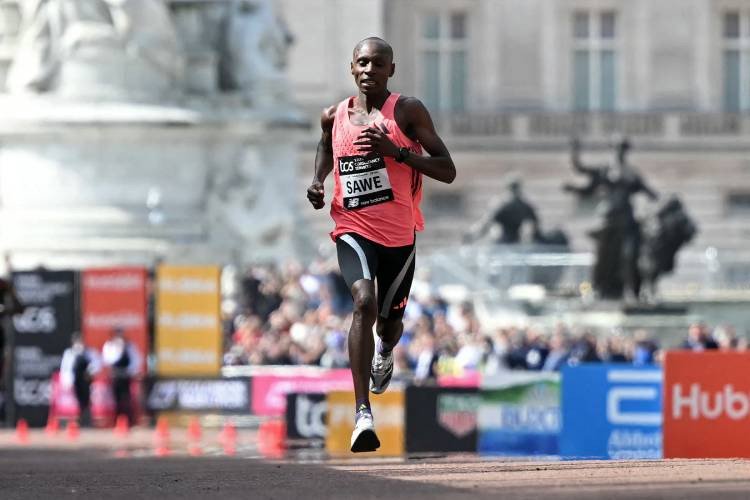
A marathon rarely rewards the runner who looks the strongest after five kilometres. Victory usually belongs to the athlete who still looks smooth after forty. That is exactly why Sebastian Sawe has become one of the most fascinating athletes in modern distance running. Long before he crossed the finish line to rewrite marathon history, seasoned coaches and athletics analysts had already noticed something unusual about the Kenyan. His stride seemed effortless, his posture barely changed, and his rhythm remained remarkably consistent even as rivals began to fade.
Television cameras often follow Sawe because he runs with a calmness that almost disguises how fast he is travelling. Every step appears measured rather than forced, creating the impression that he is conserving energy while everyone else is fighting to survive. That visual contrast has sparked thousands of online searches from fans eager to understand one thing: what makes Sebastian Sawe’s stride length so effective?
Plenty of runners have long strides, but very few have combined stride length, cadence, balance, endurance, and mental discipline as effectively as Sawe. Those qualities helped him achieve what many believed was impossible when he became the first athlete to officially break the two-hour marathon barrier, setting a new world record of 1:59:30.
Also Read: Rio Ferdinand To Open International Doors For Arusha Through AFCON 2027
Sebastian Sawe’s World Record Changed the Marathon Conversation
Distance running has always evolved through athletes willing to challenge accepted limits.
Roger Bannister shattered beliefs about the four-minute mile. Eliud Kipchoge inspired a generation by demonstrating what disciplined marathon running could achieve. Sebastian Sawe has now added another remarkable chapter by becoming the first athlete to run an official marathon in under two hours.
That achievement naturally shifted attention beyond the stopwatch.
Fans wanted to know what separated him from dozens of elite runners capable of winning major marathons. Sports scientists looked beyond fitness and discovered remarkable efficiency. Coaches replayed race footage searching for clues hidden within his running mechanics.
One recurring observation stood out.
Sawe wastes almost no movement.
Why Everyone Is Searching for Sebastian Sawe Stride Length
Stride length sounds simple.
Many people assume running faster means taking bigger steps.
Elite marathoning tells a different story.
Running experts generally agree that excessively long strides can actually reduce efficiency because the foot lands too far ahead of the body’s centre of gravity. That creates a braking effect, forcing the runner to slow slightly before accelerating again.
Sawe avoids that mistake beautifully.
His stride appears long because every push-off generates excellent forward momentum rather than unnecessary upward movement. He covers impressive ground while maintaining balance, allowing him to preserve energy across the full 42.195 kilometres.
That distinction explains why his running style has become one of the most searched topics among athletics enthusiasts.
Stride Length Is Only Part of the Formula
No world record is built on one physical characteristic.
Sawe’s stride works because it is supported by several complementary qualities that operate together throughout a race.
Elements Behind His Success
| Performance Factor | Why It Matters |
|---|---|
| Efficient stride length | Covers ground without overreaching |
| High cadence | Maintains smooth rhythm |
| Running economy | Conserves energy over long distances |
| Strong posture | Reduces fatigue |
| Excellent endurance | Sustains pace late in races |
| Tactical awareness | Responds effectively to race situations |
Viewed individually, none of these qualities guarantees victory.
Combined, they create one of the most efficient marathon runners the sport has ever produced.
Running Under Two Hours Required More Than Speed
Breaking two hours demanded exceptional physical preparation, but physical ability alone would never have been enough.
Every unnecessary movement costs precious energy.
Swinging the arms too aggressively.
Landing heavily.
Bouncing vertically.
Tensing the shoulders.
Each small inefficiency becomes magnified over thousands of running steps.
Sawe demonstrates remarkable discipline by eliminating almost all wasted motion.
Watching him race reveals an athlete whose body moves almost like clockwork, conserving precious energy until it matters most.
His Running Economy May Be His Greatest Weapon
Sports scientists often compare running economy to fuel consumption in a car.
Two vehicles may travel at identical speeds.
One uses significantly less fuel.
The same principle applies to marathon runners.
Athletes with excellent running economy require less oxygen to maintain demanding race pace.
That advantage becomes enormous after thirty kilometres, where fatigue begins separating contenders from champions.
Sawe consistently appears relaxed deep into races because his body has spent less energy reaching that point.
Years of Road Racing Built His Foundation
Before becoming marathon world record holder, Sawe had already established himself among the world’s finest road runners.
His performances in the half marathon demonstrated remarkable consistency and confirmed his ability to sustain elite pace across challenging distances.
Running under one hour in the half marathon placed him among a select group of athletes capable of extraordinary endurance and efficiency.
Those performances hinted that greater achievements were still ahead.
Transitioning successfully into marathon racing required patience, intelligent coaching, and careful management rather than rushing toward immediate success.
Kenyan Distance Running Continues to Inspire
Kenya remains the benchmark for global distance running.
Altitude training certainly contributes.
Strong competition during domestic races helps.
Community culture also plays an important role.
Young runners often grow up watching world champions emerge from villages similar to their own.
Success therefore feels achievable rather than impossible.
Sawe represents another generation carrying that remarkable tradition while adding his own unique chapter to Kenya’s sporting history.
Why Coaches Admire Sebastian Sawe

Elite coaches rarely focus only on race results.
Technique often attracts greater attention.
Sawe’s mechanics offer valuable lessons because they remain remarkably stable regardless of race conditions.
Technical Strengths
| Running Skill | Benefit |
|---|---|
| Relaxed shoulders | Reduces upper-body fatigue |
| Controlled arm swing | Maintains rhythm |
| Stable head position | Improves balance |
| Strong hip extension | Produces efficient propulsion |
| Minimal vertical movement | Saves energy |
| Smooth foot placement | Reduces braking forces |
Those details may seem small individually.
Together they explain why Sawe looks comfortable while maintaining extraordinary speed.
Mental Discipline Completes the Picture
Physical preparation wins nothing without emotional control.
Marathons tempt athletes into running too fast during the opening kilometres.
Many competitors pay dearly later.
Sawe rarely appears rushed.
His pacing reflects confidence rather than excitement.
That discipline enables him to finish races strongly while others struggle simply to maintain forward momentum.
World records demand patience just as much as courage.
Recreational Runners Can Learn Valuable Lessons
Many amateur runners immediately ask whether they should copy Sawe by taking longer strides.
That approach usually creates more problems than solutions.
Most recreational athletes benefit far more from improving efficiency than exaggerating movement.
Better posture.
Stronger hips.
Improved cadence.
Consistent strength training.
Greater flexibility.
Those adjustments often produce noticeable improvements without increasing injury risk.
Sawe’s success teaches that running smarter frequently matters more than running harder.
Technology Has Made Every Step Worth Studying
Modern broadcasts, GPS watches, slow-motion cameras, and biomechanical analysis have changed how fans experience distance running.
Supporters no longer admire only race results.
They analyse stride frequency, pacing strategies, foot strike, and movement efficiency.
That growing curiosity explains why searches surrounding Sebastian Sawe’s stride length continue increasing after every major performance.
People recognise they are watching more than another fast runner.
They are watching history in motion.
Also Read: Kibiwott Kandie: Why 7-Year Exile Marks End Of An Era
Why His Style May Influence the Next Generation
Every generation produces athletes whose techniques influence future champions.
Children growing up today will likely study Sawe’s races much as previous runners examined the careers of Kenyan marathon legends before him.
His greatest legacy may extend beyond medals and records.
Young athletes may adopt his patient racing style, economical movement, and disciplined approach to marathon preparation.
Those qualities can shape champions long after records eventually fall.
Why Efficiency Will Always Beat Power
Sebastian Sawe’s remarkable stride has become one of the most discussed aspects of modern marathon running, but focusing only on stride length misses the bigger story. His advantage comes from an extraordinary blend of efficiency, endurance, balance, rhythm, and intelligent race management that allows every step to serve a purpose.
His historic sub-two-hour world record confirmed what coaches had long suspected: true greatness is rarely built on one spectacular quality. Instead, it emerges from hundreds of small details executed perfectly over thousands of strides. That combination has not only made Sebastian Sawe the fastest marathon runner in history but has also provided runners around the world with a masterclass in how intelligent technique can transform human performance.