
Kibiwott Kandie: Why 7-Year Exile Marks End Of An Era

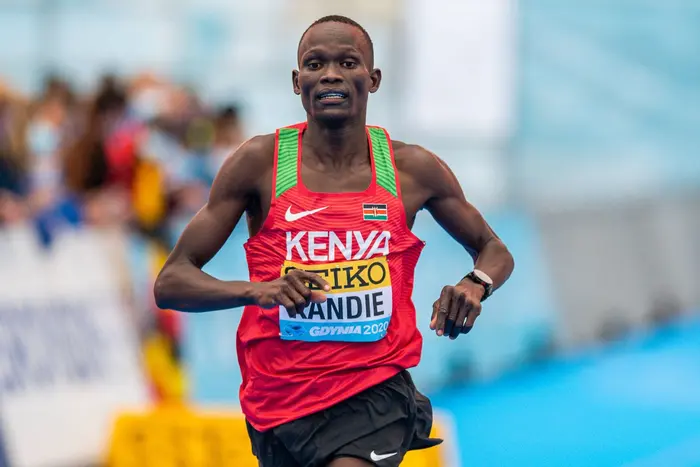
Not long ago, Kibiwott Kandie represented everything Kenyan distance running stood for on the global stage. The 30-year-old long distance runner’s fearless racing style, blistering speed and relentless determination earned him victories against some of the world’s finest athletes and culminated in a half marathon world record that stunned the athletics community.
Now, the conversation has changed.
Instead of celebrating another podium finish or debating whether he could reclaim his place among the sport’s elite, fans are searching for answers about a seven-year ban that effectively sidelines one of Kenya’s most accomplished road runners until 2032.
The suspension follows Kandie’s admission to two Anti-Doping Rule Violations involving refusal to submit to sample collection and tampering with the doping control process. While the legal proceedings have reached a conclusion, the broader discussion about legacy, accountability and the future of Kenyan athletics is only beginning.
Also Read: 5 Notable Breakout Stars From 2026 FIFA World Cup So Far
A champion whose rise captured global attention
Elite distance runners often spend years chasing recognition before producing one defining performance. Kandie needed just one unforgettable afternoon in Valencia to rewrite history.
In December 2020, he stormed to a half marathon world record of 57 minutes and 32 seconds, becoming the fastest man ever over the distance at the time. The achievement was widely celebrated in Kenya, where distance running remains a source of national pride and inspiration.
Victory was never an isolated event in his career. Multiple titles at the Valencia Half Marathon and consistent performances against world-class fields established him as one of the most dangerous competitors on the international road racing circuit.
Many observers believed even greater achievements still lay ahead.
Why Kibiwott Kandie was banned
Interest in Kandie’s case has surged because many supporters initially assumed the suspension resulted from a failed drug test.
That is not what happened.
The Athletics Integrity Unit found that the Kenyan athlete refused to provide a required sample during an out-of-competition doping test and later admitted to tampering with aspects of the doping control process. Those actions constitute independent anti-doping violations under international rules.
An eight-year sanction was initially applicable, but Kandie received a one-year reduction after admitting the offences and accepting responsibility, leaving him with a seven-year ban.
His period of ineligibility runs until March 2032.
The events that changed everything
Testing officials visited Kandie’s residence on March 1, 2025, intending to conduct an out-of-competition doping control exercise.
Investigators reported that he acknowledged the request but delayed the process while making several phone calls. Eventually, he informed officials that urgent matters related to a construction project required him to travel to Eldoret before leaving without completing the sample collection.
Officials warned him that refusing the test would carry consequences equivalent to a positive doping result.
The warning did not alter the outcome.
A routine case quickly became something much bigger
Many disciplinary proceedings end once a missed or refused test is documented.
This investigation evolved into something considerably more detailed.
Digital evidence, financial records and supporting documentation all became part of the inquiry as investigators sought to determine whether the explanations provided accurately reflected what had happened during the attempted test.
Their findings ultimately led to an additional charge involving tampering with the doping control process.
The outcome underscored how anti-doping investigations have evolved beyond laboratory analysis into sophisticated forensic exercises.
How investigators built their case
Phone records reportedly showed repeated communication with an individual in Eldoret around the time officials attempted to collect samples.
Financial information examined during the inquiry added another layer to the investigation, prompting further scrutiny into explanations offered by the athlete.
Attention later turned to documents submitted in support of requests linked to the case. Authorities reportedly established that materials intended to justify Kandie’s movements could not be verified through official records.
Those discoveries became central to allegations that the integrity of the anti-doping process had been compromised.
Also Read: Top Comoros Official Hospitalized in Nairobi Amid Rising Tensions in Moroni
Understanding the violations
Public debate often centres on athletes who test positive for banned substances.
International anti-doping rules, however, recognise several types of violations capable of attracting lengthy suspensions.
Violations admitted by Kandie
| Violation | Explanation |
|---|---|
| Refusal to submit to sample collection | Failure to provide a required doping sample |
| Tampering with doping control | Interfering with or attempting to obstruct anti-doping procedures |
Refusing to cooperate with testing authorities is treated seriously because it threatens the credibility of anti-doping systems designed to ensure fair competition.
Why refusal carries severe consequences
Athletes competing internationally agree to comply with testing requirements both in and out of competition.
Permitting competitors to ignore requests for sample collection without significant sanctions would undermine the effectiveness of anti-doping programmes worldwide.
Regulators therefore impose strict penalties not simply to punish individuals but to discourage conduct capable of weakening trust in sporting integrity.
That philosophy explains why refusal cases often attract bans comparable to those imposed after confirmed doping offences.
Early admission reduced the punishment
Kandie originally faced a combined sanction of eight years.
His decision to admit both rule violations and accept responsibility reduced the final period of ineligibility by one year under applicable disciplinary provisions.
Even with that reduction, the seven-year suspension effectively removes him from elite competition during years many distance runners consider the peak of their careers.
Timeline of key developments
| Date | Event |
| March 1, 2025 | Out-of-competition test attempted |
| March 14, 2025 | Provisional suspension begins |
| May 2026 | Tampering charge formally added |
| 2026 | Athlete admits both violations |
| March 13, 2032 | Ban scheduled to expire |
A legacy complicated by controversy
Athletes rarely control how history remembers them.
Some become synonymous with medals and records. Others are remembered for moments away from competition that overshadow years of remarkable achievement.
Kandie’s career now sits at that difficult intersection.
Supporters will still recall the breathtaking run that briefly made him the fastest half marathon runner in history. Future conversations, however, are equally likely to include discussion of one of the most significant disciplinary cases involving a Kenyan road runner in recent memory.
That dual legacy reflects the unforgiving nature of elite sport.
Kenya’s reputation remains under the spotlight
Every high-profile suspension involving a Kenyan athlete inevitably attracts international attention.
Distance running has become one of the country’s greatest sporting exports, producing Olympic champions, marathon legends and world record holders admired across the globe.
Cases involving anti-doping violations create challenges not only for individual athletes but also for governing bodies seeking to protect the credibility of Kenyan athletics.
Thousands of competitors continue to train and compete honestly each year, making strong enforcement mechanisms essential for preserving confidence in the sport.
Modern investigations extend beyond the laboratory
Anti-doping work has changed dramatically over the last decade.
Laboratory testing remains important, but investigators increasingly rely on digital evidence, financial analysis and document verification when examining potential violations.
Technology enables authorities to reconstruct timelines, verify claims and identify inconsistencies that may not emerge through interviews alone.
Kandie’s case illustrates that evolution, demonstrating how modern integrity units combine traditional testing with broader investigative methods.
What aspiring athletes can learn
Young runners watching from training camps across Kenya may find the case sobering.
Talent and hard work remain indispensable, but compliance with anti-doping obligations is equally important for sustaining a successful career.
Missed procedures, poor judgement or attempts to interfere with investigations can carry consequences extending far beyond a single competition season.
Professional sport demands accountability alongside performance.
His achievements still deserve recognition
Controversy should not erase genuine sporting accomplishments.
Kandie’s performances transformed expectations about what elite athletes could achieve over the half marathon distance and inspired admiration among fans who witnessed his fearless racing style.
Career highlights before the suspension
| Achievement | Significance |
| Half marathon world record | 57:32 performance in Valencia |
| Commonwealth Games bronze medal | International podium finish for Kenya |
| Three Valencia Half Marathon titles | Demonstrated long-term consistency |
| All-time rankings | Remains among history’s fastest performers |
Those milestones remain part of athletics history regardless of subsequent disciplinary outcomes.
Could there be a comeback?
The ban is scheduled to expire in March 2032.
Rebuilding a career after seven years away from elite competition would present enormous challenges physically, mentally and professionally. Distance running evolves rapidly, with younger athletes emerging each season and competitive standards continually rising.
Even if a return proves possible, regaining former levels of performance would require extraordinary commitment.
More than one athlete’s story
Kandie’s suspension resonates because it reflects broader questions facing international sport.
Integrity systems succeed only when athletes, governing bodies and investigators all accept shared responsibilities. Public confidence depends on transparent enforcement applied consistently regardless of fame or achievement.
Kenya’s athletics tradition remains one of excellence, resilience and inspiration. Protecting that legacy requires continued commitment to fairness as much as fast times.
Also Read: Rio Ferdinand To Open International Doors For Arusha Through AFCON 2027
The final chapter has not yet been written
Seven years is a long time in professional sport.
By the time Kandie becomes eligible to compete again, a new generation of Kenyan stars may dominate global road racing while today’s headlines fade into history.
Yet one reality is unlikely to change. His name will forever evoke two contrasting images: the athlete who shattered expectations on the roads of Valencia and the champion whose career was interrupted by a suspension that transformed public perception.
That contrast explains why the story continues to attract attention. It is not merely about a ban. It is about how quickly sporting greatness can collide with controversy and how a legacy built over years can be reshaped by decisions made in a single moment.