
KDF Rolls Out Critical Medical Programme for Military Personnel

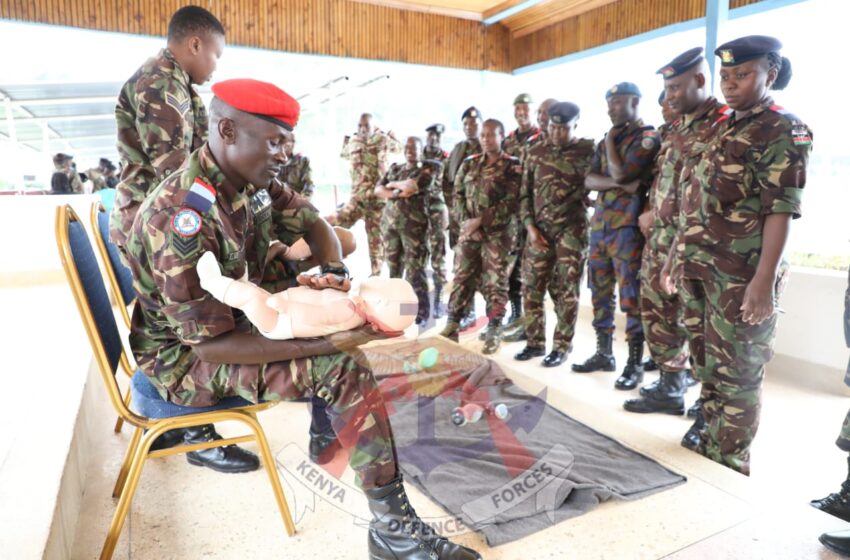
The Kenya Defence Forces (KDF) has intensified efforts to strengthen the medical preparedness of its personnel by rolling out a specialised Basic Life Support (BLS) training programme aimed at improving emergency response capabilities across its ranks.
The four-day training programme was officially launched at the Kenya Military Academy (KMA) in Lanet by the Commandant, Major General Joel Muriungi Arimi, as part of ongoing initiatives to enhance operational readiness and ensure military personnel are equipped to respond effectively during medical emergencies.
Facilitated by instructors from the Defence College of Health Sciences (DCHS), the programme is designed to provide academy staff with internationally recognised lifesaving skills that can be applied during training exercises, military operations and routine duties.
Follow Kenya Frontline X account for more updates
Medical preparedness has become an increasingly important aspect of military training, with armed forces around the world placing greater emphasis on ensuring personnel can administer immediate care before specialised medical teams arrive.
Major General Arimi said emergency response skills are an essential part of military professionalism, particularly for personnel operating in demanding and high-risk environments.
“Medical preparedness is vital to operational effectiveness, enabling military personnel to respond quickly and competently to emergencies in training and operation environments. Through continuous training and professional development, the Kenya Defence Forces (KDF) equips its personnel with lifesaving skills that enhance readiness, resilience and safety.”
Training Designed to Build Emergency Response Skills
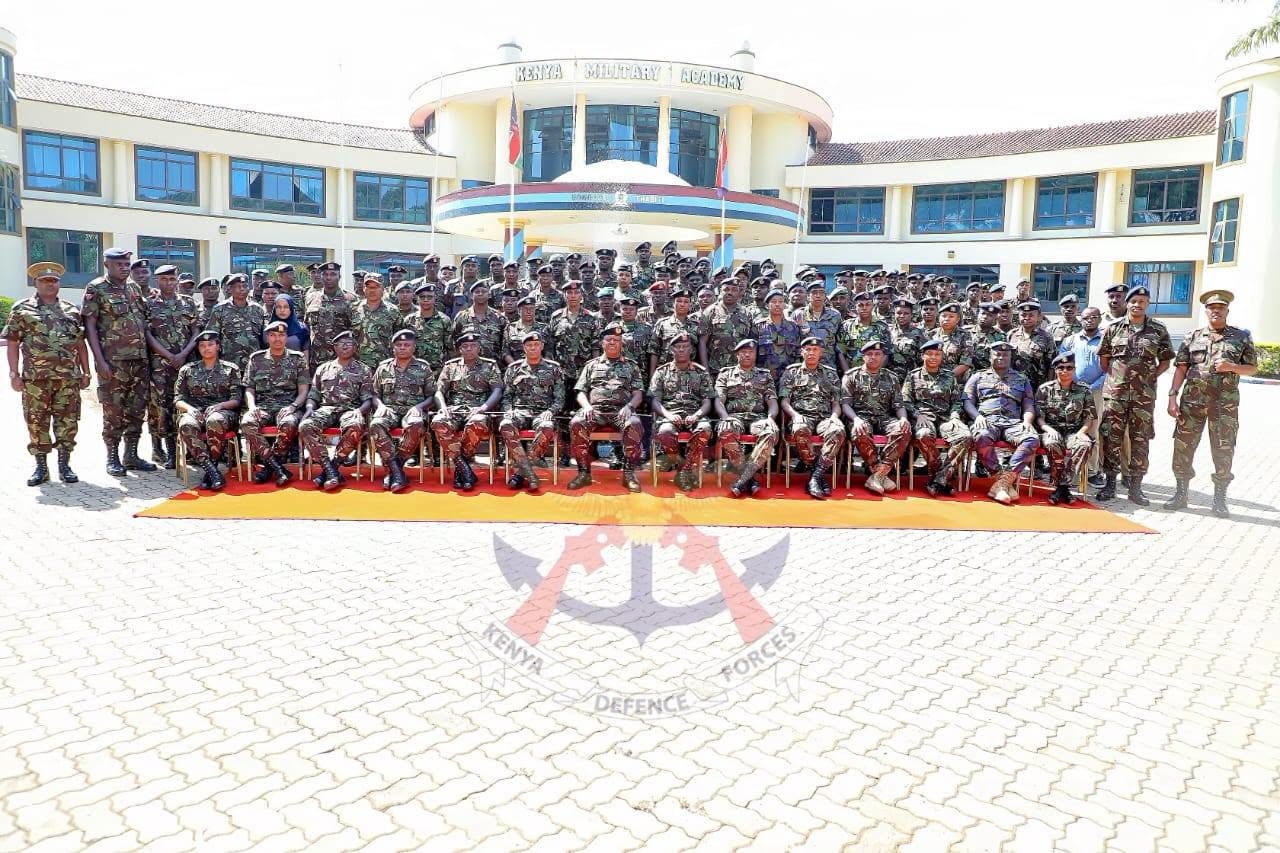
The Basic Life Support course has been developed to strengthen the Academy’s ability to respond to medical emergencies by equipping participants with practical skills that can save lives.
During the programme, participants will receive training on the early recognition of cardiac arrest, rapid activation of emergency response systems and the delivery of high-quality cardiopulmonary resuscitation (CPR).
The course also covers the use of Automated External Defibrillators (AEDs), management of choking incidents and coordinated emergency response techniques designed to improve survival rates during medical emergencies.
Personnel will also learn how to provide emergency care for adults, children and infants, ensuring they are prepared to respond to a wide range of situations that may arise both within military installations and during field operations.
According to the Kenya Defence Forces, strengthening these capabilities forms part of a broader strategy to improve resilience and operational effectiveness across the military.
“The course equips participants with internationally recognized lifesaving skills, including early recognition of cardiac arrest, prompt activation of emergency response systems, administration of high-quality cardiopulmonary resuscitation (CPR), use of Automated External Defibrillators (AEDs), management of choking incidents, and coordinated team response during medical emergencies.”
Focus on Readiness Beyond the Battlefield
The training also places significant emphasis on the internationally recognised Chain of Survival, a series of critical actions that improve the chances of survival during life-threatening medical emergencies.
Those steps include the early identification of medical emergencies, immediate delivery of high-quality CPR, rapid defibrillation, advanced resuscitation and comprehensive post-cardiac arrest care.
Military officials believe these interventions can significantly improve outcomes by ensuring casualties receive prompt treatment before they are transferred to specialised medical facilities.
Major General Arimi noted that military personnel frequently operate in environments where immediate medical intervention can mean the difference between life and death.
Developing these skills, he said, is therefore just as important as physical fitness, tactical training and operational planning.
The initiative also reflects the Kenya Military Academy’s commitment to building a highly skilled workforce capable of responding confidently and professionally whenever emergencies arise.
By investing in continuous medical training, the Kenya Defence Forces aims to strengthen not only operational readiness but also the safety and resilience of its personnel across all areas of service.