
‘This stadium will remain’-The Chinese workers leaving their mark on Nairobi

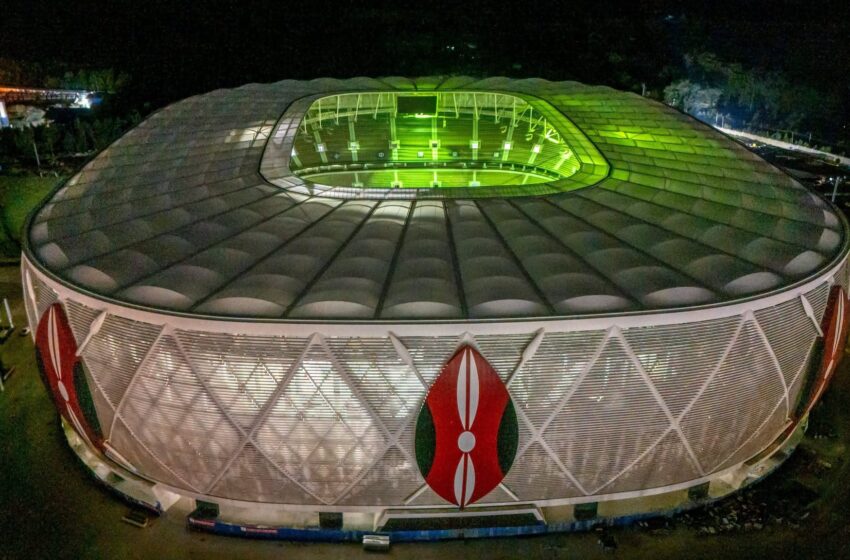
Raila Odinga International Stadium
If you stand around Talanta Stadium today, the cranes and heavy construction work have largely given way to finishing touches, but behind the 60,000-seat venue is a story of Chinese engineers and Kenyan workers who have spent years turning an ambitious project into Nairobi’s new football landmark.
The stadium is being built by China Road and Bridge Corporation (CRBC) and is expected to serve as the main venue when Kenya co-hosts the 2027 Africa Cup of Nations with Uganda and Tanzania.
Construction has moved rapidly, with the project being delivered in roughly two years. That pace has placed enormous pressure on the engineers and workers involved, many of whom have spent long periods away from their families while working towards the same deadline.
“The schedule was extremely tight — just two years, while comparable projects elsewhere usually take more than three,” Du Xiao, project manager of the stadium for China Road and Bridge Corporation (CRBC), told Xinhua in a recent interview. “There is a very real sense of pride.”
PAY ATTENTION: Follow Kenya Frontline WhatsApp channel for more news
The stadium itself is impressive, but the experiences of the people building it reveal another side of the project. Their stories are about long working days, missed family moments, friendships with Kenyan colleagues and the unexpected ways that life in Nairobi has changed them.
From China to Nairobi, one project at a time
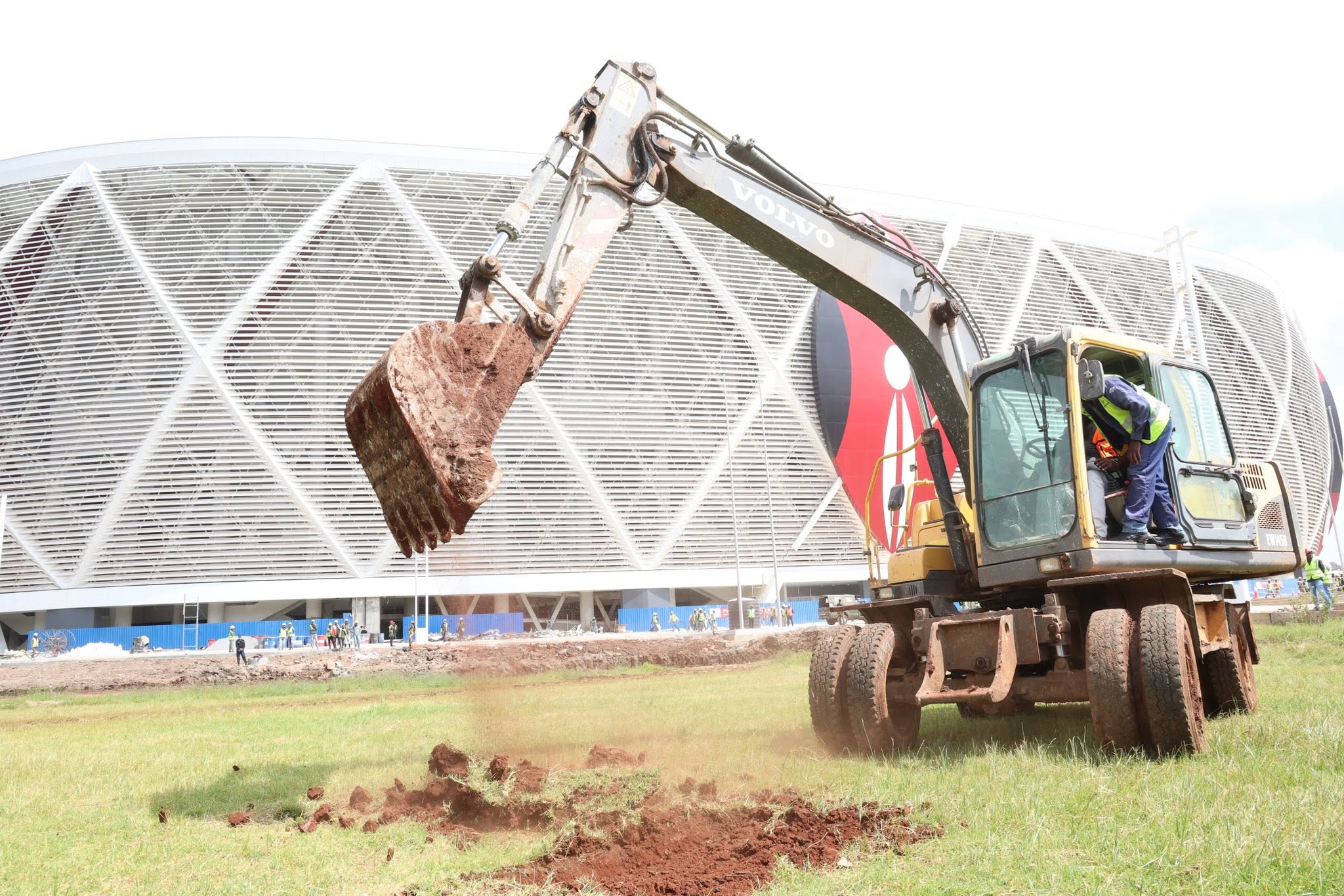
Du Xiao arrived in Kenya in August 2011, long before Talanta Stadium became part of the country’s AFCON preparations.
His career in Kenya has taken him through some of the country’s biggest infrastructure projects. He has worked on Nairobi’s ring roads, the Mombasa-Nairobi Standard Gauge Railway, the Nairobi-Malaba railway and the Nairobi Expressway before eventually taking charge of the stadium project.
More than a decade of working in Kenya has given him a perspective that goes beyond engineering drawings and construction schedules.
“Working overseas, we should not arrive thinking about changing the place. We should first adapt to and learn from the local community,” he said. “What many projects truly open up is not just roads and railways, but trust between people.”
That trust has been built gradually.
Chinese engineers working on the project have had to understand Kenyan working practices, communities and culture, while their Kenyan colleagues have gained technical experience working alongside them.
The relationship has also created friendships that would have been difficult to imagine when some of the Chinese workers first arrived in the country.
The stadium’s design has become another point of connection. Its seats carry Kenya’s green, red and black colours, while the facade incorporates the traditional shield and spear associated with the Maasai.
There is also a technical story behind the stadium’s roof. Engineers used a cable-supported grid system based on a “cable-first, steel-after” approach, with 48 radial cables tensioned to lift six ring cables before steel trusses were installed.
The method eliminated the need for temporary steel supports and, according to the project team, saved at least three months of construction time.
The pressure to finish quickly has meant that the people working on the project have had to make personal sacrifices.
Du Xiao remembers one of the most important moments of his own life happening while he was deeply involved in another major Kenyan project.
When his child was born, he was working on the Nairobi Expressway and could not return home.
“People in overseas engineering live in two worlds — the project site on one side, the family on the other. All you can do is try to do a little better on each side,” he said.
It is a simple description of a reality shared by many Chinese engineers working thousands of kilometres from home.
Their families remain in China while their daily lives unfold on construction sites in Kenya. Birthdays, holidays and important family occasions can sometimes happen through phone calls rather than face-to-face conversations.
Yet the years spent in Kenya have also created memories that go beyond work.
The Kenyan workers who became part of the story
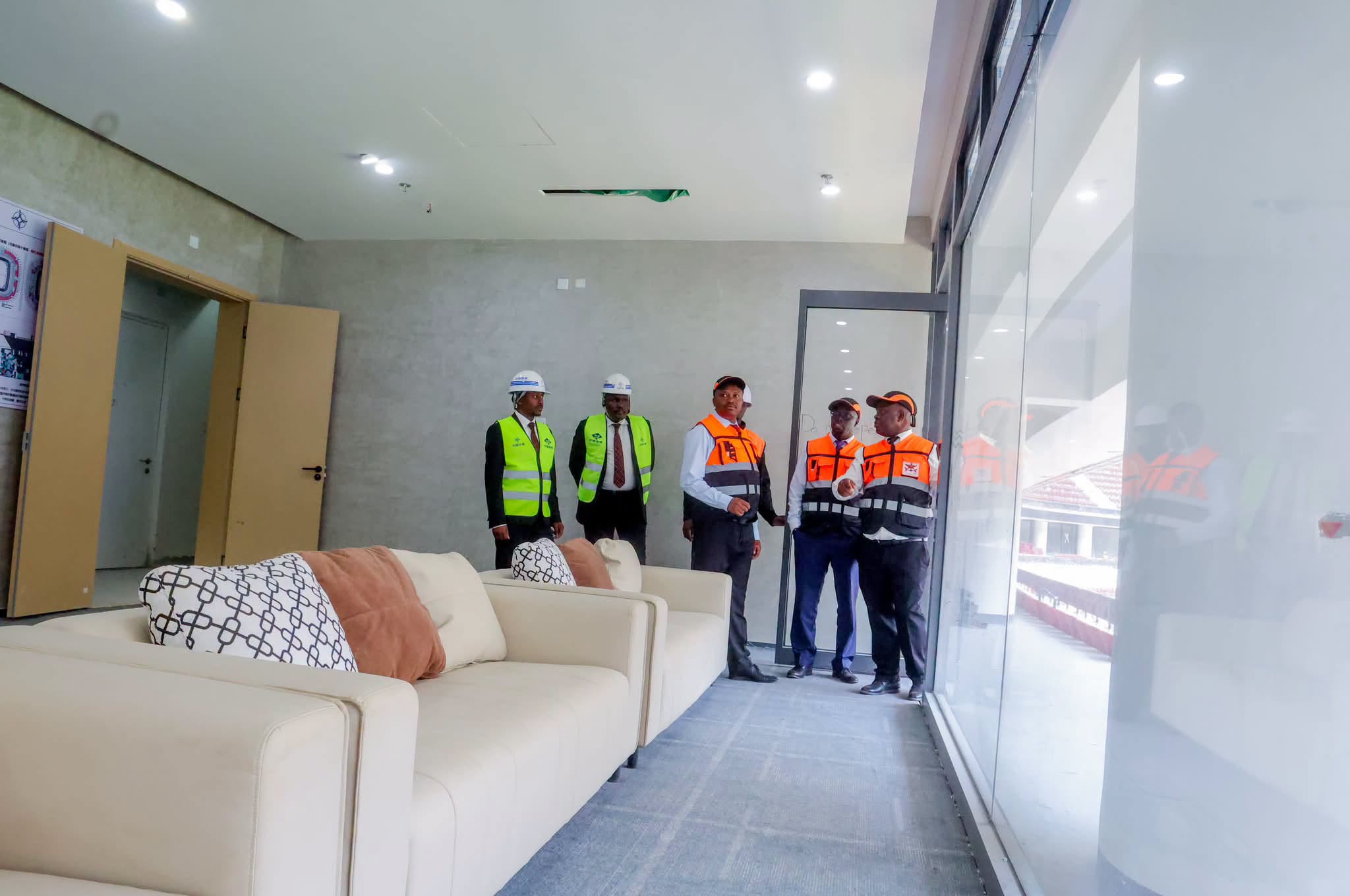
The stadium sits near Kibera, one of Nairobi’s largest informal settlements, making the project’s relationship with the surrounding community particularly important.
Among the people who benefited from the construction work was a young Kenyan named Sammy.
When Sammy first applied for a job, he did not have the technical skills needed for much of the work being carried out at the site. Instead of walking away, he volunteered to undergo equipment training.
He eventually became a pump truck operator.
Du Xiao remembered asking him why he was working so hard to learn the equipment.
“I asked him why he worked so hard. He said, ‘I never thought I would have the chance to touch these machines. Now I feel I can support my whole family.'”
Sammy’s story captures one of the less visible aspects of the stadium project. The construction site has not only brought Chinese engineers to Nairobi; it has also provided Kenyan workers with opportunities to learn skills that can remain useful long after the stadium is completed.
According to Du Shan, executive general manager of CRBC’s Kenya office, nearly 500 young people from the neighbourhood were recruited during construction.
Many of them went on to qualify as assistant engineers.
The experience reflects a wider pattern on Chinese-backed infrastructure projects in Kenya. Du Shan said around 280 local youths were mentored into technical roles during construction of the Mombasa-Nairobi Standard Gauge Railway.
Those relationships have also shaped the Chinese workers themselves.
The people arriving from China may initially see Kenya as the location of their next engineering assignment. Years later, some begin to see it differently.
They learn local phrases, develop friendships and become familiar with the streets and communities surrounding their workplaces. Kenya becomes less of a temporary posting and more of a place filled with personal memories.
CRBC’s history in Kenya stretches back to 1984, when the company built its first road in the country. More than four decades later, its work has expanded into roads, bridges, railways, ports and buildings.
That history has created a generation of workers who have spent a significant part of their careers in Kenya.
More than 350 CRBC employees have worked overseas for over a decade, according to Du Shan. The company recognises their long service with an annual gold medal.
“The medal is not only an honor, but also a kind of warmth. Because 42 years — it has truly not been easy.”
The words capture the emotional side of overseas construction that is rarely visible when people see a completed road, railway or stadium.
A finished structure can hide the years of human effort behind it.
Talanta Stadium is no different.
Every steel beam, cable and seat has been installed by people who have had to balance demanding work with ordinary lives. Chinese engineers have worked alongside Kenyan colleagues, sometimes thousands of kilometres from their families, while local workers have learned new technical skills.
The stadium’s completion will eventually become a headline about Kenya’s preparations for AFCON 2027.
Yet the workers will remember something different.
They will remember the early mornings, the deadlines, the technical problems, the people they met and the friendships formed during the construction.
Du Xiao knows that his time in Kenya may eventually end.
“Maybe I will one day leave this country. But this stadium will remain,” he said. “I came here to build projects. Then I found that this country has shaped who I am today.”
That may ultimately be the most human story behind Talanta Stadium.
The project is being built to host football, but its construction has brought together people from two countries who started with different languages, backgrounds and experiences.
When the first AFCON 2027 match is played inside the completed stadium, thousands of supporters will see the seats, the roof and the pitch.
Few will see the years of personal sacrifice behind them.
The Chinese engineers who leave Nairobi after the project may carry photographs and memories back to their families in China. Kenyan workers will carry new skills into their careers.
And Talanta Stadium will remain in Nairobi as a permanent reminder of the people who built it.

