
Where Does Kenya’s New 60,000-Seat Talanta Stadium Rank Globally?

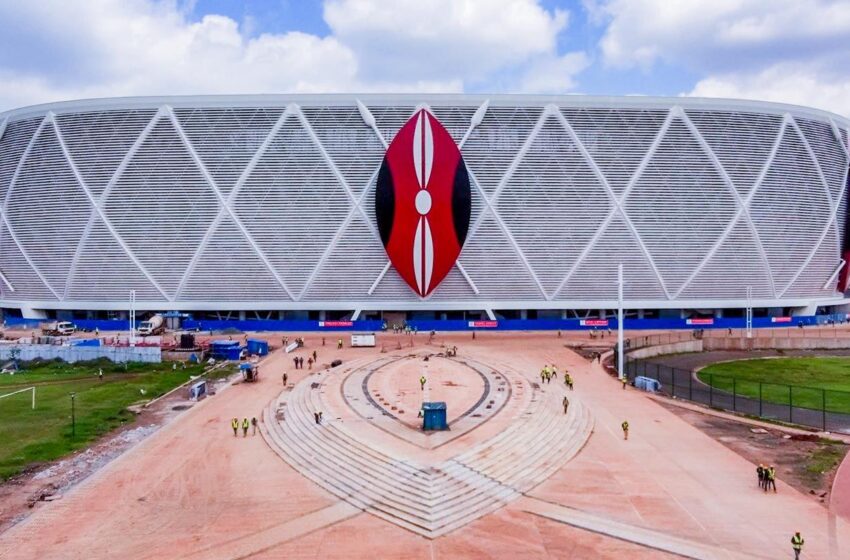
The Talanta Sports Stadium is one of Kenya’s most ambitious infrastructure projects in recent years, designed to position the country as a major host of international football and athletics events.
As Kenya prepares for the Africa Cup of Nations (AFCON) 2027 alongside Uganda and Tanzania, many sports fans and analysts are asking an important question: where does Talanta Stadium rank in Africa?
The answer requires a deeper understanding of how stadium “rankings” actually work across the continent.
Unlike leagues or tournaments, African stadiums are not placed in a single official ranking list. Instead, they are evaluated based on capacity, infrastructure quality, international certification, and ability to host major competitions.
This means Talanta Stadium’s ranking is not fixed yet — it is projected based on design, standards, and expected completion.
Also Read: Top Comoros Official Hospitalized in Nairobi Amid Rising Tensions in Moroni
Understanding How Stadiums Are Evaluated in Africa
To understand Talanta Stadium’s position, it is important to first understand how stadiums are assessed across Africa.
There is no official CAF ranking system that lists stadiums from best to worst. Instead, the Confederation of African Football evaluates stadiums using strict certification categories.
Key evaluation factors include:
-
Seating capacity
-
Safety and security systems
-
Pitch quality and drainage
-
Media and broadcast facilities
-
Floodlighting standards
-
VIP and hospitality infrastructure
-
Compliance with CAF Category 4 standards
These criteria determine whether a stadium can host:
-
AFCON matches
-
World Cup qualifiers
-
Continental club competitions
Talanta Stadium Overview and Design Capacity
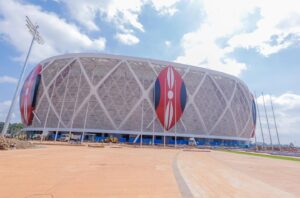
The Talanta Sports Stadium, also referred to in some national projects as the Raila Odinga International Stadium, is a modern 60,000-seat facility currently under development in Nairobi.
Once completed, it is expected to include:
-
A full football and rugby pitch
-
Modern VIP and corporate seating areas
-
International broadcast facilities
-
Advanced lighting and security systems
-
Training and support infrastructure
Its design places it among Kenya’s most advanced sports facilities ever built.
How Talanta Stadium Compares to Africa’s Top Venues
Although still under construction, Talanta Stadium can already be compared based on planned capacity and design standards.
African Stadium Comparison Table
| Stadium | Country | Capacity | Status |
|---|---|---|---|
| FNB Stadium | South Africa | 94,736 | Operational |
| Borg El Arab Stadium | Egypt | 86,000+ | Operational |
| Stade des Martyrs | DR Congo | 80,000+ | Operational |
| Olembe Stadium | Cameroon | 60,000 | Operational |
| Talanta Stadium | Kenya | 60,000 | Under construction |
From this comparison, Talanta Stadium is positioned in the top tier of African stadiums by capacity, especially once it becomes operational.
However, capacity alone does not determine its final ranking.
Where Talanta Stadium Stands Today
At the moment, Talanta Stadium is not officially ranked in Africa because:
-
It is still under construction
-
It has not hosted international matches
-
It has not yet received CAF final certification
Stadium ranking becomes official only after:
-
Completion of construction
-
Inspection by CAF
-
Approval for international matches
This means Talanta is currently a future-ranked stadium rather than an active one.
CAF Standards and Why They Matter
To host major tournaments like AFCON, stadiums must meet CAF Category 4 standards, which are the highest classification level.
Talanta Stadium is being developed with these standards in mind, which include:
CAF Category 4 requirements:
-
Minimum international pitch dimensions
-
High-quality natural or hybrid turf
-
Strong floodlighting for TV broadcasting
-
Secure perimeter and crowd control systems
-
Media zones and press infrastructure
-
Medical and emergency response facilities
Meeting these standards is what will eventually determine Talanta’s official eligibility for top-tier competitions.
Why Talanta Stadium Is Important for Kenya
The significance of Talanta Stadium goes far beyond ranking discussions.
It represents a strategic investment in Kenya’s sports future, particularly ahead of AFCON 2027.
Key national benefits include:
-
Increased sports tourism
-
Job creation during and after construction
-
Improved football infrastructure
-
Development of youth sports programs
-
International visibility for Kenya
It is also expected to reduce pressure on older stadiums like Kasarani by providing a modern alternative.
Economic and Social Impact of the Stadium
Large stadium projects often have a wider economic influence beyond sports.
Once operational, Talanta Stadium is expected to:
-
Boost local businesses around Nairobi
-
Increase hotel and transport demand during events
-
Attract international visitors
-
Support sports-related industries
It also plays a role in shaping national identity by showcasing Kenya’s ability to deliver world-class infrastructure.
Also Read; Rio Ferdinand To Open International Doors For Arusha Through AFCON 2027
Why Stadium Rankings in Africa Are Not Fixed
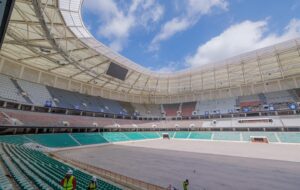
One of the most important things to understand is that Africa does not have a permanent stadium ranking system.
Instead, stadium status changes based on:
-
Renovations and upgrades
-
CAF inspections
-
Hosting of international matches
-
Infrastructure improvements
This means a stadium like Talanta can quickly rise into elite status once it meets all requirements and hosts major events.
Projected Position of Talanta Stadium in Africa
If completed successfully and approved for international use, Talanta Stadium is expected to rank:
-
Among the top 10 largest stadiums in Africa by capacity
-
Among the most modern stadiums in East Africa
-
As a key AFCON 2027 venue
It would also place Kenya in a stronger position in continental sports infrastructure rankings.
Final Outlook
Talanta Stadium is not yet officially ranked in Africa because it remains under construction and has not been certified by CAF.
However, based on its design, capacity, and strategic purpose, it is already considered one of the most promising stadium projects on the continent.
Once completed, it is expected to join Africa’s elite group of stadiums and play a central role in Kenya’s hosting of AFCON 2027.
In simple terms, Talanta Stadium is not currently ranked — but it is being built to compete at the highest level in African football.