‘A plastic policy’- Inside KPA rejection of Draft 11 GPP guidelines

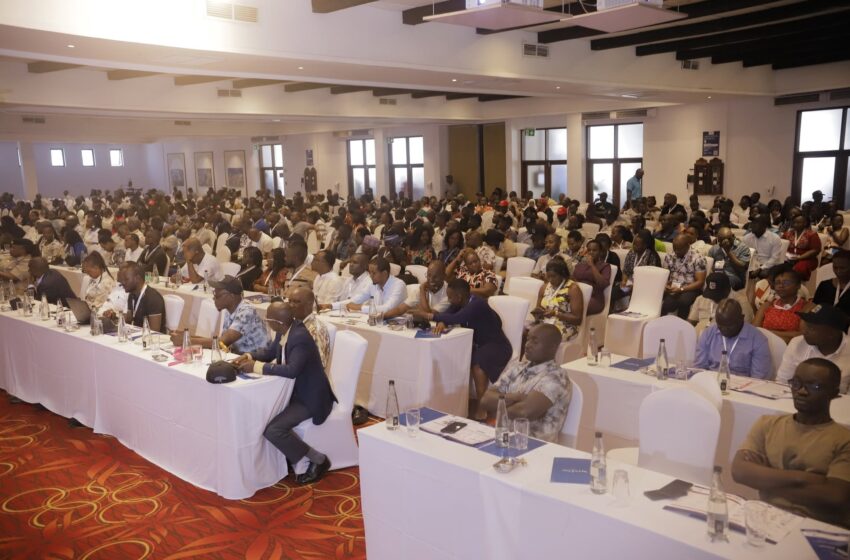
A full-blown battle for the soul of Kenya’s primary healthcare network has spilled out of boardrooms and onto the streets.
Thousands of healthcare practitioners under the banner of the Kenya Pharmaceutical Association (KPA) are mobilizing national demonstrations and marching to the Pharmacy and Poisons Board (PPB) offices.
The immediate trigger for this widespread unrest is the release and rollout of Draft 11 of the Good Pharmacy Practice (GPP) Guidelines. Unveiled during the recent Health Summit, Draft 11 introduces sweeping regulatory amendments that KPA members argue will dismantle the country’s primary healthcare backbone, trigger mass unemployment, and severely restrict patient access to essential medicines.
PAY ATTENTION: Follow Kenya Frontline WhatsApp channel for more news
To understand why thousands of licensed medical professionals have traded their clinical coats for demonstration placards, one must examine the specific mechanics of Draft 11 and the breakdown in multi-stakeholder governance that preceded its sudden release.
The Core Issues Driving Practitioners to the Streets
The primary catalyst forcing pharmaceutical technologists into active protest is a set of exclusionary clauses embedded within Draft 11. The new policy framework explicitly removes pharmaceutical technologists from holding superintendent positions at Level 3 healthcare facilities. Furthermore, it stripped these professionals of the authority to handle, manage, and dispense narcotic and psychotropic medications.
KPA leadership argues that these additions are structurally impossible to implement without collapsing local clinic networks. According to the association’s national internal memorandum issued by President Chitechi Amboka and Secretary General Eric Gichane, the regulatory framework relies on assumptions that disregard the reality of Kenya’s health system architecture.
The mathematical realities highlighted by KPA reveal a deep operational disconnect:
- Workforce Imbalance: Public workforce data indicates that Kenya possesses approximately 10,533 licensed pharmaceutical technologists compared to just 2,931 licensed pharmacists.
- Facility Demand: There are over 2,559 Level 3 health facilities scattered across Kenya’s 47 counties, serving as the front line of primary healthcare and Universal Health Coverage (UHC) delivery.
- Operational Paralysis: Mandating that Level 3 facilities be superintended exclusively by pharmacists—when the entire country has fewer than 3,000 active pharmacists spread across hospitals, manufacturing, academia, and regulatory agencies—creates immediate staffing vacuums.
By stripping 10,533 technologists of their ability to manage Level 3 facilities and handle controlled substances, the policy effectively turns millions of rural patients away from necessary care. Under Draft 11, rural clinics lacking a registered pharmacist would legally be unable to stock or dispense critical painkillers, palliative care drugs, or psychiatric medications, placing an unfair burden on marginalized populations.
When regulatory changes threaten the livelihoods of over 10,000 trained practitioners while simultaneously endangering rural patient care, street action becomes the final available tool for policy redress.
Quotes From the Official KPA Position Memo
The Kenya Pharmaceutical Association’s official internal memorandum outlines the institutional frustration, procedural flaws, and public health risks associated with the new guidelines. The document emphasizes that while regulation is necessary, it must never be weaponized to enforce arbitrary professional exclusion.
Addressing the procedural exclusion of key stakeholders from the draft’s progression, KPA leadership explicitly disowned the current document:
“For clarity, KPA’s formal participation in the GPP review process was up to Draft 8… It is therefore deeply concerning that the process appears to have progressed from Draft 9 to Draft 11 without the Association’s meaningful participation, representation or opportunity to validate the substantial amendments that have subsequently emerged. Accordingly, KPA does not recognize itself as a participant in, nor does it endorse or assume ownership of, Draft 10 or Draft 11.”
The association further highlighted the stark mathematical impossibility of enforcing Draft 11’s superintendency requirements without destroying primary healthcare access:
“These figures present a simple but fundamental health-system question: how can a policy realistically require approximately 2,559 Level 3 facilities to be superintended exclusively by a pharmacist workforce of approximately 2,931… while simultaneously excluding the much larger cadre of 10,533 Pharmaceutical Technologists? This is not merely a professional-interest argument. It is a question of health-system mathematics, workforce planning and access to care.”
Regarding the controversial attempt to align domestic healthcare policies with international frameworks like the World Health Organization’s Maturity Level 3 (WHO ML3) certification, KPA warned against sacrificing local functional capacity for international appearances:
“International standards cannot be adopted through a copy-and-paste approach that disregards Kenya’s own health-system realities, workforce structure and service-delivery needs… ML3 certification must not become a convenient justification for importing regulatory models that are disconnected from Kenya’s unique healthcare realities… International standards should inform our systems; they should not erase our context.”
Finally, KPA detailed the severe real-world consequences of restricting controlled substances strictly to pharmacists in a country with thousands of rural dispensaries:
“Reserving critical pharmaceutical services exclusively to pharmacists in a health system with over 10,000 registered premises… risks creating artificial workforce constraints, particularly in underserved and rural areas… A regulatory framework should never make a medicine legally available in principle but practically inaccessible because the health system has unnecessarily restricted the category of professionals capable of facilitating its lawful and safe access.”
Driven by these systemic flaws, the pharmaceutical technologists’ street demonstrations signal a demand for an immediate pause on Draft 11.
KPA maintains that it remains ready to participate in a fresh, transparent, and evidence-based review process—provided regulatory bodies choose inclusive healthcare planning over arbitrary professional exclusion.