
National Examinations Season 2026: KNEC Deploys 342,000 Officials, 3.6 Million Candidates, Tertiary Funding Bill Details

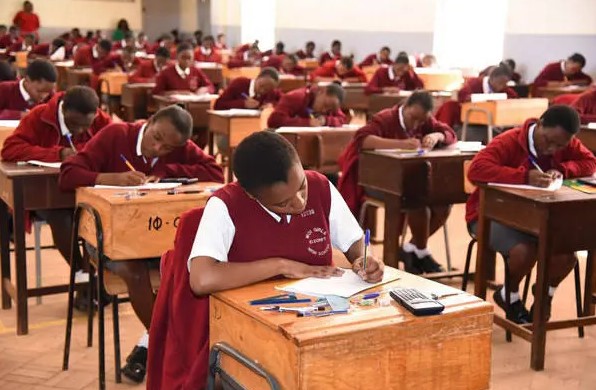
The 2026 national examinations and assessments enter a critical phase this month, with the Kenya National Examinations Council (KNEC) preparing to coordinate one of the country’s largest examination operations under the Competency-Based Education framework.
A total of 3,634,846 candidates are registered for the Kenya Primary School Education Assessment (KPSEA), Kenya Junior School Education Assessment (KJSEA) and Kenya Certificate of Secondary Education (KCSE). The exercise will run from October 16 to November 20, 2026, according to KNEC.
The scale of the operation has prompted additional investment in examination security, storage and field administration. KNEC says it will engage 342,005 contracted professionals, while the government has increased the number of examination-material storage containers to 701 after installing 48 additional facilities at sub-county level.
PAY ATTENTION: Follow Kenya Frontline WhatsApp channel for more news
The examination season also comes against a wider education-policy debate. Parliament is considering the Tertiary Education, Placement and Funding Bill, 2026, a proposed law that would substantially reorganise how university, college and TVET students are placed and funded.
2026 national examination timetable
The 2026 examination season begins with the KCSE rehearsal on October 16 before the written and practical papers get underway. KPSEA and KJSEA assessments follow later in October, while KCSE papers with larger candidature continue into November.
The official KNEC examination timetable portal provides the examination council’s published schedules and instructions for KCSE, KJSEA and KPSEA.
| Assessment Level | Candidate Volume | Flag-off Date |
|---|---|---|
| KPSEA | 1,380,463 | October 26, 2026 |
| KJSEA | 1,206,028 | October 26, 2026 |
| KCSE | 1,048,355 | October 16, 2026* |
*October 16 is the KCSE rehearsal day, with examination papers beginning from October 19. The full KCSE programme runs through November 20. KPSEA assessments run from October 26 to 28, while KJSEA assessments run from October 26 to 30.
The figures represent a significant increase in the examination workload. KPSEA has the largest candidature at 1,380,463, followed by KJSEA at 1,206,028 and KCSE at 1,048,355. For the first time, the number of KCSE candidates has crossed the one-million mark.
The combined candidature is about 6.1 per cent higher than the previous year, placing additional pressure on transport, storage, supervision, security, marking and communication systems.
KNEC deploys 342,005 contracted professionals
Managing more than 3.6 million candidates requires a field operation extending well beyond classrooms.
KNEC Chief Executive Officer Dr David Njeng’ere said the council will engage 342,005 contracted professionals to support the conduct and management of the 2026 examination and assessment process. The workforce includes centre managers, supervisors, invigilators, security personnel, drivers and other officials involved in the administration chain.
The size of the deployment highlights the logistical complexity of the new assessment system. Every examination centre has to receive the correct materials, maintain secure custody and ensure candidates are supervised according to KNEC regulations.
Read Also: Pharmacy Board Looks to Shape Future of Pharmaceutical Practice
The government is also relying on a multi-agency approach, with field officers from different ministries and agencies placed on standby to respond to operational challenges.
That preparation has particular relevance this year because authorities are also planning for potentially disruptive heavy rains. Education officials have said the government will use a whole-of-government approach to minimise interruptions and ensure candidates are not disadvantaged by weather-related challenges.
701 storage containers strengthen examination security
Examination-material security remains one of the most sensitive components of the national assessment process.
The government has installed 48 additional storage containers, increasing the national network from 653 to 701 sub-county containers. The expansion is designed to improve the distribution and handling of examination materials while reducing logistical pressures during the examination period.
KNEC has also strengthened technological security around examination-material storage. Reports indicate that smart padlocks are being expanded across the container network after a pilot programme, allowing the council to monitor access and detect possible interference.
The security architecture is increasingly important as examination malpractice evolves. Education officials have warned about the use of mobile phones, artificial intelligence and other digital technologies to facilitate cheating.
The 2026 operation will therefore depend not only on physical security but also on tighter information management, controlled access and rapid reporting of suspicious activity.
KNEC will also operate a 24-hour call centre during the examination period to allow candidates, officials and members of the public to report incidents and seek assistance.
Examiner welfare remains a major concern
The deployment of more than 342,000 contracted professionals comes after a difficult experience with payments from the 2025 examination cycle.
Thousands of examiners, supervisors and other contracted personnel experienced delays in receiving their allowances after the previous examination season. The issue became serious enough to generate pressure from teachers’ unions, including threats of boycotting the 2026 examination exercise.
The government eventually released KSh1.5 billion in July 2026 to facilitate payment of outstanding allowances to professionals involved in the 2025 KCSE and KJSEA marking exercise. KNEC subsequently confirmed that the balances had been disbursed.
The experience has placed examiner welfare firmly on the agenda ahead of the new cycle.
Principal Secretary for Basic Education John Ololtuaa said the Ministry of Education recognises the importance of contracted professionals and would prioritise their welfare as the financial demands of administering and marking examinations continue to increase.
That assurance will be closely watched by teachers and other personnel participating in the 2026 exercise. Timely payment is not simply a welfare issue; it can influence morale and willingness to participate in future examination cycles.
Tertiary Education Placement and Funding Bill 2026
While millions of learners prepare for national assessments, another major education reform is progressing through Parliament.
The Tertiary Education, Placement and Funding Bill, 2026 proposes a new legal framework for student placement, higher-education financing and career guidance. The National Assembly Bills register lists the Bill among the education reforms currently before Parliament.
One of the biggest proposed changes is the creation of a Tertiary Education Funding Authority (TEFA).
The proposed authority would bring together functions currently spread across the Higher Education Loans Board (HELB), Universities Fund and TVET Funding Board. The objective is to create a more coordinated system for financing students and trainees in universities, colleges and TVET institutions.
The proposed structure would also maintain a central placement function through the Kenya Universities and Colleges Central Placement Service framework.
Read Also: KNEC Grade 10 Assessment 2026: Guidelines, Timelines & School Requirements
Placement would become closely connected to access to government financing, meaning the system would determine not only where eligible students study but also how public financial support follows those students.
Student loans, funding reforms take centre stage
The proposed legislation would significantly change the relationship between students and government financing.
The Bill provides for financing of eligible students and trainees while introducing mechanisms for loan recovery. One widely discussed provision would limit deductions for loan repayment to not more than 25 per cent of a loanee’s emoluments.
The proposal is designed to make higher education funding more sustainable while expanding access.
Government officials have argued that the new model should reduce the extent to which a student’s ability to access university or TVET education depends on the financial capacity of their parents. At the same time, the legislation has generated debate about whether a predominantly loan-based system can deliver genuine affordability for graduates entering an uncertain labour market.
The Bill also seeks to broaden the sources available for financing tertiary education, with proposals involving resource mobilisation beyond ordinary Exchequer allocations.
That debate matters because public universities have faced significant financial pressures, including rising enrolment and accumulated pending bills. A sustainable financing framework will therefore need to address both student support and the financial health of institutions.
What the reforms mean for learners
The 2026 examination season and the proposed tertiary funding reforms are connected by a common issue: Kenya is moving through a major restructuring of its education system.
Learners sitting KPSEA and KJSEA are progressing through the Competency-Based Education framework, while KCSE continues to serve as the main examination for the remaining 8-4-4 cohort. The final 8-4-4 KCSE cohort is expected to sit the examination in 2027.
At the tertiary level, the proposed funding legislation could reshape how students transition from secondary school into universities, colleges and TVET institutions.
The combination of expanded assessment numbers, stronger examination security and proposed financing reforms means the education sector is entering a period of significant institutional change.
The test beyond the examination room
The success of the 2026 national examinations will not be measured only by the number of candidates who complete their papers.
It will also depend on whether examination materials remain secure, whether contracted professionals receive the support and payment they deserve, whether weather disruptions are effectively managed and whether allegations of malpractice are addressed quickly.
Read Also: Kenyan marathoner remanded over Ksh8 million land fraud case
KNEC’s decision to deploy 342,005 professionals and expand storage capacity to 701 containers demonstrates the scale of preparations. The challenge now is ensuring that the infrastructure works as intended throughout the examination window.
Beyond the immediate examination season, Parliament’s consideration of the Tertiary Education, Placement and Funding Bill 2026 could determine how the next generation of learners moves from national assessments into higher education.