
Benni McCarthy Harambee Stars Record: 23 Matches, Resignation Pressure, AFCON 2027 Readiness

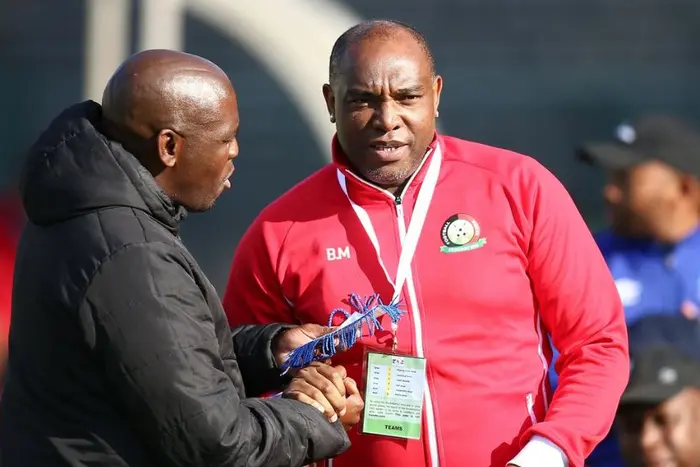
Image source: Soccer Laduma
Benni McCarthy Harambee Stars results 2026 have come under renewed scrutiny following a disappointing September–October international window that exposed Kenya’s competitive limitations ahead of the 2027 Africa Cup of Nations. The South African coach has overseen progress in some areas since his appointment in March 2025, but inconsistent results, preparation challenges and questions about the national team’s ambitions have intensified the debate over his leadership.
McCarthy’s recent assessment that Kenya lacks the resources and squad strength to challenge Africa’s leading football nations has added another dimension to the discussion. With Kenya set to co-host AFCON 2027 alongside Uganda and Tanzania, supporters want a competitive national team capable of making home advantage count.
PAY ATTENTION: Follow Kenya Frontline WhatsApp channel for more news
The central question is no longer simply whether McCarthy can improve individual performances. It is whether his technical project can deliver measurable progress before the continental tournament begins.
Benni McCarthy Harambee Stars Record: The Numbers Behind His Tenure
Appointed in March 2025, McCarthy arrived with an impressive playing career and experience as a coach at Manchester United. His appointment raised expectations that Kenya could develop a more organised, confident and technically competitive team.
According to publicly available match results, his record stood at 23 matches, eight wins, seven draws and eight losses following the 0-0 friendly draw against Rwanda on October 5, 2026. This updates the earlier 22-match tally of seven wins, seven draws and eight losses.
The figures represent a mixed record. Kenya have produced encouraging performances, including convincing victories against lower-ranked opposition, but have struggled to maintain consistency against stronger teams and in matches carrying significant competitive pressure.
| Competition | Matches Managed | Win/Draw/Loss Record |
|---|---|---|
| 2026 FIFA World Cup qualifiers | 8 | 2 wins, 3 draws, 3 losses |
| African Nations Championship (CHAN) | 5 | 3 wins, 1 draw, 1 loss* |
| International friendlies | 8 | 3 wins, 2 draws, 3 losses |
| AFCON 2027 qualifiers | 2 | 0 wins, 1 draw, 1 loss |
| Total | 23 | 8 wins, 7 draws, 8 losses |
The CHAN quarter-final against Madagascar ended in a draw before Kenya lost the penalty shootout. The competition breakdown should be cross-checked against the official match register before publication.
The overall record is more revealing than any individual result. Kenya have won approximately 35 per cent of their matches under McCarthy, while losses account for roughly 35 per cent. Draws make up the remaining 30 per cent.
Read Also: Pharmacy Board Looks to Shape Future of Pharmaceutical Practice
The statistics do not establish that the coach has failed, but they demonstrate that sustained improvement remains a work in progress. The CAF report on McCarthy’s first Harambee Stars squad outlined his intention to combine experienced internationals with emerging players.
That approach offers a reasonable foundation for rebuilding. However, a development project must eventually translate into results, particularly when a country is preparing to host Africa’s biggest football tournament.
September–October Results Expose Kenya’s Competitive Gap
Kenya entered the September–October 2026 international window with an opportunity to strengthen their preparations for AFCON 2027. Instead, the three matches delivered one draw, one defeat and another draw.
Harambee Stars opened their AFCON qualifying campaign with a 1-1 draw against Eritrea at Nyayo National Stadium on September 26. The result was disappointing for a home side expected to take control of the contest, particularly given the importance of building confidence before the tournament.
Kenya subsequently lost 1-0 to Guinea on October 1, failing to secure a positive result away from home. The team then drew 0-0 against Rwanda in Kigali on October 5.
The sequence raised concerns about attacking efficiency, consistency and the ability to convert promising passages of play into victories. The reported Rwanda friendly assessment highlighted the difficulty Kenya experienced in finding the net.
Three matches cannot provide a complete assessment of a coach’s work, but their timing matters. The AFCON countdown is advancing, and Kenya need more than competitive spells to convince supporters that the team is moving towards the required standard.
The failure to win any of the three matches also increased the pressure on McCarthy to demonstrate that his tactical ideas can produce consistent performances under difficult circumstances.
Resignation Pressure: Should McCarthy Be Judged Yet?
Calls for accountability are understandable when results disappoint, particularly with a major tournament approaching. Nevertheless, demands for McCarthy to resign should be separated from the evidence required to determine whether his tenure has become untenable.
The coach has been candid about Kenya’s limitations. In comments reported on October 8, he argued that the country does not currently possess the resources or squad strength to compete on equal terms with established continental powers such as Morocco, Egypt, Côte d’Ivoire and Senegal.
The report published by The Standard captured the debate surrounding his assessment.
Read Also: KNEC Grade 10 Assessment 2026: Guidelines, Timelines & School Requirements
His argument has merit. Football development depends on player quality, professional infrastructure, competitive domestic leagues, consistent training and adequate preparation time. A coach cannot manufacture all these conditions within a short period.
However, public communication is also part of international management. When supporters hear that their national team is not strong enough to challenge Africa’s leading sides, they need to understand what the coach intends to do about it.
Joined @MetroFMSA with @AndileNcube on Sports Night Amplified yesterday to discuss East Africa’s readiness for AFCON 2027.
The plain truth? Kenya is simply not ready yet.
Time is ticking.
#AFCON2027 #KenyaFootball #AfricanFootball #SportsBiz #MetroFM #PamojaBid https://t.co/ufya5s0Rq6
— Festus Chuma (@fessychuma) October 8, 2026
Acknowledging weaknesses is not the same as accepting mediocrity. McCarthy must explain the milestones Kenya can realistically achieve, the improvements he expects from his players and the standards by which his progress should be judged.
The federation must also accept responsibility for the conditions in which the team operates. Preparation disputes, administrative shortcomings and outstanding player payments cannot simply be treated as coaching problems.
The Daily Nation’s report on the Eritrea qualifier highlighted McCarthy’s concerns about inadequate preparation and off-field distractions.
A fair assessment must therefore examine both the coach’s decisions and the federation’s contribution to the team’s performance.
Squad Transition: Building Beyond Established Names
One of McCarthy’s most important responsibilities has been to develop a squad capable of competing beyond the immediate tournament cycle.
Kenya have traditionally depended heavily on experienced players, including captain Michael Olunga, while searching for a reliable generation of replacements. McCarthy’s early squad selections showed an interest in blending senior internationals with younger prospects.
The challenge is to make that transition productive rather than disruptive.
Young players need opportunities, but they also require clearly defined roles, appropriate support and exposure to competitive matches. Introducing emerging talent without establishing a coherent tactical structure risks producing a team that lacks both experience and identity.
McCarthy must identify players who can perform consistently in central defence, midfield and attack, while building depth in positions where Kenya have struggled to maintain standards.
The domestic league also has a crucial role to play. Coaches cannot rely exclusively on international camps to develop players who spend most of their time with their clubs. Stronger cooperation between the national team technical bench and local clubs would help establish consistent expectations around fitness, tactical discipline and technical development.
Kenya’s run at CHAN 2024, played in 2025, provided encouraging evidence that locally based players can compete against quality opposition. Victories over Morocco and Zambia demonstrated the value of collective organisation and belief.
Those performances, however, should be treated as a starting point rather than proof that the national team has solved its wider problems.
Tactical Framework: What Must Improve Before AFCON 2027?
McCarthy’s playing philosophy must become more identifiable in competitive matches. Supporters need to see a team that understands when to press, how to progress the ball and how to respond when opponents disrupt its preferred approach.
Against stronger African sides, Kenya are unlikely to dominate every match. Tactical flexibility will therefore be essential.
The defence must improve its concentration, especially during transitions and set pieces. Midfielders must offer reliable passing options under pressure, while the attacking unit needs better movement and more decisive finishing.
The recent goalless draw against Rwanda underlined the importance of attacking efficiency. Possession and promising openings have limited value if they do not lead to goals.
McCarthy should also establish a clear hierarchy of performance standards. Every player must understand the physical, tactical and technical requirements of the national team, with selection based on current form and suitability rather than reputation alone.
The Football Kenya Federation should support this process by ensuring that international camps are organised early, travel arrangements are reliable and the technical bench has sufficient time to prepare players.
Preparation is particularly important for a host nation. Kenya cannot assume that playing at home will automatically compensate for deficiencies in organisation or squad depth.
AFCON 2027 Readiness: Ambition Must Match Preparation
Kenya’s status as a co-host creates an opportunity to change the country’s footballing reputation. It also exposes the national team to greater scrutiny because supporters will expect a meaningful performance on home soil.
The objective should not be to demand that McCarthy guarantee an AFCON title. That would be unrealistic given the gap between Kenya and several established continental powers.
Equally, the coach cannot use the quality of those opponents as a permanent explanation for disappointing performances. Kenya need achievable targets that demonstrate progress before the tournament begins.
These should include improved results against comparable African opposition, greater attacking productivity, fewer defensive errors and a settled core of players who understand the team’s tactical approach.
The federation must complement those objectives with a reliable programme of friendlies, properly organised training camps and transparent communication about preparations.
Kenya’s participation in the AFCON qualifying campaign also provides useful competitive experience, even though the three co-hosts have already secured places at the finals. The matches should be used to test combinations and identify weaknesses rather than treated as routine fixtures.
McCarthy’s contract and long-term development ambitions also make succession planning relevant. A sustainable national team should not depend entirely on one coach. His work must leave behind improved structures, a stronger player pool and a recognisable footballing identity.
Verdict: McCarthy Needs Results, Not Resignation Speculation
Benni McCarthy’s Harambee Stars tenure has produced encouraging victories, opportunities for younger players and valuable lessons about the level required to compete internationally. It has also delivered inconsistent results and a recent run that has intensified scrutiny.
The updated 23-match record of eight wins, seven draws and eight losses offers a balanced picture: Kenya have demonstrated potential but have yet to establish the consistency expected of an emerging continental contender.
Calls for resignation should not replace a serious evaluation of performance. The more useful question is whether McCarthy, Football Kenya Federation and the wider football administration can address the problems exposed by the recent results.
Read Also: Kenyan marathoner remanded over Ksh8 million land fraud case
The coach must sharpen the team’s tactical identity, improve attacking efficiency and set realistic performance targets. The federation must provide the conditions necessary for that work to succeed.
AFCON 2027 will ultimately judge Kenya on what happens on the pitch, not on promises or explanations. McCarthy has time to strengthen the team, but that time must produce visible improvement.