
Grade 9 KJSEA Assessment Timetable 2026: KNEC Examination Rehearsal Schedules Candidate Conduct Guidelines

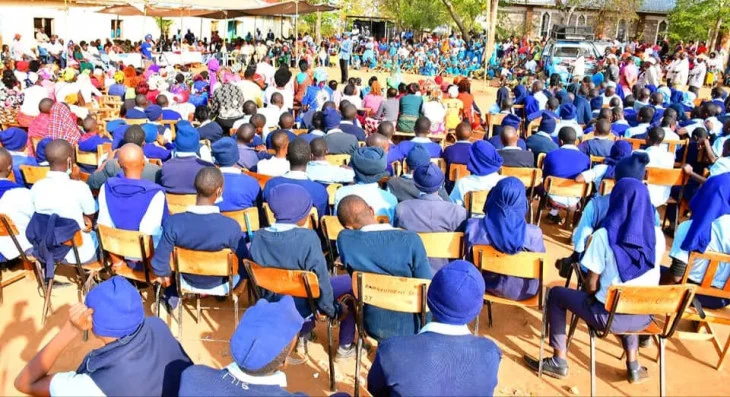
Learners in school. PHOTO/PD Daily
The Kenya National Examinations Council (KNEC) is preparing for a major national assessment exercise as Grade 9 learners get ready to sit the 2026 Kenya Junior School Education Assessment (KJSEA), with written papers scheduled from Monday, October 26, to Friday, October 30.
The assessment will take place during a busy national examination season that also includes the Kenya Certificate of Secondary Education (KCSE), the Kenya Primary School Education Assessment (KPSEA) and other national assessments. KNEC has reported approximately 3.6 million registered candidates across the 2026 examination and assessment programmes, creating a substantial logistical undertaking for schools, examination officials and education authorities. The Standard reported on the national examination preparations.
Read Also: KNEC Grade 10 Assessment 2026: Guidelines, Timelines & School Requirements
For Grade 9 learners, the assessment marks an important stage in the Competency-Based Education (CBE) system as they complete Junior School and prepare for the transition to Senior School. Schools are now expected to finalise candidate preparations, confirm examination arrangements and ensure learners understand the instructions governing the assessment.
The official KNEC timetable schedules the KJSEA rehearsal for Friday, October 23, three days before the first written papers. The council has published the 2026 KJSEA timetable and examination instructions, which outline the assessment dates, paper durations and arrangements for candidates requiring special examination formats.
KJSEA 2026 Rehearsal Set for October 23
The Friday rehearsal is an important part of the final preparations for Grade 9 candidates. It allows learners and examination-centre personnel to familiarise themselves with the procedures that will govern the written assessment period.
During the exercise, schools can confirm seating arrangements, candidate identification, attendance procedures and the organisation of examination rooms. Centre managers and supervisors also have an opportunity to clarify instructions before the first paper is administered.
Candidates should use the rehearsal to understand how they will be guided into the examination room, where they should sit and how they are expected to handle their assessment materials. Learners should also confirm their assessment details and seek clarification from authorised teachers if they encounter discrepancies.
The rehearsal should not be treated as an additional teaching day or an opportunity to circulate unauthorised examination materials. Its primary purpose is to prepare candidates and examination personnel for the official assessment procedures.
Parents can support the process by ensuring learners arrive at school on time, have the necessary stationery and receive adequate rest ahead of the written papers.
Grade 9 KJSEA Timetable: October 26–30
The written assessment begins on Monday, October 26, with English Language and English Composition and Literary Analysis. The following days cover Kiswahili, Kenyan Sign Language, Mathematics, Agriculture, Integrated Science, Social Studies, Creative Arts and Sports, Pre-Technical Studies and religious education.
The timetable includes designated durations for candidates using Braille and, where applicable, candidates who are hearing impaired. Schools should consult the official document rather than rely solely on general summaries when planning for individual learners.
Daily assessment schedule
| Date | Scheduled papers | Key times |
|---|---|---|
| Monday, October 26 | English Language; English Composition and Literary Analysis | 8:30 a.m.; 11:10 a.m. |
| Tuesday, October 27 | Kiswahili Lugha or Kenyan Sign Language; Kiswahili composition and literature or the corresponding sign-language paper | 8:30 a.m.; 11:10 a.m. |
| Wednesday, October 28 | Mathematics; Agriculture | 8:30 a.m.; 11:30 a.m. |
| Thursday, October 29 | Integrated Science; Social Studies; Creative Arts and Sports | 8:30 a.m.; 11:10 a.m.; 2:00 p.m. |
| Friday, October 30 | Pre-Technical Studies; religious education; Integrated Science Paper 2 | 8:30 a.m.; 11:10 a.m.; 2:00 p.m. |
Times are based on the published KNEC timetable. Candidates should check the official document for paper durations, subject-specific arrangements and any instructions applicable to their assessment format.
The schedule requires learners to manage several papers across the five-day period. Schools should ensure candidates understand the order of their assessments and the time allocated to each paper.
The first session generally begins at 8:30 a.m. Candidates should arrive sufficiently early to complete the required attendance and examination-centre procedures before the scheduled start.
Assessment Projects Were Scheduled Before Written Papers
Not every component of the KJSEA takes place during the October examination window. Some practical and project-based assessments are scheduled earlier in the year.
According to the official timetable, the Creative Arts and Sports project was scheduled across May to July 2026. Agriculture and Pre-Technical Studies projects were also scheduled for July.
Read Also: Top Comoros Official Hospitalized in Nairobi Amid Rising Tensions in Moroni
This arrangement means the October written papers form part of a broader assessment process rather than the entire KJSEA programme. Learners and parents should therefore avoid assuming that every subject is assessed exclusively through a conventional written examination.
The approach reflects the wider CBE emphasis on assessing learners through different forms of evidence, including practical work and projects where applicable.
Candidate Conduct Rules Every Grade 9 Learner Should Know
Following the timetable is only one part of examination preparation. Candidates must also observe KNEC instructions designed to protect the integrity of the assessment and ensure that learners complete their work under consistent conditions.
Arrival and punctuality: Candidates should arrive early enough to be seated and ready before the examination begins. The official instructions set out procedures for late arrivals and the circumstances under which admission may be considered. Learners should not assume that arriving late automatically guarantees entry.
Correct identification: Candidates must follow instructions on identifying themselves and completing the required details on their answer booklets. Names and assessment numbers should be entered accurately in the designated spaces.
Writing materials: Learners should bring the permitted stationery required for their papers. Responses should follow the writing-instrument instructions, with pencils used where appropriate for diagrams or other specified tasks. Candidates should not bring unauthorised notes or materials into the examination room.
Electronic devices: Mobile phones and unauthorised electronic communication devices are prohibited under examination rules. Learners should leave such items outside the assessment room in accordance with their centre’s instructions.
Communication and assistance: Candidates must not communicate with other learners, exchange materials or seek unauthorised assistance during an assessment. Questions about examination procedures should be directed to the authorised supervisor, without seeking help with answers.
Handling examination materials: Question papers and answer scripts must be handled according to the instructions given at the assessment centre. Candidates should not remove examination materials from the room unless expressly permitted.
Time management: Learners should read the instructions carefully, distribute their time across the questions and ensure they attempt the required sections. They must follow the time limits printed in the timetable and question papers.
KNEC states that the time allowed for each paper is specified in the timetable and that no additional time should be given beyond the applicable duration. Where the timetable and question paper contain a discrepancy, the official instructions identify the question paper’s stated duration as the reference.
Examination Malpractice Carries Serious Consequences
KNEC’s examination regulations prohibit conduct that compromises the fairness or security of an assessment. This includes impersonation, unauthorised communication, possession of prohibited materials and the disclosure of confidential examination content.
The consequences can extend beyond the cancellation of results in an affected paper. Depending on the nature and extent of an irregularity, penalties under the applicable law may affect a candidate’s subject results, the wider assessment centre or individuals involved in facilitating malpractice.
Candidates should therefore resist pressure to obtain leaked papers or participate in examination-related misconduct. Parents and teachers also have a responsibility to encourage honest preparation rather than promote shortcuts that could jeopardise a learner’s results.
Schools should ensure examination personnel understand their responsibilities and report suspected irregularities through the appropriate official channels. Consistent enforcement of the rules is essential to maintaining public confidence in national assessments.
KNEC, Schools Prepare for a Nationwide Examination Season
The administration of the KJSEA alongside KCSE and other national assessments places significant demands on examination-centre managers, supervisors, invigilators and education officials.
KNEC’s official timetable portal provides the published schedules for KJSEA, KCSE, KPSEA, KILEA and KPLEA, allowing schools and families to consult the relevant documents for each assessment.
The scale of the 2026 exercise makes coordination particularly important. Examination materials must be handled securely, candidate records must be accurate, and assessment centres must be prepared to accommodate learners, including those who require approved special arrangements.
Read Also: KNEC Grade 10 Assessment 2026: Guidelines, Timelines & School Requirements
For Grade 9 candidates, the immediate priority is to use the final days before October 26 productively. Revision should focus on the subjects covered by the timetable, while adequate sleep, punctuality and familiarity with examination procedures can help learners approach the assessment in a composed manner.
The assessment also represents a significant milestone for families following the transition from Junior School to Senior School. Clear communication from schools and reliance on official KNEC instructions will help prevent confusion over examination dates, paper times and candidate requirements.