
Unity Over Exclusion: Inside Bonface Ambani’s Push for Dialogue in Kenyan Football

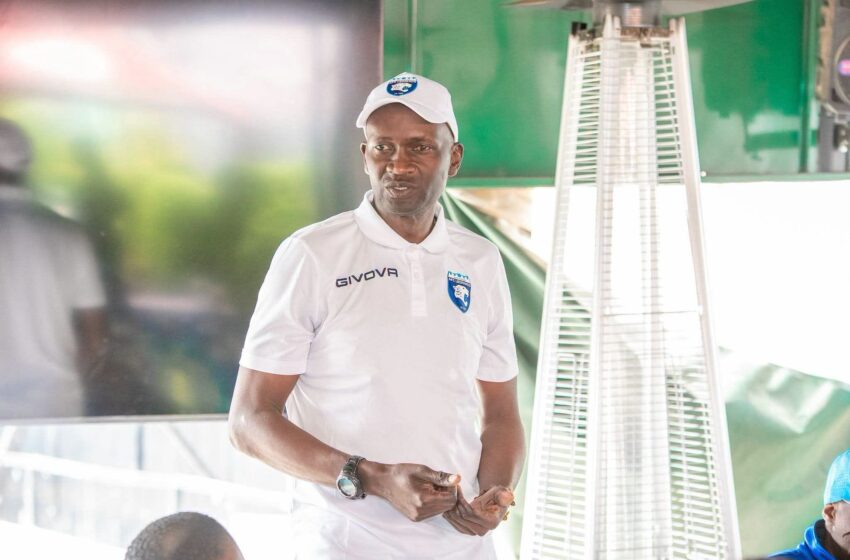
Bonface Ambani
A dramatic day in Kenyan football administration has exposed the deep divisions within the Football Kenya Federation (FKF), but AFC Leopards chairman Bonface Ambani has emerged with a different message: reconciliation must take precedence over political disagreements.
Ambani became the only delegate to oppose the removal of FKF Vice President McDonald Mariga and six other National Executive Committee (NEC) members during Saturday’s Special General Meeting (SGM) held in Meru on November 7, 2026.
The former Harambee Stars striker stood apart from the majority as delegates voted on the proposed expulsion of the seven officials, making a solitary statement against what he considered an approach that could deepen the divisions affecting Kenyan football.
“I wouldn’t have wished our football to be where it is today,” Ambani stated. “Whatever I saw here today in the morning, on the side of McDonald Mariga vice president, to me that was no. But I believe we still have room to sit down and sort our football together”.
Read Also: Pharmacy Board Looks to Shape Future of Pharmaceutical Practice
His position reflected a growing concern about the direction of football administration in the country, particularly at a time when Kenya is preparing for major continental responsibilities, including hosting the 2027 Africa Cup of Nations (AFCON).
Ambani Rejects the Politics of Exclusion
The AFC Leopards chairman made it clear that his opposition was not simply about protecting individual office holders but about preserving an environment in which football administrators could disagree without turning disagreements into prolonged institutional battles.
He argued that leadership comes with the responsibility of accommodating different opinions, particularly when individuals occupy positions that require collective decision-making.
“I wouldn’t like to see FIFA coming to sort out our problems here,” he added. “Anybody who gets into power, anybody who gets into position, always must learn to accommodate each other and must be ready to fight for our football from within before even deciding to go outside”.
The remarks highlighted Ambani’s preference for locally negotiated solutions rather than allowing internal disagreements to escalate into disputes requiring intervention from international football authorities.
His position also raises questions about whether the federation’s leadership can rebuild working relationships following months of disagreements involving its senior officials.
What Happened at the Meru Special General Meeting?
The meeting at Three Steers Hotel in Meru followed months of tension within the federation, with disagreements between FKF President Hussein Mohammed and a group of NEC members becoming increasingly difficult to contain.
The dispute intensified in April 2026 when Mariga and eight other NEC members reportedly convened a meeting that resolved to suspend Mohammed, NEC member Yusuf Ibrahim and acting Chief Executive Officer Dennis Gacheru.
Those resolutions were rejected by FIFA, which questioned whether the required procedures had been followed and urged the warring parties to pursue dialogue.
Attempts to reconcile the opposing sides did not produce a lasting resolution, eventually setting the stage for the November 7 gathering.
Saturday’s meeting was expected to address allegations of constitutional violations against Mariga and six other NEC members. The officials named were Nairobi representative Dan Shikanda, Coast representative Gabriel Mghendi, Central representative Robert Macharia, Nyanza representative Collins Kalee, Rift Valley representative Bernard Lagat and women’s representative Violet Kerubo.
The proceedings, however, were overshadowed by a tense morning involving security deployments, claims that some delegates had been denied access and the use of tear gas as police moved to control the situation.
The meeting eventually proceeded, with 65 delegates voting in favour of Mariga’s removal, while Ambani registered his opposition. The other six officials also faced removal motions, which received overwhelming support.
The Player Must Come Before Administrative Battles
Beyond the vote itself, Ambani’s intervention touched on a fundamental question about the purpose of football leadership: whether administrators are prioritising the development of the game or allowing institutional disagreements to consume their attention.
Kenyan football continues to face challenges involving domestic league administration, player development, infrastructure, competition management and the financial sustainability of clubs.
These issues require cooperation between the federation, clubs, county branches, sponsors and other stakeholders.
Ambani’s argument is that prolonged disagreements at the administrative level risk diverting attention from the people whose careers and livelihoods depend on the sport.
The country’s footballers need functional competitions, reliable structures and an environment that allows them to develop their abilities without being caught up in leadership disputes.
Read Also: KNEC Grade 10 Assessment 2026: Guidelines, Timelines & School Requirements
That concern is particularly significant for the FKF Premier League, whose clubs depend on predictable competition calendars and effective federation management to plan their seasons.
The ongoing disagreements also come at a time when Kenya needs to demonstrate organisational stability ahead of AFCON 2027, which the country will co-host with Uganda and Tanzania.
FIFA’s Shadow and the Cost of Prolonged Disagreements
Ambani’s warning about FIFA intervention carries considerable weight given the history of football administration disputes in Kenya.
FIFA’s involvement in national federation affairs is not without consequences. International football’s governing body expects member associations to operate independently and in accordance with their statutes, while also requiring adherence to its governance principles.
The earlier rejection of the April resolutions demonstrated the importance of following established procedures when dealing with internal disciplinary and leadership matters.
Ambani’s preference for resolving disputes internally therefore presents a challenge to both sides of the FKF divide: political differences must not become an obstacle to institutional responsibility.
However, dialogue alone cannot replace constitutional processes. Any lasting agreement must respect the FKF constitution, procedural fairness and the rights of all affected officials.
Reconciliation will require more than public appeals. It will demand genuine engagement, accountability and a willingness to recognise opposing views.
A Difficult Road Ahead for Kenyan Football
The consequences of the Meru meeting are unlikely to disappear immediately. The expelled officials and their supporters have questioned aspects of the proceedings, while reports indicate that the affected faction is considering legal action.
This introduces another layer of uncertainty for an institution already dealing with significant administrative disagreements.
The immediate challenge for FKF leadership will be ensuring that the decisions taken in Meru do not trigger another prolonged confrontation that distracts from the federation’s responsibilities.
For Ambani, the solution lies in recognising that football administration should not operate on the principle that one side must completely eliminate the other.
His solitary vote may not have changed the outcome of the meeting, but it offered a contrasting position at a moment when the federation was moving towards a decisive break with seven of its senior officials.
Kenyan football needs leaders capable of managing disagreements without allowing them to undermine the game. It also needs institutions that can enforce accountability without compromising fairness.
With AFCON 2027 approaching and domestic football still facing several structural challenges, the country cannot afford endless battles over positions and influence.
Read Also: Top Comoros Official Hospitalized in Nairobi Amid Rising Tensions in Moroni
Ambani’s message from Meru was therefore bigger than his opposition to Mariga’s removal. It was a call for football stakeholders to recognise their shared responsibility and put the interests of the game ahead of personal and political differences.
https://www.youtube.com/watch?v=X375p76rEys
Whether the opposing camps will embrace that message remains uncertain. What is clear, however, is that Kenyan football needs more than another leadership contest. It needs stability, cooperation and a credible commitment to rebuilding trust.

