
Billions Elon Musk Is Fighting For as OpenAI Legal Battle Intensifies in Court

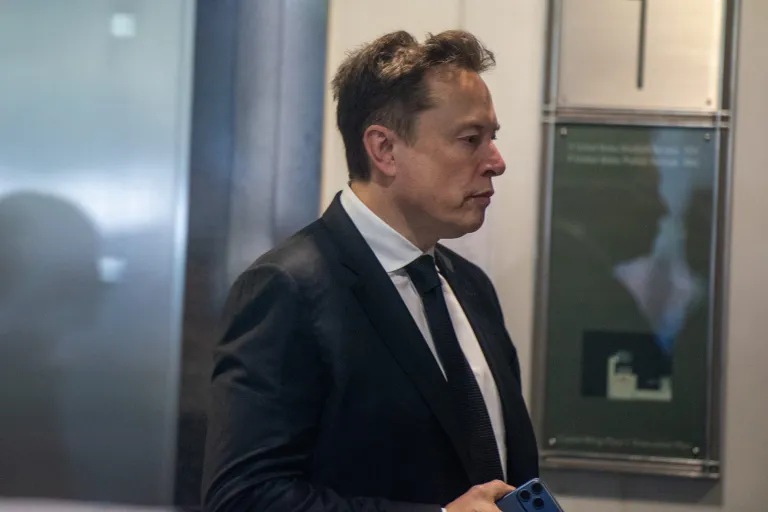
Elon Musk arriving at the OpenAI trial. IMAGE/ Getty
Elon Musk has intensified his legal confrontation with OpenAI and Microsoft demanding $150 billion in damages in one of the most high-profile technology lawsuits in recent years.
According to CNN, the case centers on allegations that OpenAI abandoned its original nonprofit mission and shifted toward a profit-driven structure, contradicting the intentions of its early backers, including Musk himself.
The lawsuit has drawn global attention because of its potential to reshape how artificial intelligence companies are structured, funded, and governed.
OpenAI, now one of the world’s most valuable AI organizations, has grown rapidly through major partnerships and investments, including a multibillion-dollar relationship with Microsoft.
Origins of OpenAI and the Core of Musk’s Claim
The dispute traces back to 2015, when OpenAI was founded as a nonprofit research lab with the stated goal of ensuring artificial intelligence benefits humanity safely. Elon Musk was among its early financial supporters, contributing approximately $38 million during its initial development phase.
Musk now claims that he was led to believe OpenAI would remain a nonprofit organization focused on transparency and public benefit. However, according to his legal filing, the company gradually shifted away from this mission and began pursuing commercial partnerships and profit-based strategies.
A key point in the case is OpenAI’s transformation into a more complex corporate structure. The organization now operates as a public benefit corporation, where both nonprofit and for-profit elements coexist. Musk argues that this restructuring fundamentally altered the company’s purpose and breached its original commitments.
He has also raised concerns about Microsoft’s growing influence over OpenAI. Microsoft has invested heavily in the company, reportedly committing around $10 billion, and provides critical cloud infrastructure and AI integration across its products. Musk’s legal team claims this partnership effectively gives Microsoft significant control over OpenAI’s direction, steering it further away from its founding ideals.
Courtroom Tensions and Competing Narratives
The trial has already featured intense courtroom exchanges, including direct questioning of Musk’s interpretation of OpenAI’s early structure. At several points, Musk challenged the framing of legal questions, arguing that they were misleading or overly simplistic. Judges intervened to maintain procedural clarity during testimony.
Musk has also alleged that OpenAI leadership, including CEO Sam Altman and president Greg Brockman, misrepresented the company’s long-term intentions. He claims that by late 2022, it became clear to him that OpenAI had fully embraced a commercial model, particularly as it expanded its partnership with Microsoft and prepared for large-scale monetization of its AI systems.
OpenAI, however, strongly disputes these claims. The company argues that Musk himself supported early discussions about transitioning toward a more scalable and commercially viable structure. Legal representatives for OpenAI also suggest that Musk’s current lawsuit may be influenced by competitive tensions, as he is the founder of his own AI company, xAI, which directly competes in the same industry.
Microsoft has similarly rejected the allegations, maintaining that its partnership with OpenAI is designed to support innovation and responsible AI development rather than control the company’s operations.
A Case That Could Reshape the AI Industry
Beyond the $150 billion in damages sought, Musk is also pushing for major structural changes, including restoring OpenAI’s nonprofit status and removing key executives from leadership positions. If successful, the case could significantly disrupt OpenAI’s planned initial public offering, which has been rumored to value the company at up to $1 trillion.
The outcome of the trial could set a major precedent for how early-stage agreements in the technology sector are interpreted, particularly in fast-moving fields like artificial intelligence. As AI systems become increasingly central to global economies, the question of whether such companies should prioritize public benefit or shareholder profit remains highly contested.
The trial is expected to continue for several weeks, with both sides preparing extensive testimony and evidence.