
Billions in New JKIA Financing Plan

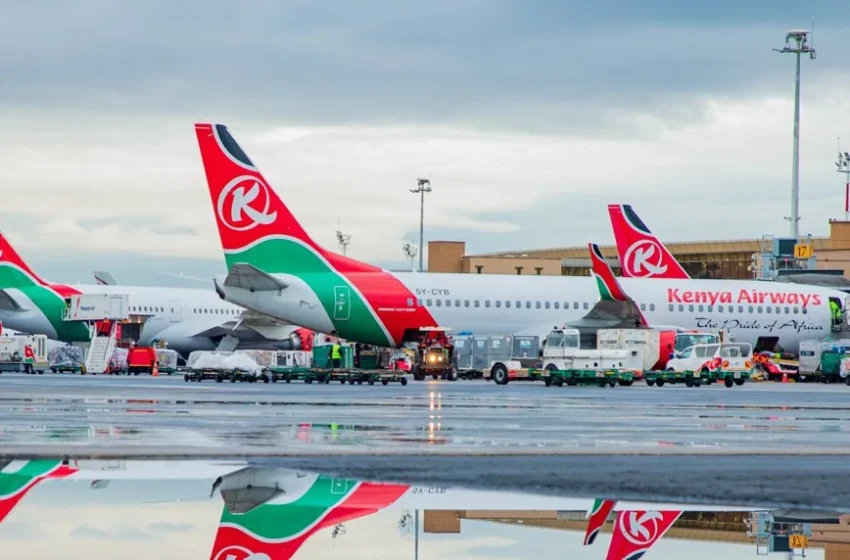
Kenya is changing how it plans to finance the long-awaited expansion of Jomo Kenyatta International Airport (JKIA), opting for a combination of borrowing, bonds and infrastructure funding as the government races to modernize the country’s busiest aviation hub while easing pressure on public finances.
The revised financing model marks a significant shift from the government’s earlier proposal, which had envisioned funding the project largely through a bond.
Instead, authorities will now rely on external borrowing to finance the bulk of the expansion, with the remaining funds expected to come from a securitised bond backed by airport passenger charges and the recently established National Infrastructure Fund.
Follow Kenya Frontline X account for more updates
The financing strategy comes as Kenya seeks to strengthen JKIA’s position as East Africa’s leading aviation gateway amid growing competition from neighboring countries investing heavily in modern airport infrastructure.
“KAA will put in 30 percent equity, and we’ll go to the market to borrow 70 percent… So, we’re basically leveraging the air passenger service charge tax, to basically sell a portion of that to raise the 30 percent, and we’ll go to the market with a bankable project to raise 70 percent,” said Roads and Transport Cabinet Secretary Davies Chirchir in an interview.
The government says the revised funding model is designed to ensure the airport expansion proceeds without placing excessive strain on the national budget, which has come under increasing pressure from rising debt obligations and competing development priorities.
Under the arrangement, the securitised bond will be supported by future revenue generated through the Air Passenger Service Levy. The levy, charged on both international and domestic passengers, provides a predictable source of income that can be used to reassure investors while helping raise capital for the project.
Officials believe the approach will allow Kenya to unlock private sector financing while maintaining momentum on one of the country’s most strategic infrastructure projects.
Read Also: Pharmacy Board Looks to Shape Future of Pharmaceutical Practice
Project Cost Reduced
The revised plan also comes with a lower project cost than initially projected.
Government officials estimate the expansion will now cost significantly less than earlier estimates after reviewing the scope of the project and exploring tax-efficient financing mechanisms.
“We also want to leverage on the National Infrastructure Fund argument that if they put in a portion of the investments, we can get a tax-free regime and we’ll be able to bring down the cost to an average of $900 million on account of bringing down the tax,” Mr Chirchir said.
The cost reduction is expected to make the project more financially sustainable while improving its attractiveness to lenders and investors expected to participate in financing the airport’s redevelopment.
The expansion is expected to include rehabilitation of existing airport infrastructure, improvements to runways and aprons, and construction of a modern passenger terminal capable of accommodating significantly more travelers than the current facilities.
Once completed, JKIA’s annual passenger handling capacity is projected to increase from approximately 7.5 million passengers to about 22 million, positioning the airport to handle future growth in regional and international air travel.
The expanded capacity is expected to reduce congestion, shorten passenger processing times and improve the overall travel experience for millions of travelers passing through Nairobi every year.
A New Direction After Adani Exit
The revised financing model follows the collapse of the government’s previous partnership with India’s Adani Group.
The earlier proposal would have seen the company finance and undertake the airport expansion before operating JKIA under a long-term lease agreement.
However, the deal was cancelled in 2024 after allegations against Adani Group founder Gautam Adani and several company executives in the United States triggered political debate and public scrutiny in Kenya.
Although U.S. authorities later dropped the case, the Kenyan government had already abandoned the arrangement and began exploring alternative financing options that would allow the project to proceed without the private concession model.
The latest plan reflects that change in direction, with the government retaining greater control over the airport while diversifying the project’s sources of funding.
To support the financing process, Kenya has engaged the Trade and Development Bank (TDB) and the Africa Finance Corporation (AFC) to help arrange funding for the airport redevelopment.
Read Also: Rio Ferdinand To Open International Doors For Arusha Through AFCON 2027
The involvement of the two financial institutions is expected to strengthen investor confidence while helping structure financing that aligns with Kenya’s long-term infrastructure ambitions.
Regional Competition Intensifies
The urgency to modernize JKIA comes at a time when East African countries are investing aggressively in aviation infrastructure to attract airlines, passengers and cargo operators.
Ethiopia continues to expand its aviation footprint through Addis Ababa, while Rwanda has positioned Kigali as a growing regional hub through major airport investments and an expanding national airline.
Kenya views JKIA as a critical economic asset that supports tourism, international trade, cargo movement and business travel.
Industry analysts argue that maintaining a competitive airport is essential if Nairobi is to preserve its status as one of Africa’s leading aviation gateways.
A larger and more efficient airport would also support Kenya’s ambition of increasing visitor arrivals, expanding exports of fresh produce and flowers, and strengthening Nairobi’s role as a regional business destination.
New Financing Models Take Centre Stage
The revised JKIA funding strategy reflects a broader shift in how Kenya intends to finance major infrastructure projects.
With limited fiscal space and growing debt-servicing obligations, the government has increasingly turned to innovative financing mechanisms, including Public-Private Partnerships (PPPs), infrastructure funds and securitised bonds.
Under securitisation, future revenue generated from an existing levy or fund is packaged into financial securities and sold to investors, allowing governments to access capital without relying entirely on conventional borrowing.
In the case of JKIA, future proceeds from the Air Passenger Service Levy will provide security for the bond, offering investors confidence that repayments will be supported by predictable revenue from airport operations.
Government data shows the levy generated billions of shillings during the financial year ending June 2025, highlighting its importance as a reliable funding source.
Read Also: What Starlink Subscription Means for Kenya’s Broadband Market & Digital Shift
Meanwhile, China Road and Bridge Corporation (CRBC), the company behind landmark projects such as the Standard Gauge Railway, the Nairobi Expressway and the ongoing Rironi-Mau Summit highway, has been identified to undertake construction works at the airport.
Notably, the revised project has dropped earlier plans to build a second runway, with the government indicating that investment can be deferred until passenger traffic grows to levels that justify the additional infrastructure.