
Cape To Cairo: How A Marathon Is Redefining Tanzania’s Tourism Narrative

By Kennedy Lucas
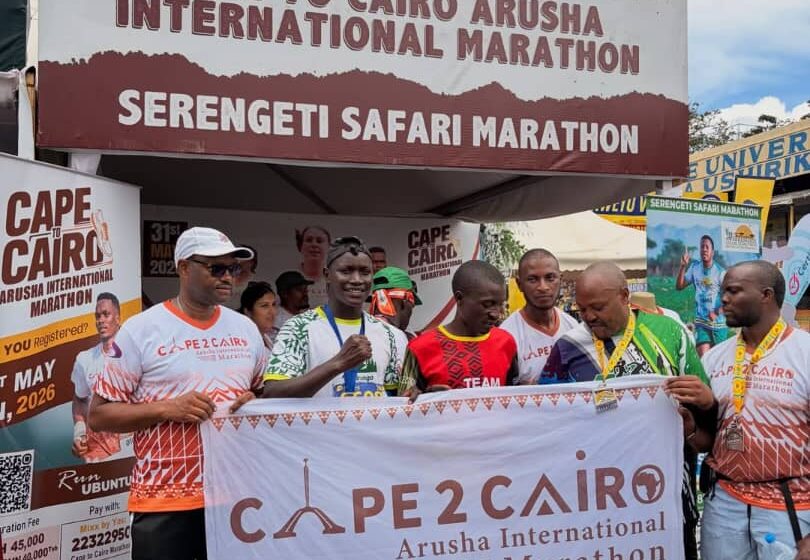
At first glance, it is a race, but in reality, the Cape to Cairo Marathon has evolved into a strategic engine driving Tanzania’s tourism ambitions onto both the continental and global stages.
Set against the dramatic backdrop of Arusha, widely regarded as Tanzania’s safari capital,the second edition of the Cape to Cairo Arusha International Tourism and Cultural Festival is poised to transform the northern city into a vibrant hub of sport, culture and commerce in May 2026.
More than 5,000 participants from across Africa and beyond are expected to converge, underlining the event’s growing stature as a Pan-African spectacle.
Staged at the iconic Sheikh Amri Abeid Memorial Stadium, the marathon is being positioned not merely as a competition, but as a powerful instrument for economic activation,one designed to stimulate intra-African tourism, deepen cultural exchange and elevate East Africa’s profile as a unified destination for travel and investment.
For Tim Mdinka, event organiser, the vision is both deliberate and ambitious. Speaking to Kenyafrontline.com, he emphasised that the initiative is ultimately about inclusive growth and community impact.
“This is about ensuring tourism benefits reach ordinary people,boda-boda riders, food vendors, cultural performers and small hotel owners. We want the economic impact to be felt at the grassroots level.”
A City On The Rise

The timing of the event could hardly be more significant. In 2025, CNN Travel named Arusha among the Top 20 places to visit in 2026,one of only two African destinations to earn the distinction, alongside Tassili n’Ajjer in Algeria.
Such recognition underscores a broader shift. Long perceived as a gateway to Tanzania’s famed wilderness, Arusha is now emerging as a destination in its own right,dynamic, diverse and increasingly sophisticated.
Nestled at the foothills of Mount Meru, the city serves as the launchpad to some of Africa’s most celebrated natural wonders, including Serengeti National Park and the Ngorongoro Conservation Area. The nearby Arusha National Park,renowned for its tranquil Momella Lakes and roaming giraffes,adds yet another layer to its appeal.
At the heart of this ecosystem lies the Ngorongoro Crater, often described as Africa’s “Garden of Eden” and widely regarded as one of the world’s most extraordinary natural landscapes.
Sport As A Catalyst

The Cape to Cairo initiative is as symbolic as it is practical. Stretching conceptually from Cairo in the north to Cape Town in the south, it reflects a broader vision of continental connectivity,one where sport becomes a unifying thread linking economies, cultures and people.
Arusha’s strategic geographic position between these two iconic cities reinforces its role as a natural midpoint in this narrative.
Crucially, the event aligns with the onset of East Africa’s peak tourism season, ensuring maximum visibility and economic impact. It will also run in tandem with the Karibu-Kili Fair, one of the region’s leading tourism trade exhibitions organised by KiliFair Promotion Co.
The deliberate scheduling is expected to extend visitor stays into early June, effectively creating a two-week corridor of tourism and business activity,an ecosystem designed to amplify returns for the local economy.
Infrastructure And Ambition

Beyond its natural assets, Arusha is investing heavily in its sporting infrastructure. The soon-to-be-completed Samia Suluhu Hassan Stadium, with a capacity of 30,000, is expected to significantly enhance the city’s ability to host major international events.
This development comes at a pivotal moment, as Tanzania prepares to co-host the Africa Cup of Nations 2027—a tournament widely seen as a transformative opportunity for sports tourism across the region.
Organisers believe the Cape to Cairo festival will serve as a vital stepping stone, helping to cultivate a culture of active tourism while positioning Tanzania as a competitive player in the global sports events market.
Beyond The Finish Line
Yet the true ambition of the festival lies beyond the race itself.
Scheduled to run from May 28 to June 3, 2026,with the marathon taking centre stage on May 31—the week-long programme will feature cultural performances, sports tourism showcases and a high-level summit bringing together policymakers and business leaders to explore opportunities within the East African Community.
Behind the scenes, collaboration has been extensive. Stakeholders range from the Tanzania National Parks Authority and the Ngorongoro Conservation Area Authority to the Tanzania Wildlife Authority, Tanzania Forest Services Agency and the National Museum of Tanzania,a coalition reflecting the scale and seriousness of the initiative.
Underpinning it all is the philosophy of Ubuntu: a distinctly African ethos that emphasises community, shared value and collective progress.
A Continental Vision

Often dubbed the “Geneva of Africa” because of its long-standing diplomatic role, Arusha is now rewriting its identity,emerging as a premier gateway not only for safaris, but for cultural exchange and cross-border commerce.
For Mdinka and his team, however, success will not be measured in prestige, but in impact.
“When visitors come, we want everyone to feel the benefit—from transport operators to small businesses. That is the real finish line.”
With strong government backing and growing private-sector partnerships, the Cape to Cairo Arusha International Festival is rapidly evolving into more than a sporting event. It is becoming a continental platform,one that seamlessly connects culture, commerce and communities from the southern tip of Africa to its northern shores.
Prices For Marathon Winners
To further elevate its competitive appeal, organisers have unveiled a detailed prize structure. In the 42km full marathon (men and women), the winner will receive TSh5,000,000, second place TSh2,000,000, third place TSh1,000,000, fourth TSh500,000, fifth TSh300,000, sixth and seventh TSh100,000 each, while positions eight to ten will each take home TSh50,000.
In the 21km half marathon, winners will earn TSh3,000,000, second place TSh1,000,000, third TSh500,000, fourth TSh300,000, fifth TSh200,000, and sixth to tenth positions will each receive TSh50,000—an incentive structure that not only rewards excellence but reinforces Arusha’s ambition to become a leading destination for international road racing.