
Court Awards 21 Students Compensation After Missing Exam Scripts Delayed Graduation

PHOTO/LSK
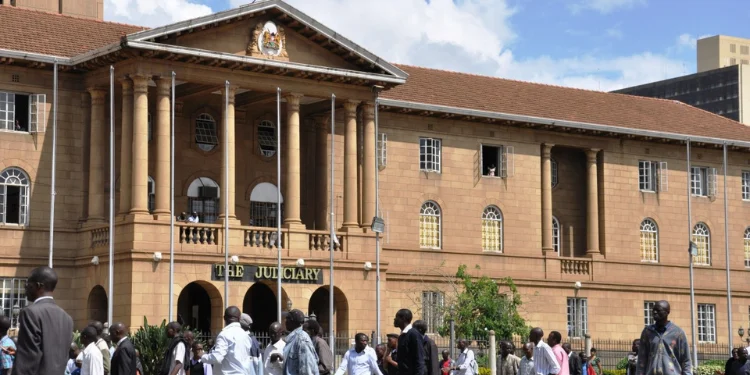
The Court of Appeal has found that the Technical University of Kenya (TUK) violated the constitutional right to fair administrative action of 21 students whose graduation was delayed by a year after their examination scripts went missing.
In a judgment delivered by Justices Daniel Musinga, Mumbi Ngugi and Francis Tuiyott, the appellate court upheld the finding that the university failed to handle the matter with the urgency it deserved. However, it reduced the compensation awarded to each student from Sh148,764 to Sh50,000, saying the initial award was not supported by sufficient evidence.
Read Also: Pharmacy Board Looks to Shape Future of Pharmaceutical Practice
The dispute dates back more than a decade and centres on missing mathematics examination scripts that disrupted the academic progression of dozens of diploma students at the institution.
Follow Kenya Frontline X account for more updates.
Missing Scripts Triggered One-Year Graduation Delay
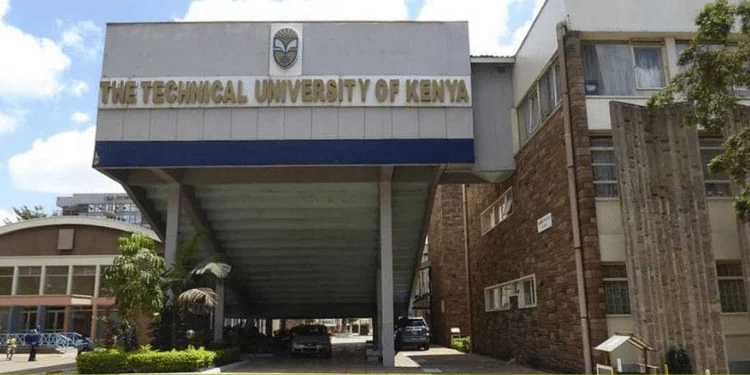
The case arose from a compulsory mathematics examination taken in 2012 by 72 diploma students in the School of Mechanical and Mechatronics Engineering.
According to court records, a lecturer failed to submit the examination marks, leaving the university unable to process the results for the affected students. The missing scripts forced the institution to organise a supplementary examination in January 2015, effectively pushing graduation for the affected students by one year.
Twenty-one students moved to the High Court after they were excluded from the December 2014 graduation list despite having progressed to their final year of study.
The students argued that the university had violated their constitutional rights by failing to communicate the problem promptly and by denying them the opportunity to graduate alongside their classmates.
They maintained that they had legitimately expected to complete their studies on time, especially after being allowed to continue with their academic programme despite the unresolved examination issue.
In 2019, the High Court ruled in favour of the students, finding that the university had violated both their right to fair administrative action and their right to human dignity.
Each student was awarded Sh148,764 in compensation.
TUK challenged that decision before the Court of Appeal, arguing that it should not be held responsible for the disappearance of the examination scripts.
Judges Fault University’s Slow Response
While considering the appeal, the three-judge bench agreed that there was no evidence showing the university itself was responsible for the disappearance of the examination scripts.
The judges, however, concluded that the institution failed in its duty to address the crisis promptly, resulting in an avoidable delay that disrupted the students’ academic journey.
“We have no doubt that the University did not act with the urgency that the matter at hand bespoke, leading to students graduating one year later,” the judges stated.
According to the court, the university had sufficient time to investigate what had happened and implement measures that would have protected the students from unnecessary delays.
Instead, the judges observed, the institution’s response was slow and lacked the urgency expected of a public university dealing with students’ academic futures.
The court noted that although investigations into the lecturer responsible for the missing scripts were necessary, those investigations should not have prevented the university from finding a timely solution for the affected students.
Read Also: Top Comoros Official Hospitalized in Nairobi Amid Rising Tensions in Moroni
Evidence presented before the court showed that criminal proceedings against the lecturer were only initiated after the students’ advocates issued a demand letter—about one-and-a-half years after the examination had been administered.
The judges described the university’s response as inefficient, saying the institution allowed the matter to drag on for far too long before taking decisive action.
That delay, they held, amounted to a violation of the students’ constitutional right to fair administrative action.
Court Rejects Dignity Claim

Despite agreeing that the students’ rights had been infringed, the Court of Appeal disagreed with the High Court’s finding that their constitutional right to dignity had also been violated.
The appellate judges said there was insufficient evidence to support claims that the delayed graduation caused the students to suffer humiliation or lose dignity in the eyes of their families, friends or society.
“The holding by the trial court that the students’ right to dignity had been violated was, in our view, based solely on speculation and conjecture,” the judges ruled.
The court further found that the High Court had adopted an incorrect approach when calculating compensation.
According to the appellate judges, the trial court appeared to assume how long it would have taken each student to secure employment had they graduated on time, yet no evidence had been presented to support those assumptions.
The judges emphasised that constitutional damages are intended to vindicate violated rights rather than punish public institutions or provide speculative compensation for possible future losses.
In the absence of evidence demonstrating actual financial loss arising from the delayed graduation, the Court of Appeal held that the damages awarded by the High Court were excessive.
Consequently, the judges substituted the award of Sh148,764 with Sh50,000 for each of the 21 students.
Even after reducing the compensation, the court maintained that the university’s conduct fell below the standards expected of a public institution entrusted with managing students’ academic affairs.
The judges stressed that universities have a constitutional obligation to ensure administrative decisions affecting students are made fairly, efficiently and within a reasonable timeframe.
Students, the court noted, should not bear the consequences of administrative failures beyond their control, particularly where those failures affect their education and future opportunities.
The Court of Appeal also upheld the High Court’s decision awarding costs of the original case to the students.
Read Also: Kenyan marathoner remanded over Ksh8 million land fraud case
However, recognising that both sides had partly succeeded in the appeal, the judges directed that each party should bear its own legal costs for the appellate proceedings.
The ruling brings to an end a legal battle that has lasted several years and underscores the growing expectation that universities and other public institutions must respond promptly and transparently when administrative failures threaten the rights and legitimate expectations of students.
Although the affected students will receive lower compensation than initially awarded, the judgment reinforces an important constitutional principle—that public institutions must act fairly, reasonably and without unnecessary delay whenever decisions affect the lives and futures of those they serve.