Creative Economy Bill 2026 Framework: Creative Economy Fund Establishment Audio Visual Commission Mandates

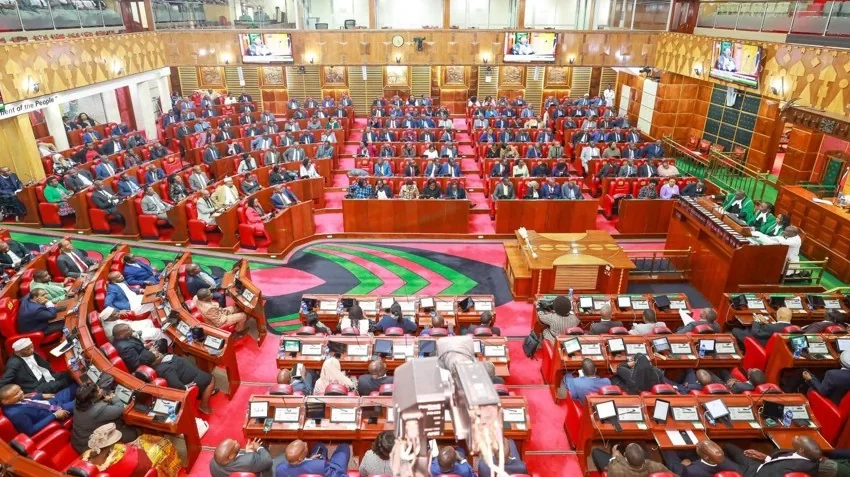
Members of Parliament during a past sitting. (Photo: Parliament of Kenya)
The proposed Creative Economy Bill, 2026, has sparked debate over how the country can regulate its growing creative sector while protecting the people whose work generates revenue across film, music, publishing, theatre and digital platforms.
Sponsored by Webuye West MP Daniel Wanyama, the legislation was published as National Assembly Bill No. 48 of 2026 in August. Its proposals include establishing the Kenya Audio-Visual and Cinema Commission, the Kenya Audio-Visual Regulatory Authority and the Kenya School of Film and Creative Arts.
However, the Bill has attracted criticism from industry stakeholders who argue that its emphasis on audiovisual regulation does not adequately address the economic needs of musicians, writers, actors, visual artists and digital content creators.
Read Also: KNEC Grade 10 Assessment 2026: Guidelines, Timelines & School Requirements
The Mzalendo parliamentary bill tracker lists the Bill at the First Reading stage in the available record. It is therefore important to distinguish between proposals contained in the legislation and reforms that stakeholders want lawmakers to introduce. The Bill is not yet law.
The debate extends beyond the creation of new government agencies. It concerns whether the country can establish a framework that helps creatives earn sustainable incomes, protects intellectual property, improves access to financing and ensures that digital platforms compensate rights holders fairly.
For a sector increasingly shaped by streaming services, online video, artificial intelligence and cross-border distribution, the outcome could influence how creative work is produced, licensed and monetised.
What the Creative Economy Bill 2026 Proposes
The proposed legislation seeks to reorganise aspects of the audiovisual and cinema regulatory framework. It also proposes separating industry promotion from regulatory enforcement, a distinction intended to clarify the responsibilities of institutions overseeing the sector.
Under the proposal, the Kenya Audio-Visual and Cinema Commission would promote the development and marketing of the audiovisual and cinema industries, while the Kenya Audio-Visual Regulatory Authority would handle regulatory functions, including licensing within the scope established by the Bill.
The legislation also proposes establishing the Kenya School of Film and Creative Arts to support education, professional development and skills training.
These institutions could help address gaps in technical training, production capacity and the international marketing of local audiovisual works. A clearer regulatory framework could also provide investors with greater certainty about licensing and compliance requirements.
Nevertheless, the design of these institutions matters. Industry representatives have questioned whether the proposed framework gives sufficient attention to creative disciplines outside film and audiovisual production.
The Creative Economy Working Group’s memorandum calls for amendments covering intellectual property, licensing exemptions, funding, dispute resolution and artificial intelligence. The group argues that a successful creative economy framework must support the commercial interests of creators rather than concentrate primarily on regulatory control.
The concerns highlight the challenge facing lawmakers: creating effective oversight without imposing unnecessary costs on people trying to build sustainable creative businesses.
Creative Economy Fund: The Financing Question
Access to finance remains a major challenge for independent creators. Film producers, musicians, photographers, writers and online publishers frequently need money for equipment, production, distribution and marketing before they can generate reliable returns.
A dedicated Creative Economy Fund could help address some of these barriers if it is supported by clear eligibility criteria, predictable financing and transparent administration.
However, the distinction between the Bill’s institutional proposals and stakeholder recommendations is essential. The Creative Economy Working Group has called for a dedicated Creative Economy Development Fund, arguing that the framework needs a reliable mechanism for supporting creative industries. Its proposed funding sources include government allocations, a share of licensing fees and contributions from streaming platforms. These recommendations should not be confused with an already operational fund or an enacted statutory entitlement.
A properly designed fund could provide grants, production financing, training support and other forms of assistance to qualifying creative businesses. It could also help emerging artists move from informal production into sustainable commercial activity.
Yet the fund’s effectiveness would depend on its governance. Parliament would need to consider who qualifies for support, how applications are assessed, whether different creative disciplines receive fair representation and how beneficiaries are held accountable for public money.
Small-scale creators should not face application requirements so complicated that only established companies can access the funding. Equally, the allocation process must guard against political patronage, conflicts of interest and the concentration of resources among a small number of beneficiaries.
Read Also: Top Comoros Official Hospitalized in Nairobi Amid Rising Tensions in Moroni
A transparent fund could strengthen the sector. A poorly governed one could create another layer of bureaucracy without materially improving creators’ incomes.
Digital Creators Need Stronger Copyright Protection
Digital platforms have created new opportunities for creatives to reach audiences beyond traditional broadcasting and publishing. Musicians can distribute recordings internationally, video producers can earn advertising revenue, and writers can license their work to commercial publishers and digital services.
The expansion of these markets has also increased the risk of unauthorised reproduction, unlicensed distribution and disputes over revenue sharing.
The country already has a legal framework governing copyright through the Copyright Act, 2001, as amended. The legislation covers literary, musical, artistic and audiovisual works, sound recordings and broadcasts. It establishes the legal foundation for protecting eligible works and enforcing copyright and related rights.
The Kenya Copyright Board (KECOBO) administers copyright and related rights under the existing framework. Its role is important because creators need more than recognition of ownership: they also need practical ways to license their work, identify unauthorised use and pursue payments where contractual or legal obligations have been breached.
For digital creators, the central issue is often whether the person who owns a work receives the income generated when it is reproduced, streamed, performed or licensed.
A photographer whose image is used commercially without permission, for example, may face difficulties establishing the extent of its use. A musician may struggle to verify whether royalties have been calculated correctly across different distribution channels. Independent video producers may have limited bargaining power when negotiating contracts with larger platforms or distributors.
The Creative Economy Bill has therefore prompted calls for clearer intellectual property safeguards. The Creative Economy Working Group has raised particular concern about the provision excluding intellectual property rights from the Bill’s scope, arguing that copyright and related rights are central to the economic value of creative work.
The issue is whether the legislation should complement existing copyright law more explicitly, establish stronger mechanisms for resolving disputes and ensure that the proposed institutions do not leave creators without meaningful protection.
Royalty Payments and the Responsibilities of Digital Platforms
Fair royalty payments remain central to the sustainability of the creative economy. As music streaming, video-sharing services and online publishing expand, creators need transparent agreements that explain how revenue is generated, calculated and distributed.
A royalty framework should address the information rights holders need to verify payments, the responsibilities of intermediaries and the procedures available when disputes arise. It should also recognise that different creative sectors operate under different commercial arrangements.
Music streaming revenue, for example, may pass through labels, distributors, publishers, collective management organisations and other intermediaries before reaching individual rights holders. Film and television productions may involve separate agreements covering scripts, performances, distribution and broadcasting rights.
The Copyright Act provides the existing legal foundation for copyright protection, but the effectiveness of that protection also depends on contracts, enforcement and the ability of creators to understand their rights.
The Bill should not be presented as having already introduced a universal royalty rate or guaranteed payments from digital platforms. Instead, lawmakers should consider whether the proposed framework needs additional provisions that improve transparency, accountability and access to dispute resolution.
A workable system could require clear licensing terms, appropriate revenue statements and accessible procedures for resolving payment disagreements. Such measures would be particularly important for independent creators who cannot afford prolonged legal proceedings.
Kenya Film Classification Board and Proposed Regulatory Changes
The Kenya Film Classification Board (KFCB) has traditionally played a central role in regulating film and broadcast content, including classification, licensing and measures intended to protect children from harmful material.
Its responsibilities are outlined in the Board’s official regulatory mandate, which describes its functions under the existing Films and Stage Plays Act and relevant broadcasting legislation.
The Creative Economy Bill proposes reorganising parts of this institutional framework, including repealing the Films and Stage Plays Act and establishing new audiovisual bodies. The precise transfer of responsibilities, assets and liabilities will depend on the legislation ultimately enacted and its commencement provisions.
For filmmakers and digital publishers, the regulatory changes raise practical questions about licensing costs, classification procedures, compliance requirements and the treatment of content distributed online.
Stakeholders have warned that broad licensing requirements could place disproportionate burdens on small-scale producers and independent digital creators. The Creative Economy Working Group has proposed exemptions for certain smaller creators and non-commercial activities, alongside clearer safeguards governing content-removal orders.
These concerns require careful consideration. Regulation can help protect audiences and establish consistent industry standards, but unnecessarily complicated licensing procedures may discourage new entrants and increase the cost of producing local content.
The legislation should therefore distinguish between activities that require formal commercial oversight and low-risk creative work that could reasonably operate under lighter requirements.
Clear appeal procedures, written reasons for enforcement decisions and safeguards against arbitrary restrictions would also help build confidence among creators.
Key Institutions and Their Potential Impact on Creators
| Statutory body | Legal mandate | Financial or royalty impact for creators |
|---|---|---|
| Kenya Copyright Board (KECOBO) | Administers copyright and related rights under existing legislation | Supports ownership protection, licensing and enforcement of creators’ rights; does not guarantee a particular royalty amount |
| Kenya Audio-Visual and Cinema Commission — proposed | Promote, develop and market the audiovisual and cinema industries | Could improve industry visibility, market access and development opportunities, depending on implementation |
| Kenya Audio-Visual Regulatory Authority — proposed | Regulate audiovisual activities and licensing within the proposed statutory framework | Compliance costs and licensing requirements could affect production budgets; clearer rules could improve regulatory certainty |
| Kenya School of Film and Creative Arts — proposed | Support film and creative arts education and professional training | Could expand access to skills development and professional opportunities |
| Kenya Film Classification Board — existing framework | Classifies and regulates film and broadcast content under applicable laws | Classification and licensing requirements may affect distribution costs and market access during any transition |
| Creative Economy Development Fund — stakeholder proposal | A proposed dedicated financing mechanism advocated by industry stakeholders | Could support production, training and business development if established with transparent funding and allocation rules |
The proposed institutions and fund must be distinguished from existing bodies and operational funding programmes. The table describes potential effects, not benefits already guaranteed by law.
Artificial Intelligence, Licensing and Creative Ownership
Artificial intelligence is adding another layer to the debate. Digital tools can help artists generate ideas, edit video, produce music and distribute content more efficiently. However, they also raise questions about consent, ownership and the use of existing creative works to train AI systems.
Creators are increasingly concerned about the unauthorised use of their voices, likenesses, photographs, scripts and music. Such concerns become particularly serious when AI-generated material imitates a real individual or reproduces protected work without appropriate permission.
The Creative Economy Working Group has called for the Bill to address artificial intelligence, including consent and compensation where creative works are used to train AI systems.
Parliament should examine whether existing copyright and related laws adequately address these situations and where further legislation or regulatory guidance may be needed.
Read Also: Pharmacy Board Looks to Shape Future of Pharmaceutical Practice
Any new provisions should distinguish between protected expression, lawful uses of material and unauthorised exploitation. They should also provide realistic procedures for creators to challenge misuse without making legitimate technological innovation unnecessarily difficult.
Clear rules would help developers, platforms, producers and artists understand their responsibilities while reducing uncertainty about the commercial use of creative material.
Parliament’s Next Steps
The Creative Economy Bill, 2026, presents an opportunity to modernise the audiovisual sector and improve the environment in which creative businesses operate. Its ultimate value, however, will depend on whether the legislation addresses the economic realities faced by creators across the country.
Parliament should consider the concerns raised by industry stakeholders before advancing the Bill through the remaining legislative stages. That process should include meaningful representation for musicians, writers, actors, filmmakers, theatre practitioners, visual artists, publishers and digital content creators.
The proposed institutional structure should also be accompanied by clear accountability mechanisms, proportionate licensing requirements and transparent procedures for funding and enforcement.
A dedicated Creative Economy Development Fund could provide important support if lawmakers establish a credible legal basis for it, identify sustainable revenue sources and create safeguards against misuse. Meanwhile, copyright protections and royalty transparency should remain central to any framework intended to turn creative work into sustainable livelihoods.
The creative sector has the potential to generate employment, attract investment and expand the country’s cultural influence internationally. Realising that potential requires more than establishing new agencies. It requires a legal and economic environment in which creators can protect their work, negotiate fair agreements, access finance and earn income from the value they produce.
The debate over the Creative Economy Bill is therefore about more than regulation. It is about whether the country can build a creative economy that rewards talent, encourages innovation and distributes commercial opportunities more fairly.