
Explainer: Why Scientists Are Warning Kenya About Possible Super El Niño
- Politics
Festus Chuma
- June 30, 2026
- 0
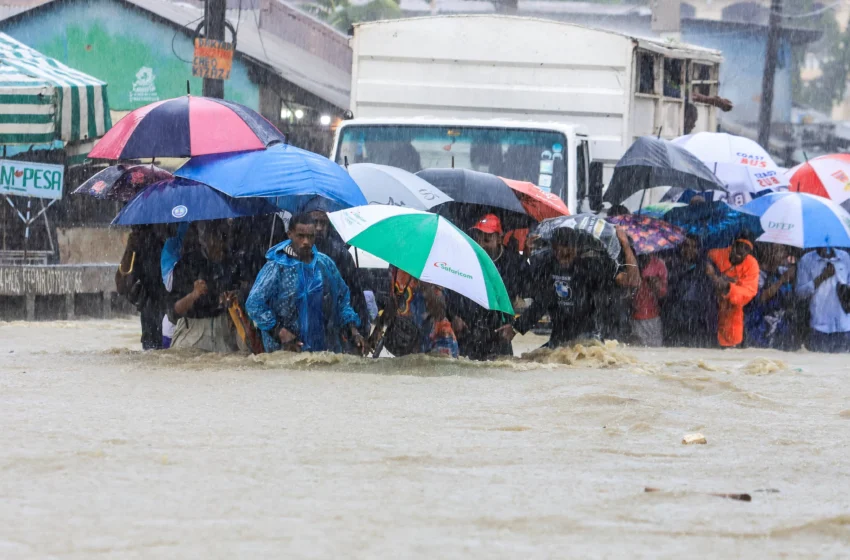
When the Kenya Meteorological Department (KMD) warned that conditions are increasingly favouring the development of El Niño later this year, it was more than another seasonal weather forecast. For a country still recovering from the devastating floods of 2023 and 2024, the warning has reopened memories of lives lost, homes destroyed and communities left to rebuild from scratch.
This time, meteorologists say the stakes could be even higher.
Current climate projections indicate that Kenya could experience what scientists describe as a “Super El Niño” during the October-November-December rainy season, a much stronger version of the climate phenomenon associated with unusually heavy rainfall across East Africa. While forecasters stress that uncertainty remains, they say the likelihood is significant enough to warrant early preparation by governments, humanitarian agencies and the public.
Also Read: Why KRA Will Not Extend Tax Returns Filing Deadline
The warning comes as many families are still recovering from the last disaster.
Among them is Jane Nyambura, a mother of three who spent more than a decade living in Kibera. Until April 2024, heavy rains had become part of everyday life. Flooded footpaths, water shortages and damp houses were inconveniences residents had learned to live with.
Then came the night of April 30.
Floodwaters surged through her neighbourhood with a force she had never experienced before, tearing through homes and destroying belongings accumulated over years.
“It took so much from me,” she recalls as per Daily Nation.
Nyambura and her children fled to her sister’s house in Huruma, where they lived for two months. Two of her school-going children stayed out of school because uniforms and learning materials had been swept away by the floods.
“That flooding took me back to zero,” she says. “Rebuilding has been slow.”
Her story reflects the experience of thousands of Kenyans whose lives were upended by one of the country’s worst flood disasters in recent memory.
By the time the floodwaters receded, more than 200 people had died. Entire villages had been cut off, roads washed away, bridges destroyed and thousands of families displaced. Schools and health facilities were damaged, while infrastructure and private property worth billions of shillings were lost.
Now, forecasters fear history could repeat itself.
Why this El Niño is attracting attention
The “Super El Niño” Threat: A Summary
| Metric/Focus | Details |
| Probability | 82% likelihood of occurrence |
| Projected Index | Expected to exceed 2.6°C (classified as “Super El Niño”) |
| Seasonal Window | October – November – December (OND) |
| Critical Rainfall | Thresholds exceeding 50mm/24 hours; potential for 180mm+ |
| Primary Risks | Urban flooding, landslides/mudslides, displacement, infrastructure damage |
| Human Impact | Loss of livelihoods, disruption to education, and cycles of poverty |
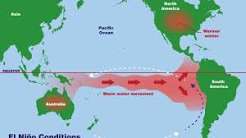
El Niño is a naturally occurring climate phenomenon caused by the warming of sea surface temperatures in the central and eastern Pacific Ocean. Although it begins thousands of kilometres away from Kenya, it alters atmospheric circulation across the globe, influencing rainfall and temperatures in many regions.
In East Africa, El Niño has historically been linked with above-average rainfall during the October-November-December season.
Not every El Niño brings catastrophic flooding, but stronger events significantly increase the likelihood of prolonged heavy rainfall.
According to Frankline Komolkori, Principal Meteorologist in charge of the National Meteorological Centre at KMD, the current outlook suggests conditions are favourable for a particularly strong event.
“We are giving an 82 per cent probability of the El Niño phenomenon later in the year,” he says.
Meteorologists determine the strength of El Niño using an internationally recognised ocean temperature index.
An index of around 0.5 degrees Celsius signals a weak El Niño.
Anything above two degrees is classified as a very strong event.
Current projections suggest this year’s index could exceed 2.6 degrees, placing it in what meteorologists commonly refer to as a Super El Niño.
Komolkori says the concern is less about the rainfall itself than the impact it could have.
“When we talk of enhanced rainfall, we mean rainfall exceeding 50 millimetres within 24 hours,” he explains.
“Some weather stations can receive up to 180 millimetres during that period. Such rainfall will definitely cause flooding. In mountainous areas, there is also the possibility of landslides and mudslides. It is no longer about what the weather will be, but what the weather will do.”
The warning is not based solely on Kenya’s forecasts.
The World Meteorological Organization (WMO) and the IGAD Climate Prediction and Applications Centre (ICPAC), which provides seasonal climate outlooks for the Greater Horn of Africa, have also identified evolving climate conditions that favour the development of El Niño later this year.
A country that knows El Niño well
Kenya has experienced several major El Niño events over the past six decades, including in 1965, 1997-98, 2015-16 and most recently in 2023.
The 1997-98 event remains one of the most destructive on record, causing widespread flooding, disease outbreaks and extensive damage to infrastructure.
More recently, the 2023-24 rains served as a reminder that the country remains highly vulnerable.
Scientists increasingly argue that climate change is amplifying the effects of naturally occurring weather phenomena such as El Niño.
Warmer air holds more moisture, meaning storms are capable of producing more intense rainfall than in previous decades.
Also Read: Rio Ferdinand To Open International Doors For Arusha Through AFCON 2027
For Kenyans, rain has therefore become a source of both hope and anxiety.
Good rainfall replenishes rivers, supports agriculture, restores pasture and improves food production.
But excessive rainfall overwhelms drainage systems, floods homes, destroys crops, disrupts transport and can claim lives within hours.
The same rains that sustain livelihoods can also erase them.
Are authorities prepared?
The latest warning has prompted humanitarian agencies to begin preparing months before the expected onset of the rains.
The Food and Agriculture Organization (FAO) and the World Food Programme (WFP) have launched their first-ever joint anticipatory action appeal, seeking $202 million (about Sh26.2 billion) to help vulnerable communities prepare before disaster strikes.
Kenya is among 22 countries prioritised for support.
“Experience consistently shows that early action is more effective and less costly than responding after a crisis has escalated,” says FAO Deputy Director-General Beth Bechdol.
“We have the data, the tools and the evidence to identify risks before they become emergencies.”
The emphasis on acting before disasters occur reflects lessons learned from previous floods, where emergency responses often arrived after communities had already suffered devastating losses.
At the national level, KMD says it has already fulfilled its mandate by issuing early forecasts and advisories.
Komolkori says weather information is intended to give other government agencies enough time to prepare.
“Our responsibility is to provide forecasts and warnings,” he says.
“The other government agencies and non-state actors are expected to use that information. That is why we are issuing the warning now—so stakeholders can prepare before October, November and December.”
The department has also developed a Weather and Climate Preparedness Checklist outlining recommended actions for sectors including health, agriculture, transport, water resources and disaster risk management.
The idea is to move beyond responding to disasters after they happen and instead reduce their impact before the rains begin.
Questions over preparedness
Despite the early warnings, questions remain about how prepared Kenya really is.
Recent rainy seasons have exposed recurring weaknesses.
Floodwaters continue to overwhelm drainage systems, roads remain impassable after heavy rains, settlements built along riverbanks remain vulnerable, and emergency responses are frequently criticised for being slow.
Online and within affected communities, many Kenyans are asking whether enough has changed since the last floods.
Nation sought responses from several ministries and government agencies expected to play key roles in disaster preparedness, including those responsible for transport, water, health, agriculture and disaster management.
Despite repeated follow-ups, none responded with details of the measures being implemented ahead of the anticipated El Niño.
Government Spokesperson Isaac Mwaura says the government has activated a multi-agency response through the National Disaster Operations Centre to prepare for the expected rains.
However, he did not provide details of the specific interventions, saying further information would be shared later.
Nairobi County, one of the areas most affected by urban flooding during heavy rains, shared a preparedness checklist but offered little explanation of how those measures would address the city’s longstanding drainage and flood management challenges.
For residents in flood-prone neighbourhoods, those unanswered questions matter.
Every rainy season brings familiar images of submerged roads, stranded motorists, flooded homes and families forced to evacuate with whatever possessions they can carry.
More than a weather forecast
For meteorologists, the coming months will involve closely monitoring changes in ocean temperatures and atmospheric conditions to determine whether El Niño strengthens as expected.
For emergency planners, the forecast provides valuable time to position supplies, reinforce vulnerable infrastructure and prepare communities that are most at risk.
For families like Jane Nyambura’s, however, the warning carries a different meaning.
It is a reminder of how quickly ordinary life can unravel.
A forecast may speak of probabilities, climate indices and rainfall totals. But on the ground, its consequences are measured in homes lost, children kept out of school, livelihoods interrupted and years spent rebuilding.
Whether this year’s El Niño becomes as destructive as feared will depend not only on the weather itself, but also on how effectively Kenya turns early warnings into early action before the first heavy rains begin.

