
How Kenyan man got caught in Zambia election plot

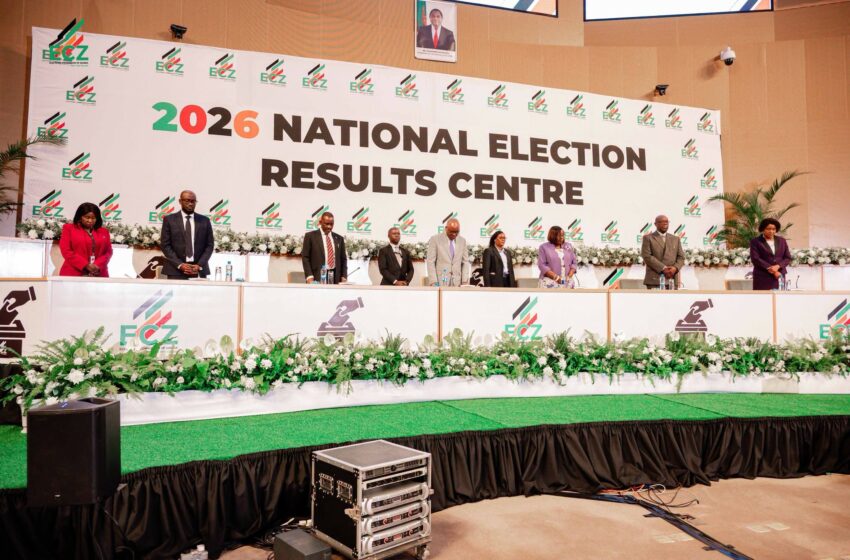
A Kenyan man is among four people being held by Zambian authorities over an alleged plot to interfere with the country’s electoral system ahead of the 2026 general elections.
The 56-year-old, identified as Michael Njuka and also referred to by Zambian authorities as Michael Juga, was arrested on Wednesday during an intelligence-led operation involving defence and security agencies.
Zambia’s Ministry of Home Affairs and Internal Security said Njuka was suspected of being contracted to carry out cybercrime activities targeting the state and attempting to compromise critical elements of the country’s electoral infrastructure.
“In a related development, the state has apprehended a Kenyan national identified as Michael Njuka, male aged 56, who is alleged to have been contracted to engage in cybercrimes targeting the state,” Permanent Secretary Dickson Matembo said in a statement.
PAY ATTENTION: Follow Kenya Frontline WhatsApp channel for more news
His arrest came shortly before Zambia’s August 13 general elections, as security agencies intensified surveillance around possible threats to the electoral process.
Matembo said the operation had also resulted in the arrest of three former senior government officials who were allegedly providing technical services intended to disrupt the electoral system.
How the alleged plot unfolded
The three former officials are being held in what the government described as lawful custody as investigations continue into the alleged cyber-disruption activities.
Zambian authorities have also invited three other individuals — Japhen Mwakalombe, Mwila Kakana and Sensho Banda — to assist investigators with the ongoing probe.
According to Matembo, the three were found in possession of more than $387,500, equivalent to about Sh7.3 million. Authorities said they had not yet established where the money came from or what it was intended for.
“The state has extended invitations to Mr Japhen Mwakalombe, Mr Mwila Kakana and Mr Sensho Banda to assist with ongoing investigations. The three were found in possession of a substantial amount of money, estimated at more than $387,500 (Sh7.3 million), whose source and intended purpose are yet to be established.”
The government said investigators had also discovered sensitive military information on some of the electronic devices seized from the trio.
“Investigations have also identified sensitive military information on some of the electronic devices seized from the trio, raising further concerns regarding unauthorised access to protected information,” Matembo said.
The discovery has added another layer to the investigation, with authorities examining whether the seized information was accessed or obtained without authorisation and whether it was connected to the wider alleged cyber operation.
The Zambian government said investigations had linked the alleged activities to local sponsors, including prominent businessman Valden Findlay. No details were provided in the statement on the nature of the alleged relationship or the specific role any of the named individuals may have played.
The allegations come at a politically sensitive moment for Zambia, where President Hakainde Hichilema was seeking another term in office.
Security tightened around election
Zambian defence and security agencies remained on high alert as authorities sought to protect the electoral process from what they described as electronic or physical interference.
The alleged cyber operation has placed renewed attention on the security of election infrastructure and the potential risks posed by attempts to interfere with systems used in the administration of elections.
For investigators, the involvement of a Kenyan national has also given the case a regional dimension, although the Zambian authorities have not provided further details about how Njuka allegedly became involved or what specific activities he was expected to undertake.
Njuka is alleged to have been contracted alongside two other people to conduct cybercrime activities targeting the state. The government has not publicly outlined the specific systems allegedly targeted or whether any electoral infrastructure was successfully compromised.
The arrests followed a joint operation involving defence and security forces, according to Matembo. Authorities described the exercise as intelligence-led and said it was carried out shortly before the elections.
The allegations have not been tested in court, and the individuals named by authorities remain suspects in an ongoing investigation.
Zambia went into the August 13 election with Hichilema seeking re-election under the United Party for National Development (UPND). His campaign focused on economic revival, improved public services and increased employment opportunities for young people in the civil service and military.
Hichilema faced 13 other contenders in the presidential race, making the election a major political contest in the southern African country.
The government’s decision to maintain heightened security around the electoral process reflected concerns that threats could extend beyond conventional political tensions to include attempts to interfere electronically with state systems.
For now, investigators are expected to establish the full extent of the alleged operation, the identities of all those involved and whether the suspected activities resulted in any actual interference with Zambia’s electoral infrastructure.
The detention of Njuka has meanwhile drawn attention in Kenya because of his nationality, although Zambian authorities have not indicated that the Kenyan government was involved in or aware of the alleged activities.
The case is likely to remain under close scrutiny as Zambia processes the outcome of an election that authorities had sought to protect from both physical and electronic disruption.

