
IEBC Setup Ahead of 2027: Cabinet Directives, Commission Independence & Election Preparation Rules

IEBC
Kenya’s preparations for the 2027 General Election have entered a decisive stage, with the Independent Electoral and Boundaries Commission (IEBC) working on voter registration, election technology, boundary delimitation, stakeholder engagement and other preparations ahead of polling day.
The commission has already moved beyond preliminary planning. IEBC launched its Strategic Plan 2024–2029 and Election Operations Plan 2025–2027 in June 2026, setting out the institutional and operational roadmap for the next General Election. IEBC’s Strategic Plan and Election Operations Plan
The latest developments have also placed renewed attention on the independence of the electoral commission.
PAY ATTENTION: Follow Kenya Frontline WhatsApp channel for more news
Political leaders, government officials and other stakeholders have increasingly been warned against interfering with IEBC operations as the country moves closer to the election.
The issue matters because Kenya’s Constitution gives the electoral commission a specific mandate and protects independent commissions from direction or control by individuals or authorities.
Article 249 of the Constitution provides that independent commissions are subject only to the Constitution and the law. That constitutional protection is central to the credibility of the electoral process.
IEBC independence remains a constitutional requirement
IEBC derives its mandate principally from Article 88 of the Constitution.
The commission is responsible for supervising elections and referenda, maintaining the voters’ register, regulating the electoral process, conducting voter education and handling the delimitation of constituencies and wards.
The commission’s own description of its constitutional mandate lists continuous voter registration, revision of the voters’ roll and delimitation of constituencies and wards among its core responsibilities.
That responsibility means government cooperation is necessary, but political direction over the commission’s constitutional functions is a different matter.
Government ministries and agencies can provide logistical, financial and technical support required to conduct elections. They cannot lawfully assume functions that Parliament and the Constitution have assigned to IEBC.
The distinction is particularly important in an election year because preparations involve multiple government institutions.
Security agencies, identification authorities, financial institutions, technology providers and other public bodies may all interact with the commission.
Such cooperation must take place within the law.
Cabinet directives and the limits of government involvement
Cabinet has a legitimate role in coordinating government resources and ensuring public institutions are prepared for national events.
An election, however, is not an ordinary government programme.
IEBC is an independent constitutional commission, meaning its operational decisions must remain within its legal mandate rather than being dictated by political interests.
The principle becomes especially important where directives touch on voter registration, electoral technology, boundaries, voter education, election results or other areas specifically assigned to the commission.
Government can provide resources and institutional support.
IEBC must retain authority over the electoral functions placed under its control.
That balance will likely remain a major issue throughout the final year before the 2027 election.
IEBC has formally entered the 2027 election period
A major development came in August 2026, when IEBC formally gazetted the election period for the 10 August 2027 General Election.
The commission said Kenya Gazette Notice No. 13497 brought the Electoral Code of Conduct and Election Offences Act into force for the election period.
The move effectively puts political parties, candidates and other election stakeholders under a formal legal framework governing conduct during the election cycle.
IEBC Chairman Erastus Ethekon said the commission would be guided by principles including independence, accountability, transparency and professionalism.
The commission has also stressed that election timelines are legally binding rather than simply administrative suggestions.
That development gives the 2027 preparations a clearer legal timetable.
Voter registration remains a major priority
Voter registration is among the most important tasks facing IEBC.
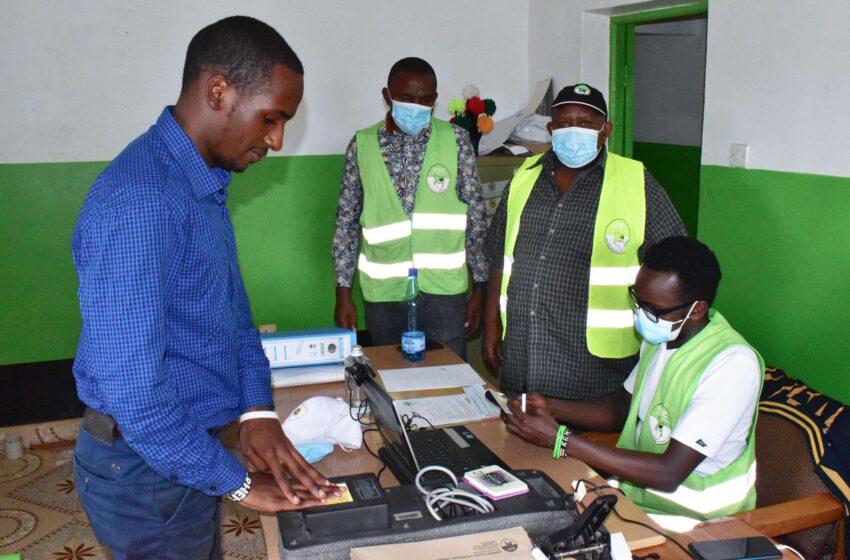
The commission’s Continuous Voter Registration exercise began on 29 September 2025 and remains ongoing, allowing eligible Kenyans to register, transfer their registration and update their details.
An enhanced registration exercise was also conducted in 2026 as IEBC sought to accelerate voter enrolment ahead of the General Election.
IEBC reported that 2,936,516 Kenyans had registered as voters by 20 August 2026.
The commission expects the 2027 voters’ register to contain approximately 28.5 million voters, compared with about 22.1 million registered voters during the 2022 General Election.
The numbers highlight the scale of the task facing the commission.
Every additional voter must be properly registered, biometrically captured and included in an accurate electoral database.
How Kenyans can register
Eligible Kenyan citizens can use IEBC registration centres to register as voters.
The commission’s official voter registration guide provides information on who qualifies, how registration is conducted and circumstances under which an individual may be denied registration.
A Kenyan citizen who has attained the age of 18 and possesses the required identification documents can apply for registration.
Existing voters can also transfer their registration where necessary and update their particulars under the applicable procedures.
Kenyans should therefore not wait until the final months before the election to check their registration status.
Early registration gives voters time to correct problems that could otherwise become difficult to resolve close to polling day.
Technology will play a central role
Election technology is another major component of IEBC’s preparation.
The Kenya Integrated Elections Management System, commonly known as KIEMS, is used for biometric voter identification and other electoral functions.
IEBC says biometric registration and verification will help strengthen the integrity of the voters’ register by allowing voters to verify their biometric information while supporting the identification and removal of deceased persons and duplicate registrations.
The commission has also indicated that the voters’ register will undergo an independent audit before the 2027 election.
Such measures are important because public confidence in electoral technology has become closely connected to confidence in election results.
IEBC will therefore need to demonstrate not only that its systems work but also that they are secure, transparent and properly tested before polling day.
Funding could affect election readiness
Election preparation requires substantial financial resources.
IEBC has warned that funding remains a major issue ahead of the 2027 polls.
The commission had sought a significantly larger allocation to cover voter registration, election technology, civic education, polling infrastructure, personnel and other preparations.
The funding debate matters because election preparation cannot be compressed indefinitely.
Technology procurement, recruitment and training of election officials, voter education and logistics all require advance planning.
Late funding can therefore create pressure on a commission already working against strict constitutional and statutory deadlines.
Parliament has a role in approving public expenditure, but the eventual funding framework must enable IEBC to carry out its constitutional mandate effectively.
Boundary review rules are equally important
Electoral boundaries remain one of the most politically sensitive responsibilities assigned to IEBC.
Article 89 of the Constitution provides the legal framework for reviewing the boundaries of constituencies and wards.
The commission must take into account population equality while also considering factors such as geographical features, urban centres, community interests, historical and economic ties and communication networks.
The Constitution requires boundary reviews to take place within specific intervals and provides that a review intended to apply to a General Election must be completed at least 12 months before that election.
That deadline makes the timing of any 2027 boundary review particularly significant.
The process cannot simply be completed at the commission’s convenience.
It must comply with constitutional timelines and provide opportunities for affected communities and other stakeholders to participate.
Boundary review involves public participation
IEBC does not have unlimited discretion to redraw electoral maps without public involvement.
The Independent Electoral and Boundaries Commission Act sets out procedures for boundary delimitation, including the preparation and publication of reports and opportunities for public representations.
The process can involve public hearings and consideration of views submitted by affected communities and other stakeholders.
Parliament also has a defined role within the process.
Judicial review remains available to parties who challenge boundary decisions on grounds recognised by law.
These safeguards are intended to prevent boundary delimitation from becoming an arbitrary political exercise.
Why population growth matters
Population changes can significantly influence boundary discussions.
Some constituencies and wards grow faster than others because of urbanisation, migration and changing settlement patterns.
Nairobi, Kiambu, Nakuru, Mombasa and other rapidly growing areas can therefore attract particular attention during population-based discussions.
IEBC must balance population equality with geographical and community considerations.
The objective is not simply to create constituencies containing exactly the same number of residents.
The Constitution recognises that geographical size, communication networks, community interests and other factors can justify variations.
Any proposed changes must therefore be assessed against the constitutional criteria rather than political convenience.
Election preparations go beyond voter registration
The 2027 election will require thousands of officials, polling stations, technological systems and logistical arrangements.
IEBC’s Election Operations Plan provides a framework for these activities.
The commission has also been engaging political parties, civil society organisations, youth groups, religious organisations, the media and other stakeholders as part of the preparation process.
The broader plan is intended to ensure that election activities do not begin only in the final months before polling day.
Election officials must be recruited and trained.
Materials must be procured and distributed.
Technology must be tested.
Voters must receive accurate information.
Security arrangements must be coordinated.
All these activities require time and resources.
The importance of public confidence
A technically prepared election can still face a credibility problem if voters do not trust the institution conducting it.
IEBC therefore faces a dual responsibility.
The commission must prepare the physical and technological infrastructure required for voting while also communicating openly with the public.
Information about voter registration, boundary review, technology, polling procedures and election timelines needs to reach citizens early enough for them to act on it.
Misinformation will also remain a major challenge.
The commission’s official platforms should therefore remain the first point of reference whenever Kenyans encounter conflicting claims about voter registration dates, polling centres or election procedures.
IEBC’s official website and election updates provide the most direct source for current announcements.
The road to August 2027
Kenya is now firmly in the election preparation period.
The legal framework has been activated, voter registration is continuing and IEBC has established a strategic and operational roadmap for the 2027 polls.
The commission is also facing pressure over funding, technology, voter registration targets and boundary questions.
Political pressure will inevitably increase as parties and potential candidates position themselves for the election.
The constitutional requirement for IEBC independence will consequently become even more important.
Government institutions must provide the support necessary to conduct a credible election. Political actors must respect the commission’s mandate. IEBC, in turn, must exercise its authority transparently, professionally and within the law.
The 2027 General Election is scheduled for 10 August 2027, but the credibility of that election will not be determined on polling day alone.
It will be shaped by decisions made throughout 2026 and the months that follow.
An accurate voters’ register, properly prepared election officials, secure technology, lawful boundaries, adequate financing and effective voter education will all contribute to the final outcome.
Kenya’s election machinery is already moving.
The biggest test now is whether every institution involved will respect the constitutional boundaries that make an independent electoral commission possible.
The preparations underway today will ultimately determine how confidently millions of Kenyans approach the ballot box in 2027.