
Kenya Boarding School Safety Crisis Deepens After Gilgil Tragedy

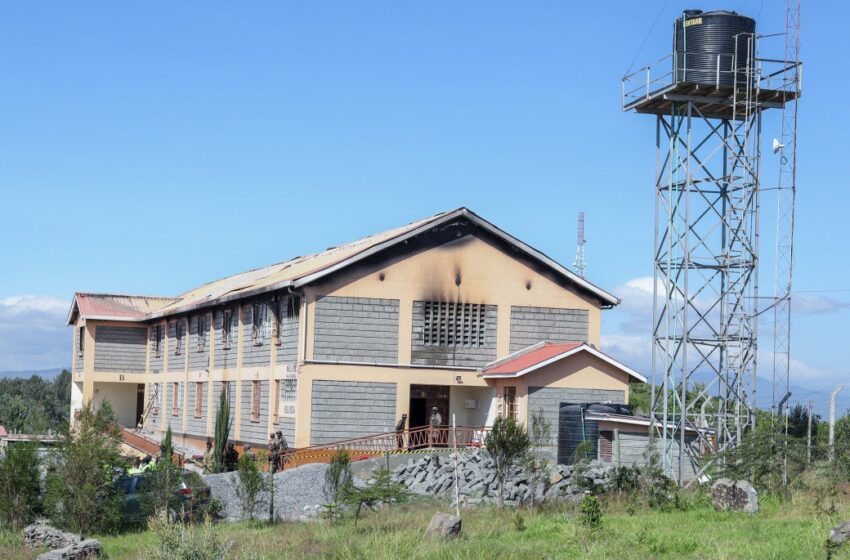
The tragic loss of 16 young lives at Utumishi Girls Academy in Gilgil marks a catastrophic breakdown in institutional responsibility and emergency preparedness. Beyond the immediate horror of the arson incident, the disaster shines a harsh spotlight on systemic compliance failures within Kenya’s secondary education sector.
Preliminary state investigations reveal a double tragedy of human negligence and structural failure. Educators ignored explicit warnings of impending student unrest, while the physical environment violated foundational safety regulations.
This crisis demands a comprehensive examination of how safety protocols are monitored and enforced in boarding institutions nationwide. The incident has shifted the national conversation from a simple disaster response to a critical evaluation of institutional accountability and structural integrity.
Intelligence failure and institutional negligence
Early reports indicate that the disaster was entirely preventable. Two institutional educators received actionable intelligence from students regarding planned disruptions by a faction of Form Three learners.
Staff members failed to initiate security protocols or notify law enforcement agencies despite possessing this critical information. This communication breakdown allowed the perpetrators to execute the arson plot undetected, trapping hundreds of sleeping students inside a vulnerable structure.
The Directorate of Criminal Investigations has detained eight learners as primary persons of interest to establish individual culpability. The Ministry of Education is pursuing disciplinary and legal action against staff members whose inaction borders on criminal negligence.
Read Also: Top Comoros Official Hospitalized in Nairobi Amid Rising Tensions in Moroni
Infrastructure violations and overcrowding crisis
Boarding facility compliance gaps
Physical infrastructure at the institution contributed significantly to the high casualty count. Emergency responders discovered that a primary emergency exit door was securely locked from the outside when the fire broke out.
This structural barrier directly violated the Safety Standards Manual for Schools in Kenya, which mandates that all dormitory doors must remain unlocked and open outwards during school hours. The obstruction caused a catastrophic bottleneck as terrified students attempted to escape the smoke and flames.
The burden of high student populations
Overcrowding remains a persistent challenge across public boarding schools, driven by the state policy of 100 percent transition from primary to secondary institutions. The dormitory involved in the incident housed students far beyond its designed capacity.
Increased student populations without a corresponding expansion of physical infrastructure create severe safety hazards. Evacuation pathways are compromised when multiple beds are squeezed into restricted spaces, turning manageable localized incidents into fatal disasters.
National school safety standards comparison
The following matrix contrasts standard statutory education guidelines against the physical realities documented during the recent multi-agency investigation.
| Safety Parameter | Statutory Requirement | Documented Institutional Status | Risk Level |
| Emergency Exits | Minimum two functional doors opening outwards | One primary exit securely locked | Critical |
| Dormitory Space | 1.2 meters space between beds with wide pathways | Extreme congestion and unauthorized bed placement | High |
| Intelligence Action | Immediate escalation to security committees | Complete internal inaction on student warnings | Critical |
| Fire Extinguishers | Serviced equipment placed every 10 meters | Absent or inaccessible during emergency | High |
Economic implications of education infrastructure gaps
Underfunding and maintenance deficits
The underlying cause of structural non-compliance in public schools is rooted in severe budgetary constraints. School administrations often channel limited resources into academic operations, leaving critical safety infrastructure neglected.
Retrofitting old buildings with modern fire suppression systems, smoke detectors, and emergency lighting requires substantial capital investment. Many institutions continue to operate with deficient emergency infrastructure without direct state subsidies targeting safety upgrades.
The true cost of institutional negligence
The economic impact extends far beyond structural damage to physical classrooms and residential halls. Families face sudden, devastating expenses including specialized medical treatment, long-term psychological rehabilitation, and funeral arrangements.
The cost for the state includes deploying specialized forensic teams from the Directorate of Criminal Investigations and processing DNA identification at the Naivasha Sub-County Hospital mortuary. These expenses strain public resources that could otherwise support education development projects.
Policy frameworks and legislative accountability
Enforcement of the Penal Code
The state is adopting a strict legal stance against both the student perpetrators and negligent administrators. Individuals found guilty of orchestrating the arson face prosecution under the arson and murder provisions of the Penal Code.
Officials who failed in their duty of care face charges related to administrative negligence and manslaughter. This comprehensive legal response signals a shift away from treating school fires as mere disciplinary issues.
Reforming the school safety manual
This disaster highlights the urgent need to reform the School Safety Manual and Basic Education Regulations. The current framework relies heavily on self-regulation by school heads, which lacks independent oversight.
Public health officers and sub-county education boards must conduct unannounced, rigorous structural inspections of all boarding schools. Institutions that fail to meet basic safety thresholds must face immediate closure until they implement full corrective measures.
National mourning and systemic transformation
President William Ruto termed the loss of 16 promising students a profound national tragedy. The state’s immediate priority centers on supporting affected families, delivering critical medical care at Kenyatta National Hospital, and finalizing DNA identification.
True honor for the victims requires more than official messages of condolence. It demands a thorough, uncompromising transformation of how educational institutions manage student safety, infrastructure, and early warnings.
School administrations across Kenya must understand that safety guidelines are mandatory legal requirements, not optional suggestions. Only strict enforcement, administrative accountability, and structural investment can protect students and prevent future tragedies.