
Kenya Sovereign Wealth Fund Law Introduces Tougher Controls on Withdrawals and Infrastructure Investments

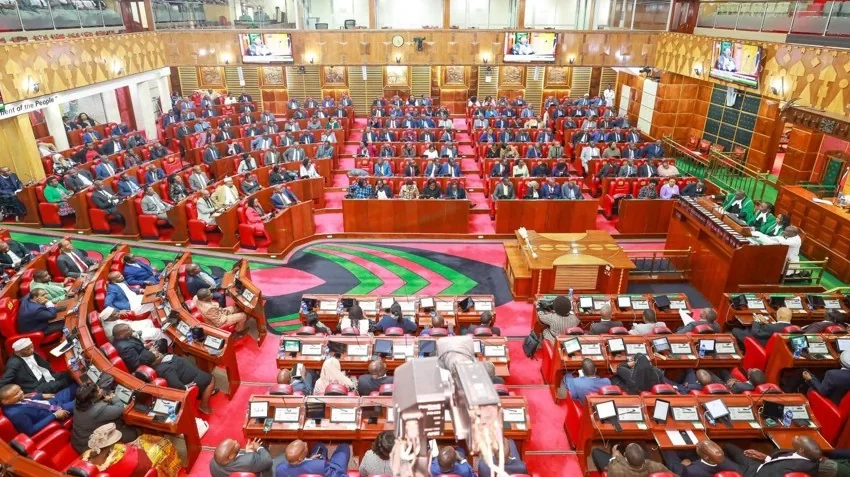
Members of Parliament during a past sitting. (Photo: Parliament of Kenya)
Kenya’s efforts to protect proceeds generated from its mineral and petroleum resources have entered a new phase following the enactment of the Sovereign Wealth Fund Act, 2026, which introduces financial safeguards governing withdrawals, infrastructure investments and the management of national reserves.
The legislation, initially introduced as the Sovereign Wealth Fund Bill (National Assembly Bill No. 7 of 2026), underwent scrutiny by the National Assembly Departmental Committee on Finance and National Planning before lawmakers approved amendments during the Committee of the Whole House on July 2, 2026. President William Ruto subsequently assented to the legislation on July 8, establishing a framework for managing resource revenues and preserving part of the country’s wealth for future generations.
Among the significant changes adopted by Parliament were stronger restrictions on the use of sovereign fund assets as collateral, additional approval requirements for withdrawals and greater transparency over payments made to external investment managers. The legislation also strengthened the National Assembly’s role in overseeing important decisions affecting the fund.
Read Also: Pharmacy Board Looks to Shape Future of Pharmaceutical Practice
During the July 2 parliamentary proceedings, Finance and National Planning Committee Chairperson Kuria Kimani defended the withdrawal safeguards, explaining the importance of additional financial oversight.
“One of the biggest challenges I saw in this Bill was the lack of oversight. We were looking at how to ensure that this House, the Controller of Budget, and everyone else who is supposed to know how these monies are being spent, know whether they can be misused,” Kimani told the House.
Three Components Designed to Protect Kenya’s National Wealth
The Sovereign Wealth Fund Act establishes three distinct components intended to serve different national economic priorities.
The Stabilisation Component is designed to provide financial protection during extraordinary economic shocks, including disruptions that could affect macroeconomic stability. It is intended to give the government a financial buffer during periods of economic uncertainty rather than relying entirely on additional borrowing or emergency revenue measures.
The Strategic Infrastructure Investment Component provides a framework for financing qualifying national development priorities. Under Clause 12 of the Bill, Parliament provided for investments in strategic infrastructure, including potential investments in mineral and petroleum projects and the mobilisation of private sector financing.
The Future Generations Component, meanwhile, is designed to preserve wealth for Kenyans who will inherit the country’s natural resources after existing mineral and petroleum reserves decline.
One of the most significant parliamentary amendments established a mandatory allocation of 30 per cent of deposits into the fund for the Future Generations Component. The remaining 70 per cent is distributed between the Stabilisation and Strategic Infrastructure Investment components according to proportions determined by the Cabinet Secretary in consultation with the Board.
This replaced the earlier arrangement that gave the Treasury Cabinet Secretary greater discretion over allocations among the three components.
The change was intended to establish a predictable savings framework and reduce the possibility of future administrations diverting resources away from long-term national interests.
Clause 17 Strengthens Controller of Budget Authority
A central issue during parliamentary consideration was the extent of Treasury control over money held within the Sovereign Wealth Fund.
Lawmakers sought to ensure that withdrawals would not depend exclusively on administrative decisions within the Executive, particularly where resources intended for long-term savings were concerned.
Clause 17 was amended to require approval by the Controller of Budget for transfers or withdrawals from the Future Generations Component for investment purposes.
The amendment provides an additional institutional safeguard by placing an independent constitutional oversight mechanism within the fund’s withdrawal framework.
The parliamentary debate also addressed the broader application of Controller of Budget approval to other components. Amendments to the withdrawal provisions for the Stabilisation and Strategic Infrastructure Investment components similarly strengthened authorization requirements.
Under Article 228(4) of the Constitution, the Controller of Budget oversees the implementation of budgets by authorising withdrawals from public funds. The additional provisions in the Sovereign Wealth Fund legislation expressly extend approval requirements to relevant fund transactions, including transfers involving the Holding Account.
Read Also: KNEC Grade 10 Assessment 2026: Guidelines, Timelines & School Requirements
This is particularly important because the fund’s resources are intended to serve different economic purposes and should not be treated as ordinary government revenue available for unrestricted expenditure.
Article 201 of the Constitution provides the broader principles guiding public finance management. These include openness, accountability, prudent and responsible use of public money, equitable sharing of financial burdens and benefits, and responsible financial management.
Read together, these constitutional principles provide the foundation for Parliament’s emphasis on transparency and independent scrutiny of sovereign fund transactions.
Clause 46 Blocks Use of Future Generations Savings as Loan Collateral
Another important safeguard emerged during the Committee of the Whole House proceedings when lawmakers amended Clause 46 to specifically protect the Future Generations Component against borrowing arrangements that could expose national savings to financial risks.
The revised provision prohibits the component from being used to make advances, provide loans or extend any other form of credit to a government entity or any person.
It also prohibits the use of the component as collateral for borrowing by a government entity or any person.
The amendment directly addresses concerns about securitisation, under which financial assets or future revenue streams can be used to support borrowing arrangements.
By restricting access to the Future Generations Component, Parliament sought to prevent resources reserved for long-term national savings from becoming indirectly exposed to government or private borrowing obligations.
During the debate, Manyatta MP George Mukunji supported the amendment, arguing that the protection was necessary to prevent future administrations from exposing the fund to inappropriate borrowing arrangements.
The restriction is particularly significant because the Future Generations Component is intended to preserve the economic value of finite natural resources beyond the period in which they are extracted.
However, the distinction between the different fund components remains important. Clause 46, as amended, specifically protects the Future Generations Component against advances, credit and collateralisation. It should not be inaccurately described as imposing the identical prohibition on every transaction involving all three components.
Clause 53 Introduces Greater Transparency in Investment Management Fees
Parliament also addressed the potential cost of managing the Sovereign Wealth Fund, particularly payments made to external investment managers and service providers.
Under the amendments to Clause 53, the Board is required to include details of all fees paid to investment fund managers and other service providers in its reporting disclosures.
The amendment was introduced to strengthen financial transparency and prevent excessive management charges from gradually reducing the value of the fund.
Lawmakers also amended the Third Schedule to introduce a ceiling on annual management fees payable to investment fund managers.
The revised provision limits the annual management fee to two per cent of the investment in the qualifying instrument, with the amount specified in the manager’s instrument of appointment.
This establishes a clearer financial limit than the original wording, which left management fees to be determined through individual appointment arrangements.
The changes are important because sovereign wealth funds frequently rely on professional managers to invest assets across different financial markets. Although external expertise can support investment performance, the costs associated with those services must remain transparent and proportionate.
For Kenya, mandatory fee disclosures and a statutory ceiling provide additional protection against excessive charges that could undermine the fund’s long-term investment objectives.
National Assembly Retains an Important Oversight Role
The legislative process also addressed concerns about concentrating too much authority within the Executive, particularly regarding investment policies and the sources of revenue allocated to the fund.
During the Committee of the Whole House proceedings, Clause 27 was amended to require National Assembly involvement alongside Cabinet approval in relation to the Board’s investment policies.
The amendment was intended to strengthen parliamentary scrutiny of decisions that could influence how national reserves are invested.
Clause 6 was also amended to provide for National Assembly involvement in decisions concerning other sources of revenue transferred into the Sovereign Wealth Fund.
The Board’s composition is addressed separately under Clause 28. It includes a chairperson appointed by the President, senior government and financial-sector representatives, four independent members appointed competitively by the Cabinet Secretary, and the Chief Executive Officer as an ex-officio non-voting member.
The legislation provides qualification, diversity and appointment requirements for members of the Board.
These provisions should be distinguished from parliamentary approval of investment policies: the National Assembly’s enhanced oversight role does not mean that Parliament directly appoints every Board member.
The arrangement creates a framework in which professional fund management operates alongside constitutional and parliamentary accountability.
What the Sovereign Wealth Fund Means for Kenya’s Economic Future
The establishment of the Sovereign Wealth Fund represents an important development in the management of Kenya’s natural resource revenues.
The legislation seeks to ensure that income generated from petroleum, minerals and other qualifying sources is not entirely consumed through immediate government expenditure.
Instead, the framework provides for stabilisation reserves, strategic infrastructure investment and long-term savings.
The Future Generations Component is particularly important because natural resources are finite. Once commercially viable deposits are exhausted, the country cannot continue relying on the same revenue streams indefinitely.
Preserving part of the proceeds creates an opportunity to generate investment income that can support future economic priorities.
The Strategic Infrastructure Investment Component also introduces an avenue for mobilising capital towards qualifying development projects, potentially alongside private sector financing.
However, the effectiveness of the legislation will ultimately depend on implementation, the quality of investment decisions, independent auditing and the willingness of public institutions to enforce the statutory safeguards.
Read Also: Top Comoros Official Hospitalized in Nairobi Amid Rising Tensions in Moroni
The Sovereign Wealth Fund Act, 2026 therefore establishes more than an investment structure. It creates a governance framework intended to balance present development needs with the responsibility to preserve national wealth for future generations.
For Kenyans, the central test will be whether the safeguards introduced by Parliament translate into transparent financial management, sustainable investments and measurable long-term economic benefits.

