
7 Wealthiest Corporate Investors Reconfiguring Kenya Private Equity Landscapes

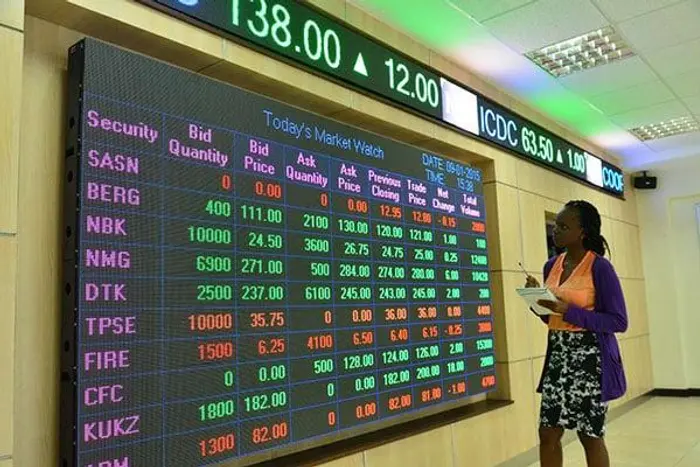
Private capital concentration within the national economic landscape is experiencing rapid structural adjustments as prominent family offices realign their portfolios toward high-yielding corporate assets.
Developing a comprehensive understanding of domestic wealth deployment serves as a critical strategic entry point for evaluating regional market liquidity and financial stability. Savvy market analysts can map large-scale equity positions to unlock vital insights into the foundational drivers of national gross domestic product expansion and secondary employment generation.
Navigating the volatile monetary environments of emerging frontier markets requires immense corporate governance expertise, deep asset diversification strategies, and predictable fiscal policies. Family investment offices must constantly balance traditional public market exposure with alternative private placements across the wider East African Community. Policy researchers can look at these high-level financial dynamics to clarify how localized private capital moves from passive dividend gathering into active industrialization drivers.
Read Also: Top Comoros Official Hospitalized in Nairobi Amid Rising Tensions in Moroni
Nairobi Securities Exchange Disclosures and Wealth Allocation Matrix
Evaluating the structural dominance of major financial empires requires tracking specific asset classes, regulatory filings, and corporate leadership roles. Public shareholding records redefine wealth metrics across the regional marketplace.
|
Major Public Investor Entity |
Primary Listed Asset Base |
Official NSE Ticker |
Primary Strategic Capital Shift |
Core Macroeconomic Objective |
|
Ndegwa Family Estates |
NCBA Group PLC |
NCBA |
Expanding cross-border trade finance networks |
Protecting Multi-Generational Liquid Holdings |
|
Kenyatta Family Portfolios |
NCBA Group PLC & Real Estate |
NCBA |
Consolidating agro-processing and milk logistics |
Maintaining Multi-Sector Industrial Control |
|
Merali Estate Successors |
Sameer Africa & Financials |
SAME |
Shifting from tire manufacturing to commercial property |
Optimizing Cash Flow Stability and Liquidity |
|
Dr. James Mwangi & Associates |
Equity Group Holdings |
EQTY |
Scaling mobile micro-lending via fintech platforms |
Dematerializing Regional Banking Access Points |
|
Baloobhai Patel Portfolio |
Carbacid Investments PLC |
CARB |
Consolidating industrial carbon dioxide supply lines |
Securing High-Dividend Defensive Value Stocks |
|
Suresh Bhagwanji R. Shah |
I&M Group PLC |
IMH |
Strengthening corporate regional trade corridors |
Deepening Institutional Banking Longevity |
|
Dr. John Kibunga Kimani |
Kakuzi PLC & Centum |
KUKZ |
Expanding premium agricultural export volumes |
Driving Minority Shareholder Governance Activism |
Sovereign wealth distribution within the national economic ecosystem is anchored by strategic family offices that systematically reinvest their earnings into high-barrier sectors. Public disclosures at the Nairobi Securities Exchange verify that these elite portfolios prioritize tier-one banking institutions, defensive industrial manufacturing setups, and agricultural export corporations.
1.Ndegwa Family Estates
Ndegwa family asset structures represent one of the most sophisticated corporate investment frameworks in the region. Rather than concentrating capital within a single operating line, executors distribute exposure across banking, insurance, shipping logistics, and prime property developments.
Commanding shareholdings in NCBA Group PLC position the estate as a primary driver of regional financial consolidation. Boardroom strategies led by family mainstays ensure that their public portfolio remains optimized to withstand localized currency depreciation. Beyond liquid equities, their private property management arms handle premium commercial developments in urban corridors, converting volatile market gains into steady, long-term rental cash flows.
2.Kenyatta Family Portfolios
Kenyatta family holdings occupy a central position in the socio-economic framework of the country, spanning multiple foundational pillars of the domestic economy. Public market footprints are highlighted by substantial equity ownership in NCBA Group PLC, working in perfect synchronization with extensive private market dominance.
Corporate operations extend across multiple high-barrier industries, most notably through Brookside Dairy Limited, which commands a massive share of the regional milk processing and distribution network. Additional holdings in the luxury hospitality sector cater directly to international business travel and premium tourism. Managing vast tracts of prime agricultural land slated for conversion into master-planned industrial hubs allows the family to preserve generational capital while driving modern infrastructural expansion.
3.Merali Estate Successors
Legacy frameworks established by the late Naushad Merali continue to guide capital allocation decisions through the executive directors of the Sameer Group. Historically recognized for high-stakes telecommunications deals that completely reshaped regional infrastructure, the family maintains a highly liquid and adaptable portfolio.
Retaining a strategic, long-term position in NCBA Group PLC alongside a dominant controlling interest in Sameer Africa PLC anchors their public exchange presence. Commercial strategy shifts away from capital-heavy tire production toward high-yield real estate and logistics warehousing have protected their capital base from manufacturing supply chain shocks. Strategic positioning within regional transport corridors ensures steady revenue generation from commercial leasing operations.
4.Dr. James Mwangi & Associates
Mwangi’s investment portfolio directly reflects the institutional expansion and geographical diversification of Equity Group Holdings PLC. Serving as the long-term chief executive officer, his direct and indirect equity blocks anchor his position as a prominent self-made corporate titan.
Operational leadership has pushed the banking conglomerate across strategic regional frontiers, including high-growth entries into the Democratic Republic of Congo and Rwanda. Geographical diversification drives consistent dividend yields back to core shareholders, insulating the parent company from localized macroeconomic shocks. Personal investments in regional insurance giants like Britam Holdings and premium commercial real estate developments reinforce his substantial asset sheet.
5.Baloobhai Patel Portfolio
Patel stands out as a brilliant practitioner of value investing within sub-Saharan Africa, operating with a philosophy centered strictly on corporate governance and tangible asset backing. Methodical accumulation over several decades has secured highly influential stakes across a wide array of listed and unlisted entities.
Public holdings are characterized by highly calculated concentrations, including a dominant controlling interest in Carbacid Kenya PLC, the premier supplier of natural carbon dioxide in East Africa. Strategic minority stakes in key tier-one lenders, including Co-operative Bank of Kenya and Absa Bank Kenya, provide robust dividend inflows. Reinvesting these consistent cash payouts into automated agricultural projects and independent power generation setups ensures steady wealth compounding through volatile economic cycles.
6. Suresh Bhagwanji R. Shah
Shah’s financial architecture is explicitly tied to the disciplined, long-term scaling of I&M Group PLC. Foundational work transforming a niche retail lender into a highly integrated financial services group has created an asset that operates smoothly across Kenya, Tanzania, Rwanda, and Mauritius.
Holding Chairman-Emeritus status, his wealth remains secured within private family holding structures designed to guarantee institutional longevity. His focused concentration in corporate banking and trade finance ensures steady capital growth that closely tracks the expanding intra-African trade corridors. Utilizing structured corporate foundations allows the family to manage social investments without diluting their primary equity blocks.
7. Dr. John Kibunga Kimani
Kimani represents an iconic figure in the landscape of minority shareholder activism and strategic equity accumulation. Armed with an analytical approach to agricultural assets and digital infrastructure, he has systematically built an influential stock portfolio.
Investment blueprints focus heavily on market-dominating companies with clear competitive advantages, highlighted by a massive equity stake in Kakuzi PLC, a premier exporter of avocados and macadamia nuts to European and Asian markets. Strategic holdings in Centum Investment Company PLC provide indirect exposure to private equity, educational infrastructure, and large-scale real estate projects. Long-term equity positions in Safaricom PLC highlight a disciplined methodology that values structural efficiency and high dividend payout ratios.
Macroeconomic Forces Shaping Private Equity Dynamics
Sustained capital accumulation among elite tier-one investors introduces valuable stability into regional financial markets during periods of global inflation. Transitioning from simple public equity holding to managing diversified corporate conglomerates directly redefines capital retention, local manufacturing capability, and national tax revenue streams.
Read Also: Rio Ferdinand To Open International Doors For Arusha Through AFCON 2027
Capital Reallocation Trends and High-Yield Property Corridors
Commercial real estate networks along metropolitan bypass zones represent a primary destination for redistributed public equity dividends. Shifting liquid stock earnings into physical logistical hubs allows family offices to secure predictable, inflation-hedged returns while supporting the regional e-commerce boom.
The Investment Shift: National financial sectors gain immense resilience when high-net-worth individuals shift passive stock wealth into active industrial warehouses and specialized cold-chain storage facilities.
Building these high-capacity logistical hubs helps smooth out domestic agricultural distribution bottlenecks, ensuring that rural producers can access metropolitan markets with minimal product spoilage. Internal wealth preservation within these corporate circles drives secondary investments across national construction supply chains, digital estate registries, and green building manufacturing sectors.
Regional Integration and Cross-Border Banking Footprints
Developing a dominant pan-African banking footprint requires establishing seamless, high-volume digital financial platforms that connect landlocked trading centers directly to coastal ports. Expansion demands accelerate the deployment of interoperable mobile money grids, cross-border trade finance processing, and centralized risk mitigation architectures.
Sustained regional network growth achieves genuine economic integration once commercial credit facilities move beyond national borders into integrated regional development funding pipelines. Strategic corporate investments by major banking tycoons ensure that local small and medium enterprises can access trade capital easily, reducing reliance on costly foreign lines of credit.
Fiscal Policy Realities and Regulatory Compliance Alignments
Execution of large-scale corporate restructurings highlights the absolute necessity of predictable, long-term tax legal frameworks and capital market protections. Private equity ventures deployed across multiple regulatory borders require absolute transparency regarding capital gains taxation, withholding tax exemptions on dividends, and double taxation treaties.
National treasury authorities and capital markets regulatory organs must move swiftly to standardize electronic trading registries, minority shareholder protection protocols, and specialized corporate bond frameworks. Creating a friction-free regulatory runway serves as the foundational step for transforming individual financial influence into sustainable, corporate-backed institutional assets.
Furthermore, reducing non-tariff barriers, such as complex cross-border currency clearing regulations and restrictive capital flight rules, remains a vital prerequisite for expanding regional financial services trade. Modern investment conglomerates cannot function efficiently without the rapid, unrestricted movement of investment capital across regional trade points.
Strategic Portfolio Defense and Wealth Preservation Optimization
Independent family offices must implement coordinated risk-tracking frameworks to protect long-term asset values from technical market shifts and currency fluctuations. Establishing centralized private asset archives shields generational wealth from sudden economic downturns or global market volatility:
- Diversified Holding Infrastructures: Constructing independent private holding companies alongside public listed equities guarantees continuous capital access during unexpected stock market corrections.
- Balanced Asset Distribution Portfolios: Blending defensive industrial manufacturing shares, high-export agricultural equities, and liquid financial service options prevents sector-specific declines from impacting overall group net worth.
- Coordinated Venture Capital Contracts: Setting up direct multi-year funding agreements with regional technology startups, renewable energy developers, and commercial agricultural firms anchors commercial viability and lowers baseline operational costs.
Linking raw private capital directly to data-driven corporate finance frameworks builds an enduring defense against market asset devaluations and technical execution errors under international financial pressure.
Public Capital Direction and Financial Accountability Goals
Resolving long-standing domestic investment deficits requires a comprehensive policy approach that connects individual billionaire portfolio success with structured local manufacturing and infrastructure funding models. Independent financial regulatory bodies must collaborate closely with regional capital markets authorities to ensure that corporate investment operations adhere to modern sustainability and transparency benchmarks.
Enforcing high standards of corporate governance across public listed companies ensures that the management quality achieved by senior executives sets a solid precedent for upcoming local businesses. Clear corporate reporting pathways foster deep public trust, making it significantly easier to secure institutional co-investments and international pension fund backing for expansive, cross-border infrastructure bonds in future financial years.
Ultimately, achieving sustainable national economic self-reliance depends entirely on an unyielding commitment to local value addition and domestic heavy industry financing. Ensuring that regional investment networks adapt dynamically to support world-class corporate structures safeguards long-term industry development, making the regional financial economy resilient, competitive, and structurally self-sustaining.