
KJSEA Grade 9 National Assessment Timetable 2026: KNEC Rehearsal Schedule, Examination Dates and Candidate Conduct Rules

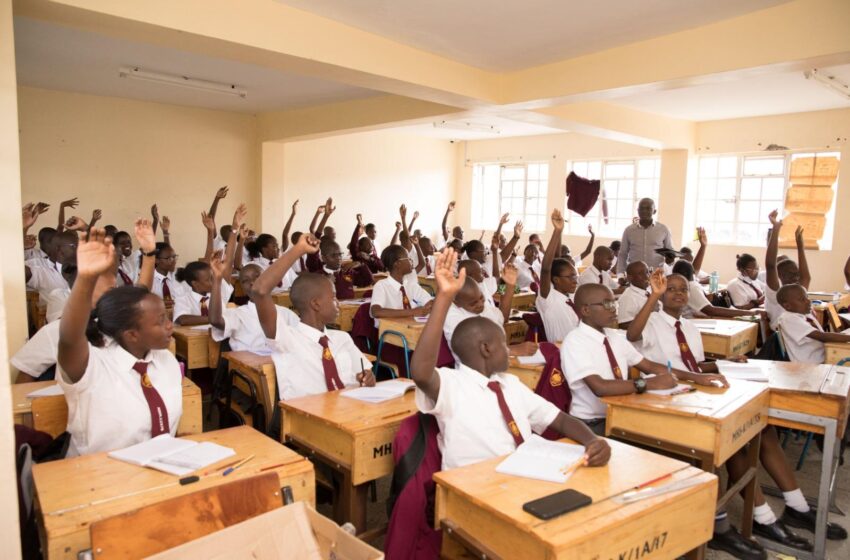
Thousands of Grade 9 learners across Kenya are preparing for the 2026 Kenya Junior School Education Assessment (KJSEA), with the Kenya National Examinations Council (KNEC) scheduling a rehearsal on October 23 before the written assessments begin on October 26.
The assessment will run until October 30, marking an important stage in the transition of learners from junior school to senior school under Kenya’s Competency-Based Education (CBE) system. Schools, parents and candidates are expected to use the published timetable to organise revision, transport, meals and other arrangements ahead of the assessment period.
KNEC has published the official 2026 KJSEA timetable and instructions, document reference KNEC/TD/SE/KJSEA/TT/2026/003. The document outlines the dates, paper codes, examination durations and instructions governing the administration of the assessment.
Read Also: Pharmacy Board Looks to Shape Future of Pharmaceutical Practice
The 2026 exercise follows the first KJSEA administration in 2025. It therefore represents the second year of the national assessment under the new education framework, rather than its inaugural year.
KJSEA 2026: Key Dates for Grade 9 Candidates
The assessment period begins with a rehearsal on Friday, October 23, when candidates are expected to familiarise themselves with the examination-centre environment and receive instructions from assessment officials.
The written papers start on Monday, October 26, with English Language and English Composition and Literary Analysis. Candidates will subsequently sit papers covering Kiswahili, Kenyan Sign Language, Mathematics, Agriculture, Integrated Science, Social Studies, Creative Arts and Sports, Pre-Technical Studies and religious education.
The timetable also provides alternative durations for candidates using Braille and, where applicable, candidates with hearing impairments.
The KNEC examinations timetable portal provides access to the relevant assessment documents. Candidates should consult the official revised timetable and their school for any additional instructions rather than relying exclusively on social media summaries.
The timetable also confirms that project assessments were scheduled earlier in the year. Creative Arts and Sports projects ran from May to July, while Pre-Technical Studies and Agriculture project assessments were scheduled for July.
These activities form part of the broader assessment programme and should not be confused with the five-day written examination period.
Day-by-Day KJSEA Examination Timetable
The following schedule summarises the main written papers in the published KNEC timetable. All times are East Africa Time.
| Assessment Subject | Timetable Schedule | Exam Administration Protocol |
|---|---|---|
| English Language; English Composition and Literary Analysis | Monday, October 26: 8:30–10:10 a.m.; second paper 11:10 a.m.–12:55 p.m. | Candidates must follow the correct paper sequence and observe the prescribed duration. Special-needs candidates follow their allocated times. |
| Kiswahili Lugha; Kiswahili Insha na Utangulizi wa Fasihi; Kenyan Sign Language | Tuesday, October 27: morning session from 8:30 a.m.; second session from 11:10 a.m. | Candidates must check their registered papers and follow the centre manager’s instructions. |
| Mathematics; Agriculture | Wednesday, October 28: Mathematics 8:30–10:30 a.m.; Agriculture 11:30 a.m.–1:10 p.m. | Candidates should bring permitted mathematical instruments and follow the instructions printed on each paper. |
| Integrated Science; Social Studies; Creative Arts and Sports | Thursday, October 29: Integrated Science 8:30–10:10 a.m.; Social Studies 11:10 a.m.–12:40 p.m.; Creative Arts and Sports 2:00–3:40 p.m. | Candidates must observe the separate sessions, remain within the allocated assessment period and follow invigilator instructions. |
| Pre-Technical Studies; CRE, IRE or HRE; Integrated Science Paper 2 | Friday, October 30: Pre-Technical Studies 8:30–10:10 a.m.; religious education 11:10 a.m.–12:40 p.m.; Integrated Science Paper 2 2:00–3:00 p.m. | Candidates should confirm their registered religious education paper and observe the afternoon session arrangements. |
Source: Official KNEC 2026 KJSEA timetable. The table summarises the main examination sessions; candidates should consult the full document for paper codes, special-needs timings, breaks and other detailed instructions.
Why the October 23 Rehearsal Matters
The rehearsal provides candidates with an opportunity to understand how the assessment centre operates before the first written paper.
Read Also: Top Comoros Official Hospitalized in Nairobi Amid Rising Tensions in Moroni
Learners should use the session to confirm their seating arrangements, understand the reporting procedure and listen carefully to instructions concerning the handling of question papers and answer booklets.
Assessment officials are also expected to brief candidates on the rules governing conduct and the consequences of irregularities. The exercise helps schools identify practical issues that could interfere with the smooth administration of the assessment.
Parents can support their children by confirming transport arrangements, checking the reporting time and ensuring that candidates have the required stationery before the assessment begins.
The rehearsal should not be treated as an additional examination paper. It is an orientation and preparation exercise intended to reduce uncertainty and help learners approach the assessment with confidence.
Candidate Conduct Rules: What Learners Must Observe
KNEC’s timetable includes specific instructions for candidates, teachers, centre managers, supervisors and invigilators. These rules are intended to maintain fairness, protect assessment materials and ensure that candidates complete their papers under consistent conditions.
Punctuality is essential. Candidates are instructed to be available for searching outside the assessment room and seated at their desks or tables at least 15 minutes before the scheduled start. Morning papers begin at 8:30 a.m.
Late arrival can create difficulties for both the candidate and the assessment centre. KNEC’s instructions state that a candidate arriving more than 30 minutes late will only be permitted to sit the paper in exceptional circumstances. Any late candidate must provide a satisfactory explanation to the supervisor.
Candidates must check their examination materials. After receiving a question paper, learners should ensure that its pages are complete and that their names and assessment numbers are correctly recorded where required. They must also follow instructions on the question paper and answer booklet.
Time limits must be respected. KNEC states that no extra time is to be allowed beyond the duration specified for a paper. Where a discrepancy arises between the timetable and the question paper, the time stated on the question paper takes precedence.
Reading time is included in the allocated duration unless special instructions for a particular paper provide otherwise.
Candidates should therefore avoid spending excessive time on questions that carry few marks and should read the instructions carefully before beginning their responses.
Assessment integrity must be protected. Candidates should follow all directions from supervisors and invigilators, use only permitted materials and avoid any conduct that could amount to an assessment irregularity. Questions about an unusual circumstance should be directed to the assessment officials rather than resolved through unauthorised action.
The full KNEC timetable and candidate instructions should be consulted for the complete requirements applicable to each paper.
Special Arrangements for Candidates With Disabilities
The published timetable makes provision for candidates using Braille and candidates with hearing impairments in applicable papers.
These arrangements include additional time where specified. For example, the English Language paper scheduled for 8:30 a.m. on October 26 runs for one hour and 40 minutes under the standard schedule, one hour and 50 minutes for the hearing-impaired version and two hours and 10 minutes for the Braille version.
Similar differences appear in other papers, including English Composition and Literary Analysis and selected subjects later in the week.
Candidates and their schools should confirm the applicable version of each paper and the relevant reporting and finishing times before the assessment begins. The full timetable should be used for these arrangements because a general summary may not capture every special-needs provision.
What Parents and Schools Should Do Before the Assessment
The remaining preparation period should focus on practical readiness as well as academic revision.
Schools should ensure that candidates understand the timetable, know where they are expected to report and have received the necessary instructions. Teachers should help learners practise managing their time, reading questions accurately and presenting their answers clearly.
Parents can assist by establishing a regular sleep routine, arranging reliable transport and ensuring that stationery is prepared in advance. Learners sitting papers across several sessions on Thursday and Friday should also have suitable arrangements for meals and breaks.
Revision should remain balanced. Concentrating on difficult topics, reviewing previous exercises and identifying mistakes can be more productive than attempting to cover every subject at the last minute.
Schools should also communicate any official timetable changes promptly. The KNEC website remains the appropriate starting point for checking the latest assessment documents and instructions.
KJSEA and the Transition to Senior School
The assessment forms part of the wider Competency-Based Education framework, which places emphasis on learners’ demonstrated knowledge, skills and competencies.
Grade 9 is an important transition point because learners are preparing to progress to senior school and pursue pathways aligned with their interests, abilities and educational goals.
The KJSEA should therefore be understood within the broader assessment framework rather than as an isolated test. Learners’ school-based assessments and other applicable assessment components also have a role in the overall process.
Read Also: KNEC Grade 10 Assessment 2026: Guidelines, Timelines & School Requirements
Accurate assessment administration is essential to maintaining confidence in the results and ensuring that learners are treated fairly. Clear instructions, secure handling of materials and consistent application of the rules help protect the credibility of the exercise.