
KNEC Tightens 2026 KCSE Security as Candidates Face New Rules on Watches, Phones & School Visits

KNEC
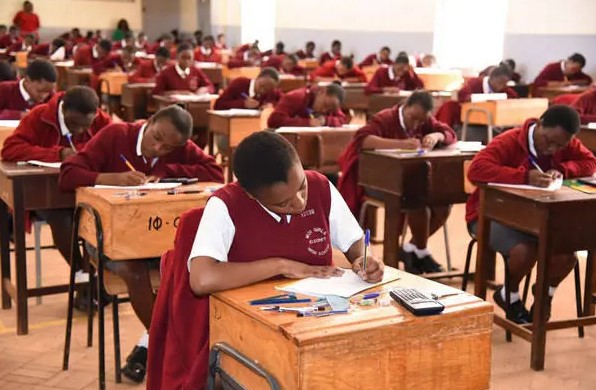
The Kenya National Examinations Council (KNEC) has reinforced examination security measures as the 2026 Kenya Certificate of Secondary Education (KCSE) examinations enter their main written-paper phase, placing renewed responsibilities on school heads, examination officials and centre managers.
The latest instructions require candidates to surrender the use of all wristwatches inside examination rooms, with schools expected to install functional wall clocks to help learners monitor examination time. The council has also reiterated restrictions on mobile phones, electronic devices and access by unauthorised individuals.
The measures come as more than 1.04 million candidates undertake the national secondary school examination, which began with oral and practical papers on October 19 before the main written examinations commenced on November 2. The exercise is scheduled to conclude on November 20, 2026.
Read Also: Pharmacy Board Looks to Shape Future of Pharmaceutical Practice
The Ministry of Education has separately maintained restrictions on external school activities during Third Term, including candidate prayer days involving visitors, annual general meetings and prize-giving ceremonies. The combined measures are intended to minimise disruptions and strengthen the integrity of national examinations.
KNEC reinforces total wristwatch ban inside examination rooms
One of the most significant instructions concerns the prohibition of wristwatches inside KCSE examination rooms.
In a communication issued on November 1, KNEC Chief Executive Officer David Njengere reminded examination centre managers that candidates must not enter examination rooms wearing wristwatches of any kind.
The restriction covers ordinary analogue watches, digital watches and smartwatches.
Centre managers have instead been directed to ensure that every examination room has a functional wall clock that candidates can use to monitor the time remaining during their papers.
The instruction is important because candidates traditionally rely on personal watches to organise their examination time, particularly during lengthy papers involving multiple sections.
The requirement for wall clocks provides a common time reference for everyone sitting an examination in the same room.
According to the KNEC examination security instructions reported by Eastleigh Voice, the directive applies to all types of wristwatches and requires centre managers to provide clocks in every examination room.
The restriction should not be confused with a ban introduced for the first time in November. KNEC’s 2026 field-officer briefing notes already included the requirement, with the latest communication reinforcing compliance as the examination entered its high-candidature phase.
Mobile phones and electronic devices face tighter controls
KNEC has also strengthened restrictions governing mobile phones and other electronic equipment within examination centres.
Under the 2026 examination briefing instructions, mobile phones belonging to people present at examination centres must be switched off and secured under lock and key outside examination rooms during examination sessions.
The requirement extends beyond candidates and teachers to include security officers and other personnel operating within the centres.
The instructions also cover teachers involved in laboratory preparations for practical examinations, who must ensure that their devices are secured outside the examination room.
This measure is intended to prevent unauthorised communication, access to examination content and possible coordination between individuals inside and outside examination centres.
The use of electronic communication devices during examinations can create opportunities for malpractice, particularly where candidates attempt to obtain assistance through external communication channels.
The 2026 KNEC briefing and sensitisation notes further require invigilators to position themselves strategically behind candidates to discourage attempts to access unauthorised materials.
Supervisors are also expected to record incidents as they occur and ensure that candidates do not enter examination rooms carrying prohibited materials.
The measures make it necessary for school administrators to organise secure storage arrangements before examination sessions begin.
Ministry restricts prayer days, AGMs and prize-giving ceremonies
Separate from the examination-room restrictions, the Ministry of Education has maintained strict administrative controls on activities conducted in schools during Third Term.
A circular dated September 3, 2026, issued by Principal Secretary for Basic Education John Ololtuaa, directed education officials to regulate social, co-curricular and external engagement activities throughout the examination and national assessment period.
The directive prohibits prayer sessions for candidates involving parents, outsiders or other external visitors during the examination period.
Schools have also been instructed to move annual general meetings to First or Second Term rather than organising them during Third Term.
Read Also: KNEC Grade 10 Assessment 2026: Guidelines, Timelines & School Requirements
Prize-giving ceremonies, thanksgiving events and dedicated candidate prayer days must similarly be scheduled outside the restricted period.
The Ministry explained that the measures are intended to minimise unnecessary interactions between candidates and external parties during preparations and administration of national examinations.
However, the directive does not prohibit all religious activities within schools. Regular prayers and worship sessions organised internally by school chaplains and teachers are permitted to continue.
The September 2026 Ministry directive also assigns regional, county and sub-county education directors responsibility for ensuring that institutions comply with the restrictions.
The measures reflect the government’s position that Third Term should remain focused on academic preparation and the administration of national examinations.
Original national identity cards required for examination personnel
KNEC has also introduced stricter identification requirements for individuals authorised to operate within examination centres.
Centre managers are required to maintain approved weekly lists of all personnel authorised to be present at their institutions during the examination period.
Individuals appearing on the approved lists must carry their original national identity cards to facilitate verification while undertaking examination duties.
The requirement is intended to ensure that only authorised personnel access examination centres and participate in the administration process.
It also provides a clearer accountability mechanism in cases involving suspected malpractice, unauthorised access or breaches of examination procedures.
Examination officials are further expected to display identification badges showing their respective roles within the centres.
These requirements are particularly important because examination centres accommodate different categories of personnel, including supervisors, invigilators, security officers and designated administrative staff.
By maintaining updated personnel records and requiring original identification documents, KNEC seeks to minimise the possibility of impersonation and unauthorised entry.
The latest instructions issued by KNEC Chief Executive Officer David Njengere specifically highlight the need for original national identification cards and approved weekly personnel lists.
Examination containers must be opened at 7am
Another important administrative requirement concerns the handling and distribution of examination materials.
KNEC has directed examination officials to ensure that examination containers are opened at exactly 7am, in line with the prescribed procedures.
The requirement is intended to maintain consistency in the handling of examination materials and ensure that question papers are distributed through authorised channels.
The security of examination containers is particularly important because they hold confidential materials that must remain protected until the appropriate time.
KNEC’s 2026 examination security arrangements also include the use of smart padlocks on examination containers, strengthening access controls at distribution centres.
The briefing notes explain that the smart padlock system, previously piloted in selected containers, was being extended across distribution centres during the 2026 examination cycle.
The measures are part of a wider effort to improve the security of examination materials from distribution points to individual schools.
The official KNEC examination timetable and instructions also specify that morning examination sessions begin at 8am, while afternoon papers start at 2pm.
Legal framework governing examination security in Kenya
The examination security requirements operate within the wider legal framework governing national examinations and basic education.
The Kenya National Examinations Council Act No. 29 of 2012 establishes KNEC and provides the statutory foundation for the council’s administration and regulation of national examinations and assessments.
The legislation gives the council responsibility for maintaining the credibility, integrity and standards of national examinations.
It also provides a framework for dealing with examination irregularities and offences involving the unlawful handling of examination materials.
The KNEC Act No. 29 of 2012 is therefore an important legal reference when examining the council’s authority to establish examination procedures and enforce compliance.
The Basic Education Act No. 14 of 2013 provides another important foundation by establishing the legal framework for the provision, regulation and management of basic education in Kenya.
The legislation addresses the responsibilities of education institutions and the government’s obligation to provide an organised and accountable education system.
Its provisions must be read alongside the KNEC Act when considering the responsibilities of schools, education administrators and other institutions involved in national examinations.
The Basic Education Act provides the broader institutional context within which schools operate and implement government education policies.
The Ministry’s Third Term circulars and KNEC’s annual examination instructions then translate these responsibilities into practical administrative requirements.
Examination security measures and institutional responsibilities
The principal requirements affecting schools during the 2026 KCSE examination period can be summarised as follows:
| Examination security measure | Regulatory authority | Operational school mandate |
|---|---|---|
| Wristwatch restrictions | KNEC 2026 examination instructions | Candidates must not wear wristwatches of any kind; functional wall clocks must be installed in every examination room. |
| Mobile phone restrictions | KNEC examination security guidelines | Phones must be switched off and secured outside examination rooms during examination sessions. |
| Third Term visitor restrictions | Ministry of Education September 3, 2026 circular | Candidate prayer days involving outsiders, AGMs and prize-giving ceremonies are restricted or moved outside Third Term. |
| Staff identification | KNEC examination administration instructions | Approved examination personnel must carry original national identity cards and display identification badges. |
| Examination container security | KNEC examination management guidelines | Containers must be opened at the prescribed time and secured through approved procedures. |
More than one million candidates sit the 2026 KCSE examination
The stricter security measures come during one of Kenya’s largest national secondary school examination exercises.
According to figures released by the Ministry of Education, 1,048,355 candidates registered for the 2026 KCSE examination.
The figure represents an increase from the 995,860 candidates recorded in 2025.
The large candidature places additional demands on examination administrators, particularly in the areas of examination material distribution, supervision, security and coordination between schools and education officials.
The 2026 examination began with oral, practical and low-candidature papers on October 19, before the main written papers started on November 2.
The examination is scheduled to conclude on November 20, according to the official KNEC timetable.
Education Cabinet Secretary Julius Ogamba has maintained that the government has strengthened examination security arrangements to reduce the risk of leakage and early exposure of examination materials.
The Ministry has also warned candidates, parents and teachers against individuals claiming to possess leaked examination papers or promising access to confidential materials.
Such schemes expose unsuspecting individuals to financial losses while potentially placing candidates at risk of examination-related disciplinary action.
What the new rules mean for candidates and parents
The reinforced instructions require candidates to adjust to a more controlled examination environment throughout the remaining KCSE period.
Learners must avoid carrying prohibited electronic devices or wristwatches into examination rooms and should familiarise themselves with the examination timetable.
Parents and guardians must also understand that the restriction on external prayer sessions and school activities is intended to protect candidates from unnecessary disruptions.
Schools, meanwhile, must ensure that examination rooms have working wall clocks, secure phone-storage arrangements and clearly documented personnel lists.
The responsibilities extend to school heads, supervisors, invigilators and security officers, all of whom must comply with the instructions issued by KNEC.
The measures also underline the importance of preventing examination malpractice before it occurs rather than relying exclusively on investigations after an irregularity has been detected.
Examination integrity remains the priority
The 2026 KCSE security measures demonstrate the importance of protecting the credibility of national examinations through coordinated institutional action.
Read Also: Top Comoros Official Hospitalized in Nairobi Amid Rising Tensions in Moroni
The wristwatch restrictions, phone-storage requirements, staff identification procedures and Ministry directives on external school activities are intended to reduce opportunities for malpractice and ensure that candidates undertake their examinations under consistent conditions.
However, effective implementation will depend on the conduct of examination officials, cooperation from school administrators and compliance by candidates and parents.
For the more than one million learners undertaking the examination, the immediate priority remains completing their papers in a secure and orderly environment.
The credibility of the KCSE certificate ultimately depends on public confidence that every candidate is assessed fairly, examination materials remain protected and the rules are applied consistently across all examination centres.

