
Martha Karua Breaks Silence After Okoth Obado Is Found Guilty of Sharon Otieno Murder

When the High Court convicted former Migori Governor Okoth Obado and his two co-accused over the murder of university student Sharon Otieno, it closed one of Kenya’s longest-running and most closely followed criminal cases while reigniting calls for stronger action against the country’s growing femicide crisis.
The judgment, delivered by Justice Cecilia Githua on Thursday, found Obado, his former personal assistant Michael Oyamo and former Migori County clerk Caspal Obiero guilty of Sharon’s murder. The ruling brought to an end nearly eight years of investigations and court proceedings that had gripped the nation since Sharon’s killing in September 2018.
Beyond the courtroom victory, political leaders and women’s rights advocates said the verdict should not only deliver justice for Sharon’s family but also become a catalyst for reforms aimed at ensuring that women facing gender-based violence receive timely justice.
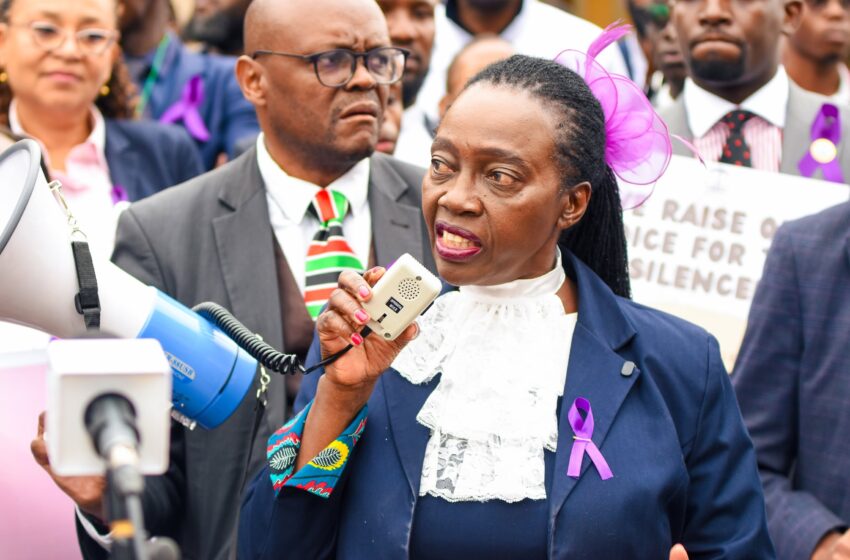
“It has taken 7 years and 10 months, 42 prosecution witnesses, and 81 exhibits presented by the ODPP for justice for Sharon Otieno to finally arrive,” wrote Martha Karua.
The People’s Liberation Party leader acknowledged that Sharon’s loved ones had finally seen justice served after years of waiting. However, she stressed that the length of the trial exposed deep weaknesses within Kenya’s criminal justice system, particularly in handling cases involving violence against women.
Karua argued that while the prosecution deserved recognition for successfully securing convictions, justice should never take close to a decade to reach grieving families. She said the Sharon Otieno case should become a benchmark for improving investigations, prosecutions and court processes in similar cases across the country.
Karua calls for urgency in tackling femicide

Karua used the moment to highlight the broader challenge of femicide, saying Sharon’s case reflects the experiences of countless Kenyan women whose deaths often fail to receive equal public attention or swift legal action.
She urged institutions responsible for investigating and prosecuting criminal cases to apply the same determination demonstrated in Sharon’s case to every victim, regardless of whether their story dominates national headlines.
“Today, as Sharon’s family sat in court to hear the verdict, we were reminded of the immense cost of justice delayed.
While we commend the prosecution, justice must not take nearly a decade. Across Kenya, from young girls to grandmothers, women continue to be lost to a horrific wave of femicide.
Our police, ODPP, and courts must bring the same rigor, urgency, and commitment to every case. not only those that attract national attention. We must all to our part to end the killing of women.”
Her remarks resonated with many Kenyans who have increasingly demanded stronger action against gender-based violence and more efficient handling of cases involving the murder of women and girls.
The Sharon Otieno case has remained one of the country’s most symbolic examples of violence against women, not only because of the high-profile individuals involved but also because of the prolonged legal process that followed.
Justice Githua, while delivering the judgment, said the prosecution had successfully established the guilt of all three accused persons beyond reasonable doubt.
“It is therefore my finding that the prosecution has proved its case against the first, second and third accused persons beyond reasonable doubt. I consequently find each accused guilty of the offence of murder. Each accused is accordingly convicted.”
Court finds evidence formed an unbroken chain
The case stemmed from the September 2018 killing of Sharon, a 26-year-old Rongo University student who was approximately seven months pregnant when she was murdered.
Throughout the lengthy trial, prosecutors presented evidence from 42 witnesses and produced 81 exhibits in support of their case. Rather than relying on direct eyewitness testimony, the prosecution built its argument largely on circumstantial evidence linking the three accused persons to Sharon’s abduction and eventual killing.
Justice Githua concluded that the evidence presented before the court established an unbroken chain connecting Obado, Oyamo and Obiero to the murder.
The judge also dismissed Obado’s defence regarding Sharon’s pregnancy. Although the former governor had maintained that he had accepted the pregnancy, the court found that evidence presented during the trial pointed in a different direction.
According to the judgment, prosecutors successfully demonstrated that Obado had pressured Sharon to terminate the pregnancy, providing what the court considered a motive for the crime.
The murder shocked the country in 2018 after Sharon disappeared shortly after leaving Graca Hotel in Rongo alongside Nation Media Group journalist Barrack Oduor.
The two had reportedly left the hotel together before being abducted by unknown individuals travelling in another vehicle. Oduor managed to escape by jumping from the moving car, surviving the ordeal and later becoming a key witness in the investigation.
Sharon, however, was not as fortunate. Her body was later discovered in a thicket near Kodera Forest in Homa Bay County bearing multiple stab wounds. The brutal killing triggered nationwide outrage and intensified debate about violence against women, abuse of power and accountability.
Over the years, the case attracted significant public interest as court hearings unfolded, with each development closely monitored by Kenyans eager to see whether justice would ultimately prevail.
Thursday’s convictions now represent a major milestone in one of Kenya’s most high-profile murder trials. For Sharon’s family, the verdict offers long-awaited legal closure after almost eight years of uncertainty and grief.