
Why Merishaw School Exam Case Was Withdrawn By Nairobi Court

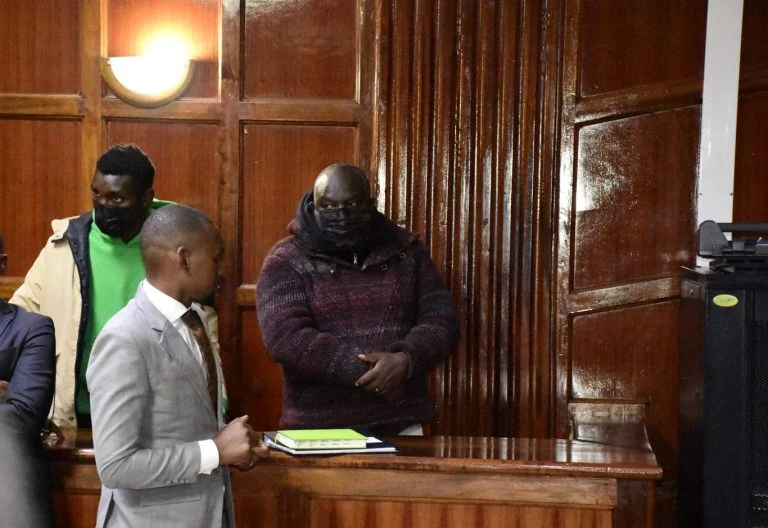
David Kariuki and Alex Kasaine (in the dock) flagged by one of the defence lawyers (in suit) appear before Milimani Law Court Magistrate Daisy Mutai on Tuesday, May 26, 2026. IMAGE/ PD Daily
A Nairobi court has withdrawn the examination malpractice case against former Merishaw School principal David Gideon Kariuki and school technician Alex Kataiyo Kasaine, marking a significant development in one of Kenya’s closely watched education-related prosecutions.
The decision, delivered at the Milimani Law Courts, does not amount to an acquittal. Instead, it allows prosecutors to conduct further reviews and, if necessary, reinstate the charges at a later date.
The ruling has renewed debate about examination integrity, prosecutorial discretion, and the legal safeguards surrounding Kenya’s national examinations.
Why the Court Allowed the Charges to Be Withdrawn
Milimani Principal Magistrate Daisy Mutai allowed the prosecution’s application to withdraw the charges under Section 87(a) of the Criminal Procedure Code.
The prosecution had earlier requested additional time from the court to reassess the evidence and determine whether the case should proceed.
After considering the application, the magistrate ruled that the legal requirements for withdrawal had been satisfied.
Importantly, the withdrawal does not permanently end the matter.
Under Kenyan law, prosecutors may revive the case if subsequent investigations uncover sufficient evidence to justify fresh proceedings.
What Section 87a of the Criminal Procedure Code Means
Many Kenyans often confuse the withdrawal of criminal charges with a declaration of innocence.
However, Section 87(a) of the Criminal Procedure Code allows the Office of the Director of Public Prosecutions (ODPP) to discontinue a criminal case before judgment without preventing future prosecution.
This legal provision enables investigators and prosecutors to:
-
Review evidence more comprehensively.
-
Obtain additional witness statements.
-
Conduct further forensic analysis.
-
Correct procedural issues before refiling charges.
Consequently, the withdrawal should be viewed as a procedural legal step rather than a final determination of guilt or innocence.
Summary of the Court Decision
| Issue | Outcome |
|---|---|
| Court | Milimani Law Courts |
| Magistrate | Daisy Mutai |
| Application | Charges withdrawn under Section 87(a) |
| Applicants | Office of the Director of Public Prosecutions |
| Current Status | Case withdrawn but may be reinstated |
Allegations That Led to the Criminal Case
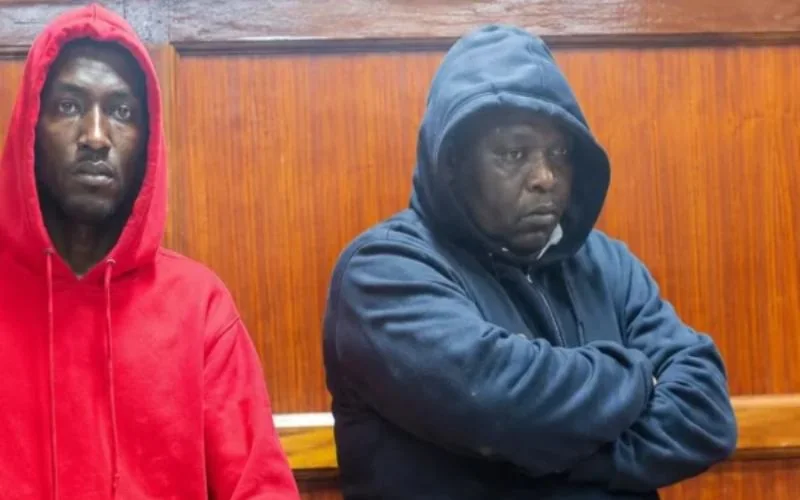
The case stemmed from allegations relating to the administration of the 2025 Kenya Certificate of Secondary Education (KCSE) examinations.
According to investigators, the former principal and the school’s technician were accused of unlawfully disclosing confidential examination material during the examination period.
Prosecutors alleged that the examination paper involved was the English Paper 1 Functional Writing Skills examination.
Authorities further claimed that the alleged disclosure occurred while the accused were carrying out official responsibilities connected to supervising and administering the national examinations.
The accused denied the allegations through their legal representatives before the matter was temporarily halted.
CCTV Allegations Added to the Investigation
Beyond the alleged disclosure of examination material, investigators also accused the two officials of participating in a conspiracy to facilitate examination malpractice.
The prosecution alleged that the school’s CCTV surveillance system was interfered with to create opportunities for examination irregularities.
Surveillance systems have increasingly become an important component of Kenya’s examination security framework.
Their installation aims to deter cheating while providing investigators with digital evidence whenever examination integrity is questioned.
Whether those allegations will ultimately be tested in court will depend on the outcome of the prosecution’s ongoing review.
Timeline of the Merishaw School Case
| Date | Development |
|---|---|
| November 2025 | Alleged KCSE examination malpractice reported |
| May 2026 | Prosecution sought more time to review evidence |
| July 2026 | Court allowed withdrawal under Section 87(a) |
Why KCSE Examination Integrity Matters
The KCSE examination remains one of Kenya’s most important national assessments.
Results influence university admissions, scholarship opportunities, career pathways, and employment prospects for thousands of students every year.
Because of these high stakes, examination security has become a national priority involving multiple government agencies.
Over the years, authorities have introduced measures such as:
-
CCTV surveillance in examination centres.
-
Secure transportation of examination papers.
-
Digital monitoring systems.
-
Tighter invigilation procedures.
-
Enhanced coordination between education and security agencies.
These reforms are intended to strengthen public confidence in national examinations while reducing opportunities for malpractice.
The Role of the Office of the Director of Public Prosecutions
The Office of the Director of Public Prosecutions has a constitutional responsibility to evaluate evidence independently before proceeding with criminal prosecutions.
In some cases, prosecutors may determine that additional investigations are necessary before continuing with legal proceedings.
Such reviews help ensure that criminal cases presented before the courts meet the required legal standards and reduce the risk of unsuccessful prosecutions.
Legal experts generally view periodic evidence reviews as an important safeguard for both accused persons and the integrity of the justice system.
What Happens Next
Although the charges have been withdrawn, the matter remains legally open.
If investigators obtain new evidence or conclude their review with sufficient grounds for prosecution, the Director of Public Prosecutions may file fresh charges against the accused.
If no further action is taken, the matter may remain closed indefinitely.

