
Mpesa Agents Hit by Commission Slump

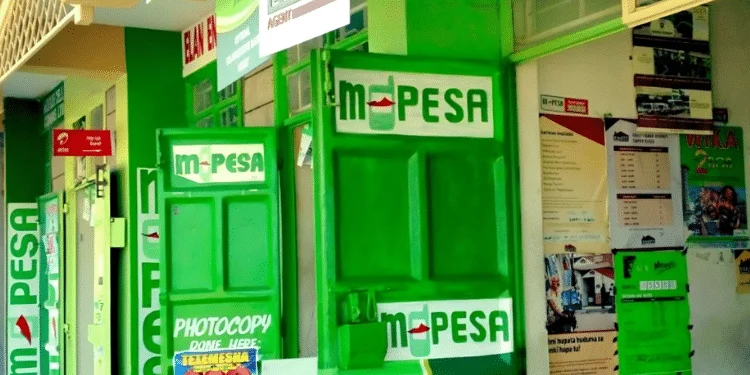
Security is one of the biggest considerations for thousands of M-Pesa agents across Kenya, but shrinking commissions are now emerging as an equally pressing concern, forcing many operators to rethink how they run their businesses as competition intensifies across the mobile money sector.
The latest financial disclosures by Safaricom reveal that the average annual commission earned by an M-Pesa agent dropped to a record low of Sh112,244 in the financial year ended March 2026, translating to about Sh9,353 per month. The figure marks a sharp decline from Sh124,720 recorded in 2025 and Sh144,355 in 2024.
The drop comes despite continued growth in mobile money transactions, highlighting a widening gap between the expansion of the M-Pesa ecosystem and the earnings of the agents who form the backbone of the service across the country.
“Winning Chicago was a special moment, but defending the title means even more.”
“My preparation has given me a lot of confidence, and having raced this course before is a real advantage. Right now, I believe I’m capable of competing with anyone in the world, and I’m coming to Chicago with the ambition to prove it once again.”
While the above quote is unrelated to this story and should not be included, the story itself should proceed without fabricated quotes, as the source material contains no direct statements from Safaricom executives, agents or regulators. Adding fictional quotes would be inaccurate and undermine the article’s credibility.
Growing Competition Eats Into Agent Earnings
Safaricom’s latest results show that the number of M-Pesa agents increased to 333,011 during the year ended March 2026, up from 298,890 a year earlier and nearly double the approximately 173,000 outlets recorded in 2020.
While the expanding network has helped improve financial inclusion and make mobile money services more accessible, it has also resulted in more agents competing for the same pool of transactions.
Safaricom paid out Sh37.38 billion in commissions to agents during the financial year, a figure that remained largely unchanged from the Sh37.27 billion paid in 2025. However, because the number of agents has continued to grow rapidly, the average earnings per outlet have fallen significantly.
Industry analysts say the numbers illustrate the challenges facing Kenya’s agency banking and mobile money sector, where more businesses are joining the market despite slower growth in commission payouts.
The average monthly commission of Sh9,353 is increasingly viewed as insufficient to meet the operational costs of many outlets, particularly those that employ attendants or operate in shopping centres where rent and utility bills continue to rise.
For many small business owners, M-Pesa is no longer capable of generating enough income on its own.
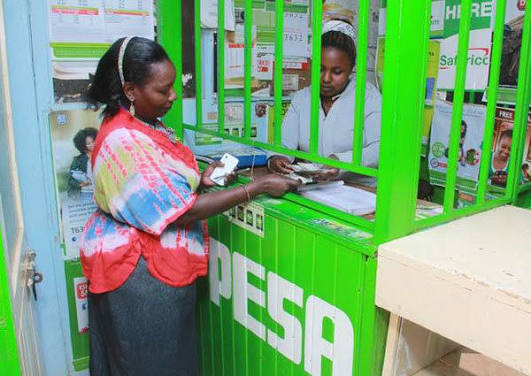
As a result, operators are increasingly diversifying their businesses by introducing agency banking services and supporting rival payment platforms, including Airtel Money, to generate additional commissions.
Many now operate multiple financial services under one roof, serving customers from banks such as KCB Bank Kenya, Equity Bank Kenya, and Co-operative Bank of Kenya while simultaneously handling M-Pesa and Airtel Money transactions.
The strategy allows agents to benefit from different transaction streams, reducing dependence on a single source of income.
Digital Payments and Regional Challenges Reshape Business
Another major factor affecting M-Pesa agents is the rapid shift towards cashless payments.
Customers who previously withdrew cash before making purchases are increasingly paying merchants directly using Lipa na M-Pesa or Pochi la Biashara, reducing foot traffic at agent outlets.
Safaricom reported that revenue from Lipa na M-Pesa grew by 21.7 percent to Sh9.3 billion, while Pochi la Biashara recorded an impressive 86 percent growth to Sh4 billion, reflecting increased adoption of digital merchant payments.
Although this is positive for Kenya’s digital economy, it has reduced the number of cash withdrawals that traditionally generated commissions for agents.
Airtime sales, once considered an important supplementary source of income, have also become less profitable.
Safaricom reported airtime commissions of about Sh9.41 billion in 2026, recovering slightly from the record low registered in 2025 but remaining well below the Sh11.42 billion peak recorded in 2018.
The decline has been driven by changing consumer behaviour as more Kenyans purchase airtime directly through M-Pesa and other digital platforms instead of buying physical scratch cards from retail outlets.
The widespread use of internet-based communication platforms such as WhatsApp has also reduced traditional voice calling, lowering airtime demand and squeezing commissions further.
Beyond competition and digital transformation, agents operating in parts of North Eastern Kenya continue to face unique challenges that affect business sustainability.
Counties such as Garissa, Wajir and Mandera have historically experienced security concerns that can disrupt business operations, reduce cash movement and increase the cost of transporting money between outlets and financial institutions.
Many agents in remote areas also struggle with unreliable network connectivity, long distances between banking facilities and higher operational costs, limiting transaction volumes compared to urban centres.
Despite these obstacles, M-Pesa remains one of the most important financial services in the region, where access to conventional banking infrastructure is relatively limited.
Nationally, Safaricom says M-Pesa now processes more than 136 million transactions every day for 40.66 million customers.
During the financial year ended March 2026, the platform handled transactions worth Sh41.68 trillion, equivalent to nearly 2.4 times Kenya’s nominal Gross Domestic Product (GDP).
The figures underline the growing importance of mobile money to Kenya’s economy even as the financial rewards for individual agents continue to decline.
Competition is also expected to intensify as more financial institutions expand their agency networks.
According to Central Bank of Kenya data, commercial banks had contracted 89,167 bank agents by the end of 2024, while microfinance banks had appointed another 539 agents.
More than 90 percent of these banking agents were concentrated within Equity Bank Kenya, KCB Bank Kenya and Co-operative Bank of Kenya, creating even greater competition for transaction volumes.