
Omar Abdulkadir Artan World Cup Exclusion Raises Immigration Questions Across Global Football

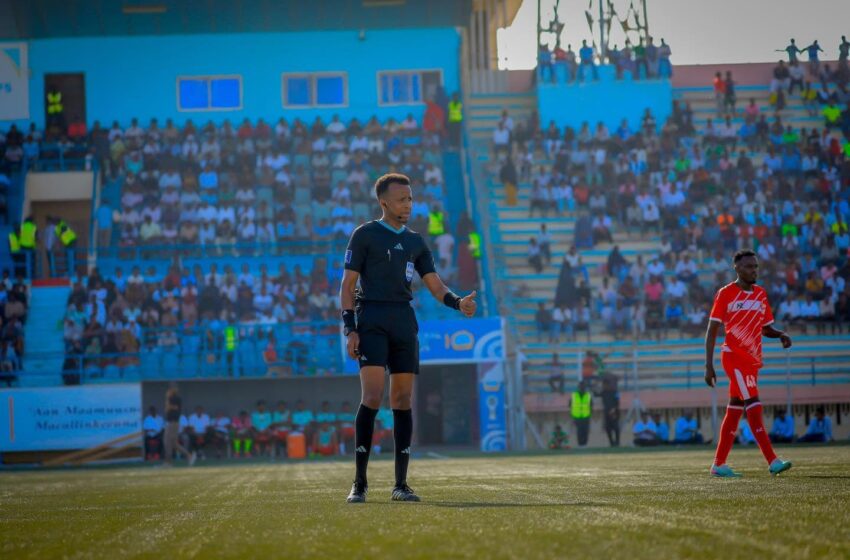
The exclusion of Somali referee Omar Abdulkadir Artan from the 2026 FIFA World Cup has become one of the most discussed stories in international football. What initially appeared to be an immigration issue has quickly evolved into a broader conversation about global mobility, sports diplomacy, immigration policy, and the growing influence of African officials on the world stage.
Artan was expected to make history as the first Somali referee to officiate at a FIFA World Cup finals tournament. Instead, his journey ended at a United States airport after immigration authorities denied him entry despite his reported possession of valid travel documentation.
The decision has sparked debate far beyond football circles, particularly because the tournament is jointly hosted by the United States, Canada, and Mexico. For many observers, the incident highlights the complex intersection between national security policies and international sporting events.
Also Read: Top Comoros Official Hospitalized in Nairobi Amid Rising Tensions in Moroni
Omar Artan Journey From Mogadishu To Global Football
Omar Artan’s rise through football officiating represents one of the most remarkable success stories in Somali sport.
Born in Mogadishu, Artan began officiating local matches before steadily progressing through regional and continental competitions. His inclusion on FIFA’s international referees list in 2018 marked a major breakthrough for both his career and Somali football.
Over the years, he gained recognition for handling high-pressure fixtures across Africa. His performances in major CAF competitions elevated his profile among football administrators and observers.
His selection for the World Cup was not merely a personal achievement. It symbolized the progress of a football system that has spent decades rebuilding amid significant social and economic challenges.
Why Omar Artan Selection Was Historic

For Somalia, Artan’s appointment represented much more than sporting recognition.
The country has rarely been represented at the highest levels of global football. Decades of instability disrupted sports development, infrastructure investment, and talent pathways.
His selection demonstrated that Somali football could now contribute not only players but also elite officials capable of managing the world’s biggest matches.
Key Milestones In Omar Artan Career
| Year | Achievement | Significance |
|---|---|---|
| 2018 | FIFA-listed referee | Entry into international officiating |
| 2024 | First Somali referee at AFCON | Historic continental breakthrough |
| 2025 | CAF Referee of the Year | Recognition among Africa’s elite officials |
| 2025 | CAF Champions League Final | Managed one of Africa’s biggest matches |
| 2026 | FIFA World Cup selection | First Somali chosen for a World Cup |
His progression illustrates how investment in referee education can produce world-class talent even in nations facing significant developmental obstacles.
FIFA World Cup 2026 And Immigration Challenges
The World Cup is often promoted as a celebration of international unity. However, hosting such a massive event also exposes the realities of immigration systems and border controls.
FIFA organizes tournaments, but participating countries maintain authority over visa approvals and border admissions.
This distinction became central to the Artan case.
Although FIFA selected him as an official for the tournament, the governing body has limited influence over sovereign immigration decisions. Once a host nation determines an individual is inadmissible, sporting organizations have little power to reverse the outcome.
The incident demonstrates how international sports events remain dependent on domestic policies.
Understanding The Broader Policy Context
The controversy has also renewed attention on United States immigration policies affecting travelers from several nations.
Over recent years, enhanced vetting procedures have become a recurring topic in debates surrounding border security and international travel.
Supporters of stricter screening measures argue they are necessary for national security. Critics contend that such policies can create barriers for legitimate travelers, including athletes, officials, academics, and business professionals.
The Artan case sits directly at the center of this discussion.
Without detailed public explanations from immigration authorities, speculation has filled the information gap. As a result, the story has attracted significant international attention.
How Sports Diplomacy Is Affected
Major sporting events are often described as instruments of soft power.
Governments use them to showcase openness, tourism opportunities, and international cooperation. When high-profile participants encounter travel restrictions, questions naturally emerge about accessibility and inclusivity.
Sports And Border Policies Comparison
| Factor | Sports Objective | Immigration Objective |
|---|---|---|
| International Access | Encourage participation | Control entry requirements |
| Global Image | Promote openness | Prioritize security concerns |
| Event Operations | Ensure smooth participation | Maintain legal compliance |
| Stakeholder Impact | Athletes and officials | Government agencies |
Balancing these priorities is increasingly difficult in an era of heightened security concerns and complex geopolitical relationships.
Somalia Football Development Story
While headlines focus on the World Cup setback, the larger story may actually be Somalia’s football progress.
Over the last decade, efforts by football authorities, development organizations, and international partners have expanded opportunities for young players and officials.
Referee training programs have become especially important.
Modern officiating requires extensive education, fitness preparation, technological understanding, and international exposure. Access to these resources was once limited for many Somali officials.
As security conditions improved in parts of the country, training initiatives resumed and new pathways emerged.
Artan became one of the clearest examples of what sustained development can achieve.
Factors Behind Somalia Football Growth
| Area | Recent Progress |
|---|---|
| Referee Training | Expanded FIFA-supported education |
| Youth Development | Increased grassroots participation |
| International Representation | More officials and players gaining exposure |
| Administrative Capacity | Stronger football governance structures |
His rise reflects a broader transformation occurring within Somali football rather than an isolated individual success story.
Also Read: Rio Ferdinand To Open International Doors For Arusha Through AFCON 2027
Economic Impact Of Global Sporting Participation
International sporting appointments carry economic significance beyond prestige.
Officials selected for elite tournaments gain access to professional development opportunities, sponsorship visibility, and future assignments.
Countries also benefit from enhanced international recognition.
When referees, athletes, or coaches achieve success globally, they contribute to national branding efforts that can influence tourism, investment perceptions, and international partnerships.
For emerging football nations, representation at events such as the World Cup serves as a powerful symbol of progress.
This explains why Artan’s exclusion generated such strong reactions among Somali football supporters.
What FIFA Can Learn From The Incident
The situation may prompt discussions about how international sporting bodies coordinate with host governments.
Future tournaments could see increased emphasis on early travel clearance procedures for referees, officials, and support staff.
Potential areas for review include:
Possible Improvements
-
Earlier immigration verification processes.
-
Enhanced communication between host governments and sports governing bodies.
-
Faster dispute resolution mechanisms.
-
Greater transparency regarding eligibility concerns.
While no system can eliminate every complication, proactive planning may reduce similar controversies in future tournaments.
Omar Artan Future Remains Bright
Despite missing the World Cup, Artan’s professional reputation remains strong.
His achievements across African football have already secured his place among the continent’s leading officials.
Many referees continue officiating major tournaments well beyond a single World Cup cycle. Given his experience, age profile, and international standing, future opportunities remain highly realistic.
His response following the decision has also drawn praise from football observers.
Rather than focusing on disappointment, he emphasized professionalism, gratitude, and continued commitment to officiating.
That approach may ultimately strengthen his standing within global football circles.
Why This Story Resonates Beyond Football
The Omar Artan story resonates because it touches multiple issues simultaneously.
It is a football story, but also a story about globalization, mobility, opportunity, and national policy.
For Somalia, it highlights remarkable progress in football development.
For FIFA, it underscores the limitations sports organizations face when operating across multiple legal jurisdictions.
For governments, it illustrates how immigration decisions can carry international visibility during major global events.
And for millions of football fans, it serves as a reminder that behind every World Cup appointment lies years of dedication, training, and sacrifice.
Whether remembered as an immigration controversy or a chapter in Somali football history, Omar Artan’s journey has already become one of the most significant stories surrounding the 2026 FIFA World Cup.