
PSG vs Bayern: 5 Things Learnt from 9-Goal UCL Semifinal

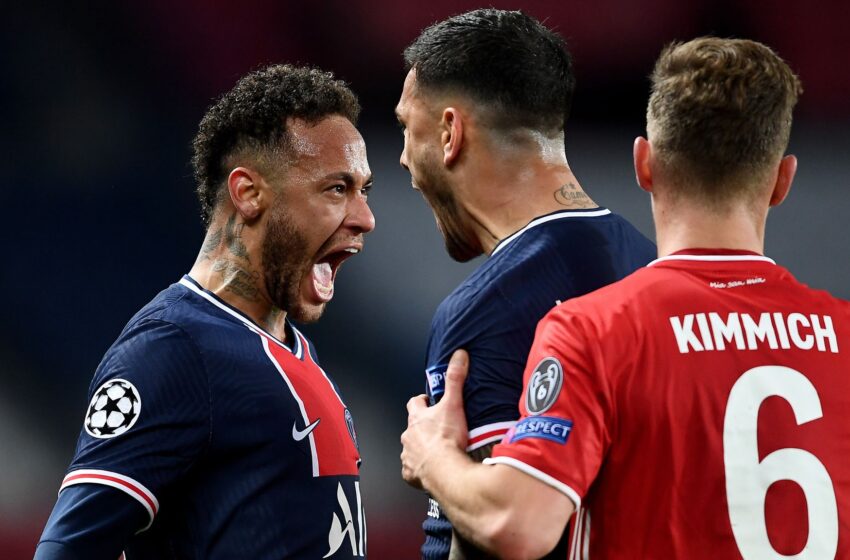
Paris Saint-Germain and Bayern Munich delivered an unforgettable spectacle at the Parc des Princes, crafting a 5-4 thriller that redefined the excitement of a Champions League semi-final.
The nine-goal encounter served as a breathless reminder of the beautiful game’s raw, attacking power.
Kenya Frontline looks at five things learned from this historic first leg.
5.Attacking Brilliance Overrides Defensive Structure
The match was a triumph of offensive intent, proving that at the highest level, sometimes the best form of defense is relentless pressure. Both teams boasted world-class attacking talent, choosing to prioritize vertical, goal-oriented football rather than stifling tactical safety.
This philosophy produced the highest-scoring semi-final first leg in Champions League history. While purists may bemoan the lack of defensive solidity, the sheer quality on display turned the pitch into a canvas, with players like Khvicha Kvaratskhelia and Michael Olise treating the massive occasion as an opportunity for creative expression.
The lesson here is simple and is that when two elite sides decide to throw everything forward, the result is a showcase of human athletic achievement. Goals were not just outcomes of mistakes, but the product of immense individual skill, high-tempo transitions, and a shared refusal to settle for a stalemate.
4.High Defensive Lines Remain a Dangerous Gamble
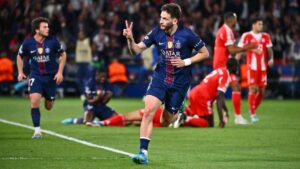
Bayern Munich’s commitment to an aggressive, high defensive line proved to be a double-edged sword. While it enabled them to maintain control and pressure, it left them catastrophically exposed to the rapid counter-attacking pace of PSG’s front line.
PSG punished this openness repeatedly, particularly in the second half when they surged to a 5-2 lead. The space left behind by Bayern’s defenders allowed players like Ousmane Dembélé to exploit gaps with devastating effect, turning transitions into golden opportunities almost instantly.
The match highlighted that against elite-level opposition, an “all-in” defensive strategy requires absolute perfection. Any slight lapse in concentration or recovery speed against attackers of this caliber is immediately fatal, leading to the kind of high-scoreline punishment that nearly cost Bayern the tie.
3.Young Talent Thrives Under Pressure
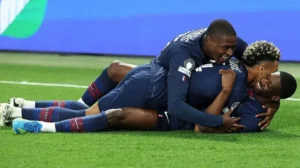
Experience is often cited as the key to Champions League success, but this fixture was dictated by the fearless performances of the youngest players on the pitch. PSG’s contingent, including João Neves and Désiré Doué, performed with a maturity that belied their years.
These young stars did not shy away from the spotlight, instead, they anchored the team’s creative flow and provided crucial composure during the most chaotic segments of the match. Their ability to influence the game at the highest level suggests a shifting of the guard, where youth is increasingly defined by tactical intelligence and bravery.
For the neutrals watching, this was a glimpse into the next decade of elite football. These players demonstrated that they possess not just the technical ceiling to compete with veterans, but the mental fortitude to manage the immense psychological weight of a semi-final atmosphere.
2.The “Fine Margins” of European Football
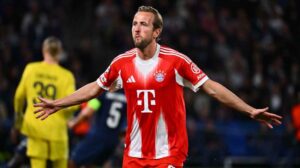
Vincent Kompany’s post-match assessment perfectly captured the reality of this encounter: the game operates on razor-thin margins. While the scoreline suggests a defensive collapse, the reality was a series of pivotal moments,penalties, deflections, and individual flashes, that determined the outcome.
The controversial penalty awarded to PSG serves as a primary example of how referees’ decisions can drastically alter the trajectory of a two-legged tie. Such incidents, combined with missed opportunities at 5-2, remind us that success in Europe is rarely about dominance; it is about capitalizing on fleeting moments of chaos.
Managing these margins is the ultimate challenge for coaches. As the focus shifts to the return leg in Munich, both teams realize that a single error or a marginal call could once again flip the narrative of the entire semi-final, proving that momentum is as fragile as it is powerful.
1.The Second Leg Remains Wide Open

Despite PSG entering the return leg with a lead, the feeling among players and pundits alike is that the tie is far from settled. Bayern’s late rally to make it 5-4 was not just about reducing the deficit; it was a psychological statement that they remain entirely capable of overturning the result at home.
The 5-4 scoreline leaves the door wide open for either side to reach the final in Budapest. With the benefit of the Allianz Arena crowd, Bayern will feel confident they can replicate their attacking output while fixing the structural gaps that left them vulnerable in Paris.
Both managers now face the monumental task of adjusting their strategies. Will they double down on the high-octane attacking style that provided such entertainment, or will they seek a more disciplined approach to navigate the second leg? One thing is certain is that the world will be watching to see how this tactical chess match concludes.