
Ruto Warned Over Strategy That Could Hurt 2027 Re-election Bid

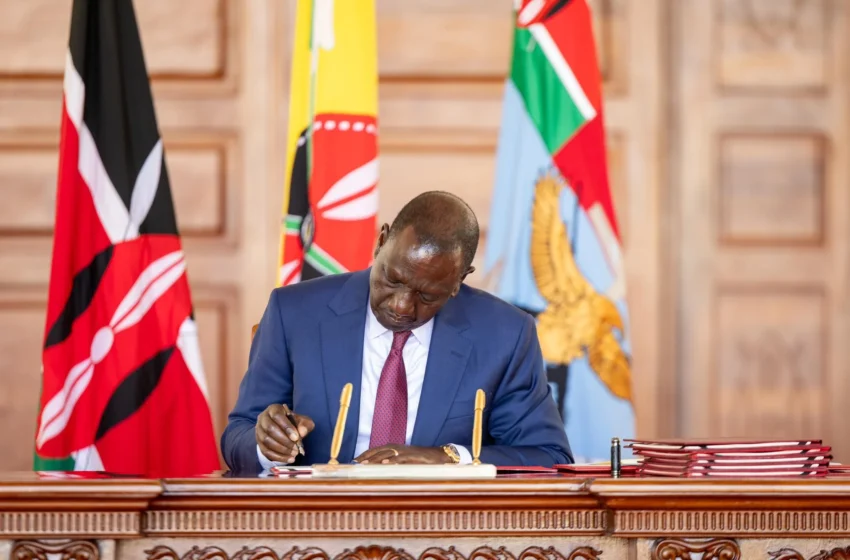
Kenyan politics has taken another intriguing turn after Rodgers Kipembe, the son of Tigania East Member of Parliament Mpuru Aburi, cautioned President William Ruto against neglecting his traditional support base while seeking to rebuild political support in the Mt Kenya region.
Kipembe’s remarks came in the wake of the United Democratic Alliance (UDA)’s crushing defeat in the Ol Kalou parliamentary by-election, a result that has sparked fresh debate about President Ruto’s political strategy ahead of the 2027 General Election.
Taking to X on Sunday, Kipembe argued that the President risks making the same mistake he believes cost opposition leader Raila Odinga victory in the 2022 presidential election.
Follow Kenya Frontline X account for more updates.
According to Kipembe, Raila spent too much time attempting to win over Mt Kenya voters while failing to adequately nurture support in areas that had consistently backed him.
“Mr President, don’t repeat the mistake Raila made in 2022. He spent too much time trying to win over Mt Kenya while taking his traditional support base for granted,” Kipembe wrote.
He urged President Ruto to focus on delivering meaningful development projects in regions that have remained loyal to his administration instead of concentrating most political attention on winning back areas where support has recently declined.
Ol Kalou Defeat Sparks Fresh Political Debate
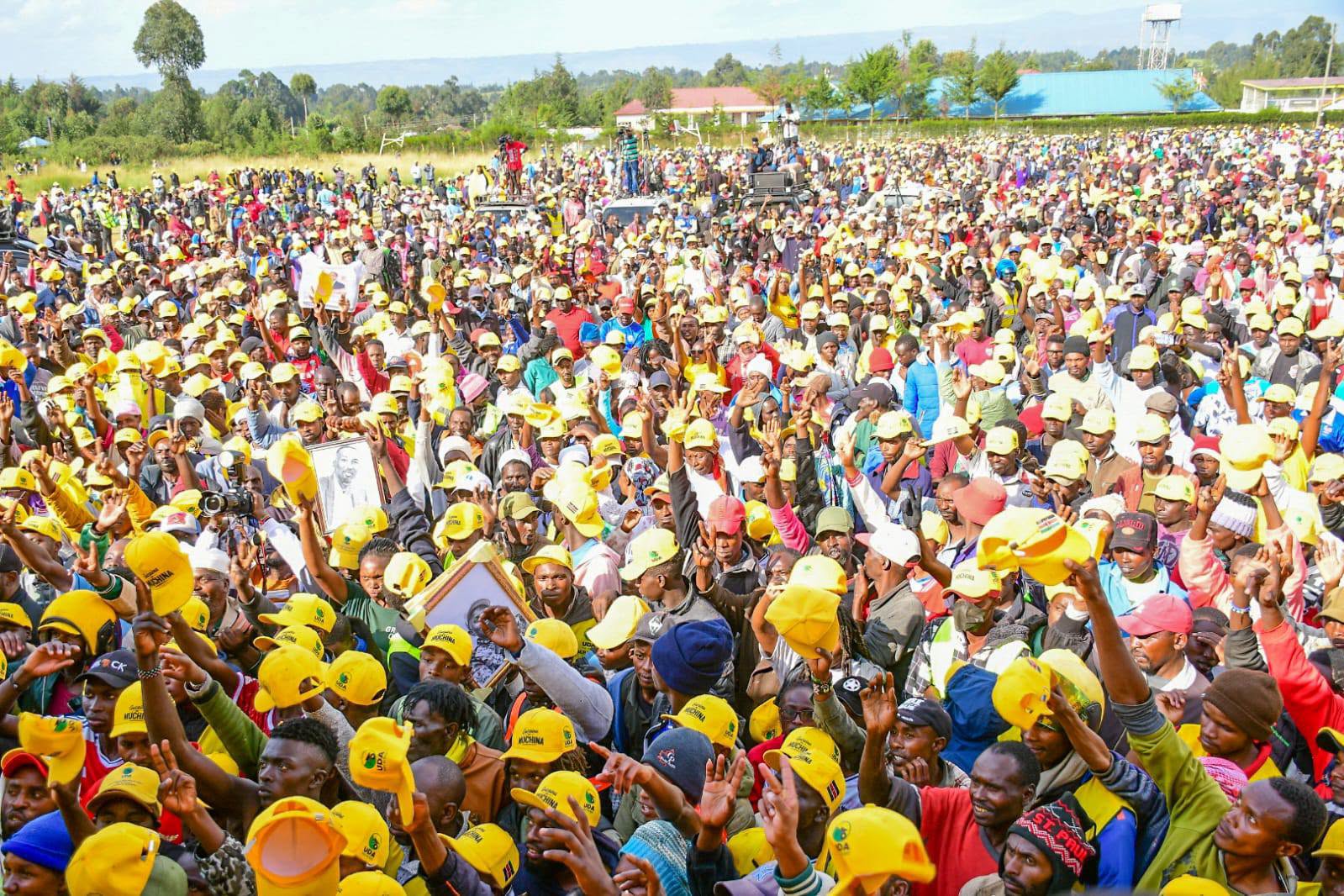
Kipembe’s warning follows one of UDA’s most significant electoral setbacks since forming government.
Democracy for the Citizens Party (DCP) candidate Sammy Kamau Ngotho won the Ol Kalou parliamentary by-election in commanding fashion, defeating UDA candidate Samuel Muchina Nyagah by an overwhelming margin.
Ngotho secured 35,440 votes compared to Nyagah’s 5,450, handing DCP a victory margin of 29,990 votes.
The outcome represented more than just the loss of a parliamentary seat.
Many political observers viewed the result as an important boost for former Deputy President Rigathi Gachagua, whose DCP party has increasingly positioned itself as a major political force in the Mt Kenya region.
UDA had invested considerable resources in the campaign.
Senior government officials, Cabinet Secretaries and elected leaders criss-crossed the constituency seeking votes for the ruling party’s candidate. Government development projects and economic empowerment initiatives also featured prominently throughout the campaign period.
Despite that effort, voters overwhelmingly rejected UDA’s candidate.
The scale of the defeat has renewed questions about whether the ruling party needs to rethink its political approach in Mt Kenya while also maintaining support in other regions that delivered victory in the 2022 General Election.
Kipembe believes that balancing those priorities will be critical over the next year.
Lessons From Mpuru Aburi’s Political Journey

Kipembe also pointed to his father’s political career as evidence that strong grassroots support can sometimes overcome powerful national political waves.
He reminded Kenyans that Mpuru Aburi won the Tigania East parliamentary seat in 2013 on an Orange Democratic Movement (ODM) ticket despite Central Kenya overwhelmingly backing other political formations at the time.
“Look back at 2013. Who was the only legislator elected on an ODM ticket across the entire Central Kenya region?” Kipembe asked.
Another example came during the 2022 General Election.
Mpuru Aburi openly supported Raila Odinga’s presidential bid while contesting on the National Ordinary People Empowerment Union (NOPEU) ticket.
Meru County was widely viewed as one of UDA’s strongholds during that election.
Even so, Aburi retained the Tigania East seat after securing 32,172 votes, translating to nearly 60 percent of all votes cast in the constituency.
That victory, Kipembe argued, demonstrated that consistent engagement with voters and visible development can sometimes outweigh national political trends.
“Wave politics is nothing new to us. We’ve never been afraid to go against the grain, and history speaks for itself,” he wrote.
The remarks carry broader political significance beyond Meru County.
Political loyalty in Kenya has increasingly become fluid, with voters placing greater emphasis on economic performance, development and service delivery than traditional party affiliations.
Many analysts believe the next General Election could be shaped less by regional political waves and more by perceptions of government performance over the next two years.
President Ruto now faces the delicate task of expanding political support without alienating regions that have consistently backed him since the 2022 elections.
Winning back Mt Kenya remains politically important because of the region’s large voting population.
Maintaining confidence among supporters in Rift Valley, parts of Western Kenya, North Eastern, Coast and other areas that strongly backed Kenya Kwanza could prove equally important.
Balancing those competing priorities will likely define much of the government’s political strategy heading into 2027.
Kipembe’s comments therefore reflect a growing conversation within Kenya Kwanza circles about whether political energy should focus primarily on recovering lost ground or strengthening existing support.
Every administration eventually faces that strategic choice.
History shows that governing coalitions often struggle when supporters begin feeling overlooked while leaders pursue new political alliances elsewhere.
Development projects, economic opportunities and consistent engagement with local communities frequently determine whether political goodwill is sustained beyond one election cycle.
President Ruto has repeatedly maintained that his administration is committed to equitable development across all parts of the country regardless of voting patterns.
Even so, the Ol Kalou by-election has intensified political debate over the ruling party’s direction and messaging.
Kipembe’s intervention adds another voice to that conversation, arguing that political expansion should never come at the expense of communities that have remained steadfast supporters.
Whether that advice influences Kenya Kwanza’s strategy remains to be seen, but it has already sparked discussion about the lessons political leaders can learn from previous elections as the race toward 2027 gradually begins.