State House Cabinet Approves Sh23.74 Billion Pending Bills Payout, Targets Small Businesses

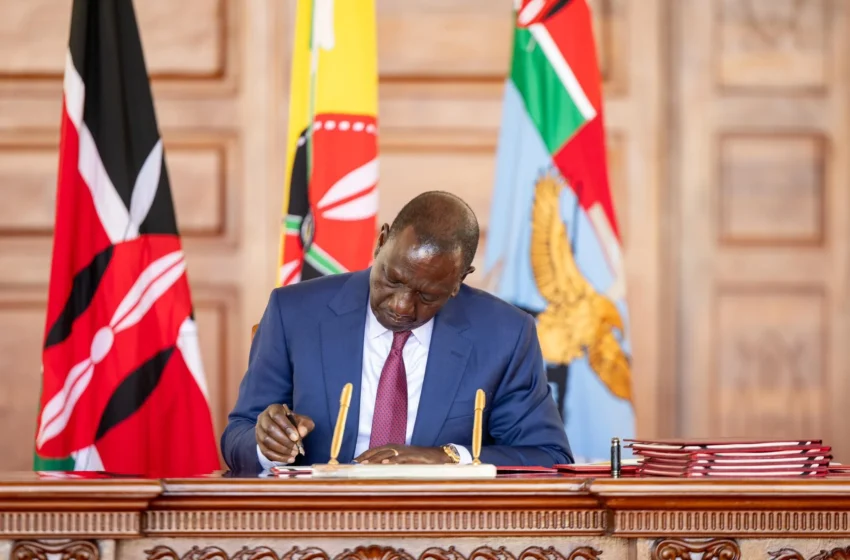
President William Ruto’s Cabinet has approved the settlement of KSh 23.74 billion in verified government pending bills, offering long-awaited relief to thousands of contractors and suppliers who have struggled to recover money for goods and services delivered to public institutions.
The decision was reached during a Cabinet meeting chaired by President Ruto at State House, Nairobi, on Friday, October 9, 2026. The approval covers 28,726 verified claims valued at KSh 50 million and below, with priority given to micro, small and medium enterprises (MSMEs), including businesses owned by women, young people and persons with disabilities.
According to the Cabinet dispatch, the approved payments represent approximately 98 per cent of the 29,257 claims recommended for settlement following an examination by the Pending Bills Verification Committee. Some suppliers have reportedly waited for payment since 2005.
PAY ATTENTION: Follow Kenya Frontline WhatsApp channel for more news
The settlement is expected to ease financial pressure on businesses, protect jobs and inject liquidity into parts of the economy that depend on government contracts. However, the decision also raises questions about the speed of disbursement, the treatment of larger claims and the measures needed to prevent the accumulation of new arrears.
The approval forms part of a broader set of executive decisions covering healthcare infrastructure, energy access, roads, water security and the financial position of Kenya Airways.
Pending Bills Settlement Framework: Treasury Takes Charge of Payments
The National Treasury will oversee the implementation of the KSh 23.74 billion settlement, with the government expected to direct funds towards the claims that have passed the verification process.
The figures emerging from the exercise illustrate the scale of the challenge facing the government. The Pending Bills Verification Committee received 115,617 claims valued at KSh 664.8 billion. Following scrutiny, it recommended 29,257 claims worth KSh 155.34 billion for settlement.
The latest Cabinet approval therefore represents a significant step towards clearing verified obligations, although it does not resolve the entire recommended payment backlog.
The distinction between submitted, verified and approved claims is important. An invoice submitted by a supplier does not automatically qualify for payment. Government agencies must establish that the goods were delivered or the services performed, that the procurement was legitimate and that the supporting documents meet the applicable requirements.
The verification exercise is intended to protect public funds against fraudulent claims, unsupported invoices and irregular procurement arrangements. At the same time, it provides a mechanism through which genuine suppliers can seek payment for work already completed.
The government’s pending bills verification and clearance strategy identifies the accumulation of arrears as a threat to private-sector liquidity, particularly among micro and small enterprises.
The policy challenge now shifts from verification to implementation. Suppliers need clear communication about payment processing, documentation requirements and the status of their approved claims. Without predictable timelines, businesses may continue to face uncertainty even after a settlement has received Cabinet approval.
Read Also: Pharmacy Board Looks to Shape Future of Pharmaceutical Practice
The government has not provided a confirmed payment date for every approved supplier. Businesses should therefore distinguish between the Cabinet’s approval and the actual receipt of funds.
Small Contractors and MSMEs Receive Priority
The decision to prioritise smaller enterprises reflects the disproportionate effect that delayed government payments can have on businesses with limited access to affordable credit.
A large contractor may have access to bank facilities, diversified revenue streams or substantial working capital. A small supplier operating in a county may depend on a single government contract to pay employees, purchase stock and meet transport costs.
When payment is delayed, that supplier may be forced to borrow at high interest rates, postpone wages or negotiate longer payment periods with wholesalers. Some businesses may lose access to credit because outstanding government invoices cannot readily be converted into cash.
Prioritising verified claims of KSh 50 million and below could help ease these pressures. The Cabinet’s stated focus on enterprises owned by women, young people and persons with disabilities also places smaller businesses at the centre of the settlement framework.
The approach is economically significant because small enterprises support employment and commercial activity across Kenya’s counties. Suppliers of construction materials, office equipment, food, transport, maintenance and professional services depend on regular payments to sustain daily operations.
The settlement could also strengthen confidence in public procurement. Businesses are more likely to participate in future tenders when they believe that legitimate invoices will be processed and paid within a reasonable period.
Nevertheless, the effectiveness of the initiative will depend on the amount reaching businesses, the speed of disbursement and the extent to which suppliers can resume normal operations after receiving payment.
SME Cashflow Multiplier: How the Payout Could Reach Local Economies
The economic impact of the KSh 23.74 billion settlement could extend beyond the contractors whose invoices have been approved.
A supplier receiving payment may first clear outstanding debts to wholesalers, fuel stations, transport operators and other service providers. Those businesses can then meet their own obligations, creating a chain of transactions that supports economic activity.
Read Also: KNEC Grade 10 Assessment 2026: Guidelines, Timelines & School Requirements
A small construction contractor, for example, could use the funds to pay workers, settle hardware bills and purchase materials for another project. A catering supplier could clear debts owed to farmers and food distributors. A transport company could service vehicles and pay drivers after recovering money owed by a public institution.
These are potential outcomes rather than guaranteed results. The actual effect will depend on how businesses allocate the money and whether the payments arrive in time to prevent further financial losses.
The settlement could also reduce pressure on business owners who have relied on personal savings or expensive short-term borrowing to keep their operations running. Repayment of those loans may consume part of the funds, but it could leave businesses with a more manageable debt position.
The wider economic benefits will be strongest if the payout reaches productive enterprises that can restore operations, retain workers and continue supplying goods and services.
However, the injection of funds should not be mistaken for new government investment. Much of the money represents payment for work already undertaken or goods already delivered. The immediate benefit is the conversion of long-outstanding government obligations into cash that businesses can use.
The distinction matters because clearing arrears improves liquidity and confidence, but it does not by itself guarantee new contracts, higher productivity or sustained economic growth.
Executive Governance Directives: Healthcare, Energy and Infrastructure
The October 9 Cabinet meeting also addressed broader development priorities, including healthcare expansion, energy access, infrastructure and water security.
Among the healthcare proposals reported after the meeting were plans for a new 2,000-bed Moi Teaching and Referral Hospital in Eldoret, a 1,000-bed Level Six facility in Mombasa and additional capacity at 13 regional Level Five hospitals.
The proposed expansion is intended to increase hospital capacity and bring specialised services closer to patients who currently travel long distances to access treatment. Its implementation will require funding, staffing, medical equipment and supporting infrastructure, not merely the construction of hospital buildings.
Energy access featured prominently in the Cabinet’s decisions. The government adopted the Kenya National Energy Compact, valued at KSh 2.47 trillion, with a target of extending electricity connectivity to 5.1 million additional households by 2030. An e-cooking initiative worth US$8.8 million was also reported, targeting 100,000 households.
These initiatives point to the administration’s wider emphasis on expanding access to essential services while supporting economic activity. Reliable electricity can help small manufacturers, traders and service providers reduce operating constraints, while improved healthcare infrastructure can strengthen access to treatment in underserved regions.
The Cabinet also considered road and water infrastructure priorities. Such investments can have direct implications for local suppliers and contractors, particularly businesses involved in construction materials, transport, engineering and maintenance.
The key implementation question is how the government will sequence these commitments alongside its existing financial obligations. Clearing pending bills, funding new infrastructure and maintaining essential public services all place demands on public resources.
The Treasury will therefore face the challenge of balancing development priorities with cash management and the need to avoid creating another generation of unpaid invoices.
Kenya Airways Financing Adds to the Fiscal Challenge
The Cabinet also approved US$350 million in shareholder financing for Kenya Airways as part of efforts to address the national carrier’s financial obligations and support its operations.
The airline’s financing plan was among the major decisions announced following the meeting, alongside the pending bills settlement and development programmes.
The proposed support illustrates the range of financial pressures confronting the government. While paying verified suppliers can ease private-sector cashflow problems, financing a national carrier and implementing large infrastructure programmes require separate assessments of costs, expected benefits and long-term sustainability.
The government must ensure that commitments across these sectors remain consistent with available resources and broader fiscal objectives.
For businesses awaiting payment, the immediate concern remains the conversion of approved claims into actual funds. For taxpayers, the broader concern is whether government spending can deliver public services without allowing unpaid obligations to accumulate.
Accountability and Prevention of Future Arrears
The pending bills settlement will be judged not only by the money released but also by whether it leads to lasting improvements in public financial management.
Verification provides an essential safeguard, but a sustainable solution requires government agencies to monitor commitments from the moment contracts are awarded. Procuring entities must ensure that approved projects have realistic funding arrangements and that payment obligations are recorded accurately.
The National Treasury’s pending bills policy framework recognises the need to identify the causes of arrears, establish a structured clearance process and introduce reforms to prevent further accumulation.
Stronger commitment controls, timely reconciliation of invoices and regular reporting could help identify payment problems before they become large backlogs. Clear accountability for procurement and payment decisions would also reduce uncertainty for businesses supplying public institutions.
The government will need to communicate how the remaining recommended claims will be handled, particularly those exceeding KSh 50 million. The Cabinet’s reported position is that larger verified bills will be settled progressively, but suppliers still require clarity on the applicable timelines and procedures.
Public reporting on the number of claims paid, the value disbursed and the remaining balance would help demonstrate whether the settlement is translating into practical relief.
What Happens Next?
The KSh 23.74 billion approval provides a significant opening for thousands of suppliers and contractors whose money has remained tied up in government accounts. Its immediate success will depend on the National Treasury’s ability to process payments efficiently while maintaining the safeguards required to protect public funds.
Smaller enterprises stand to benefit from improved liquidity, reduced borrowing pressure and the ability to meet obligations to workers and suppliers. Local economies could also gain as the money circulates through businesses linked to public procurement.
Read Also: Kenyan marathoner remanded over Ksh8 million land fraud case
The broader Cabinet agenda, meanwhile, will require careful coordination between development spending, public-service delivery and the management of government liabilities.
Ultimately, clearing pending bills is only one part of the solution. Kenya will need consistent budget discipline, transparent procurement and reliable payment systems to ensure that suppliers are paid on time rather than being forced to wait years for money owed to them.
The October 9 decision marks progress towards settling verified claims. The next test will be whether the approval produces timely payments and a more dependable relationship between the government and the businesses that deliver its goods, services and infrastructure.