
Top Kenyan Lawyer Warns of Political Earthquake if Gachagua Impeachment is Overturned

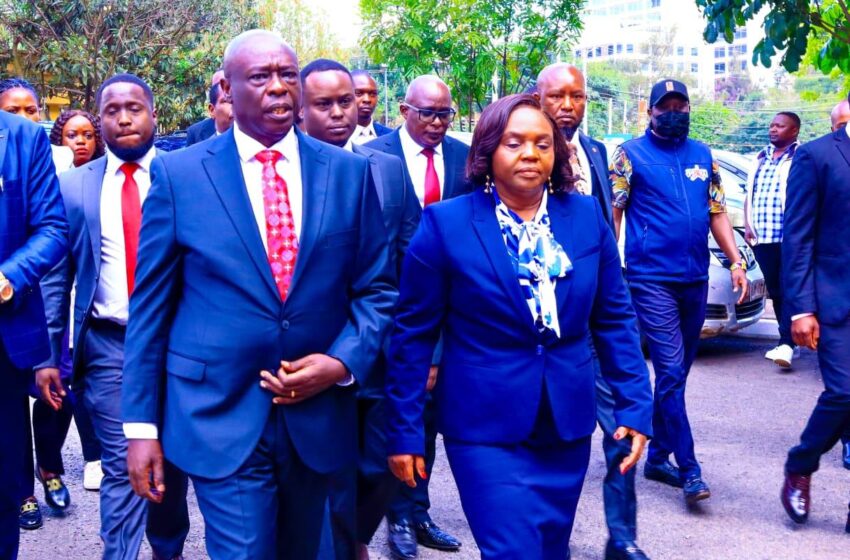
A top Kenyan lawyer has warned that a court ruling overturning the impeachment of former Deputy President Rigathi Gachagua could trigger immediate and far-reaching constitutional consequences, including a possible reshuffle in Kenya’s top leadership.
The comments come amid heightened public interest in a case that continues to test the strength of Kenya’s constitutional framework.
The matter is currently being heard at the Milimani Law Courts, where Gachagua is challenging his 2024 impeachment. The case has attracted national attention due to its implications on succession, executive authority, and the interpretation of constitutional impeachment procedures.
Gachagua’s removal from office in 2024 marked a historic moment in Kenya’s political history, making him the first Deputy President to be impeached.
Since then, his legal team has argued that the process was rushed, procedurally flawed, and politically influenced, setting the stage for a highly contested legal battle now unfolding before a three-judge bench.
“If the High Court overturns the impeachment of Hon Rigathi Gachagua, then he will automatically resume his office and Prof Kithure Kindiki will by operation of law vacate office. Come 2027 and Gachagua will be H.E William Ruto’s running mate …very interesting times ahead,” the lawyer said in a post shared on X.
Legal Stakes and Constitutional Questions

The remarks were made by senior counsel Ahmednasir Abdullahi, who has been closely following the proceedings and offering legal commentary on their potential impact. His interpretation has sparked debate among constitutional experts, particularly on whether a court nullification would automatically reinstate Gachagua or require additional legal steps.
At the heart of the case is whether the impeachment process adhered strictly to constitutional requirements, including fair hearing, adequate public participation, and proper legislative procedure. Gachagua’s lawyers argue that these safeguards were violated, rendering the entire process unconstitutional and invalid.
The case is being handled by Justices Erick Ogolla, Anthony Mrima, and Freda Mugambi, who are tasked with determining whether the impeachment met legal standards or whether it should be set aside. Their ruling is expected to set an important precedent in Kenya’s constitutional law, particularly regarding executive accountability.
Courtroom Battle and Political Ripples
Gachagua appeared in court accompanied by his wife Dorcas Rigathi, his children, and a team of lawyers as hearings officially began. His presence underscored the personal and political weight of the proceedings, which have drawn significant public attention beyond legal circles.
Inside court, his legal team, led by Senior Counsel Paul Muite, argued that the impeachment process was conducted in undue haste and failed to uphold constitutional standards. They also claimed that Parliament did not provide sufficient opportunity for public engagement before transmitting its resolution to the Senate.
“The public was not adequately informed of Gachagua’s side of the story, undermining the integrity of the process,” Muite argued as per Tuko.
The lawyers further contend that the speed at which the National Assembly acted raised questions about fairness and due process. They argue that such rapid decision-making weakened transparency and denied the former Deputy President a meaningful chance to defend himself.
Shifting Legal Strategy and National Implications
Initially, Gachagua’s petition sought full reinstatement to office. However, his legal strategy has since shifted, with his team now also pursuing compensation for what they describe as unlawful removal, alongside declarations that the impeachment process was unconstitutional.
Legal analysts note that the outcome of the case could significantly influence Kenya’s political direction ahead of the 2027 General Election. A ruling in Gachagua’s favour could reshape alliances within both the ruling coalition and opposition formations, potentially altering succession dynamics.