
Tseikuru Attack: Police Reinforce Security in Kitui Following Deadly Raid

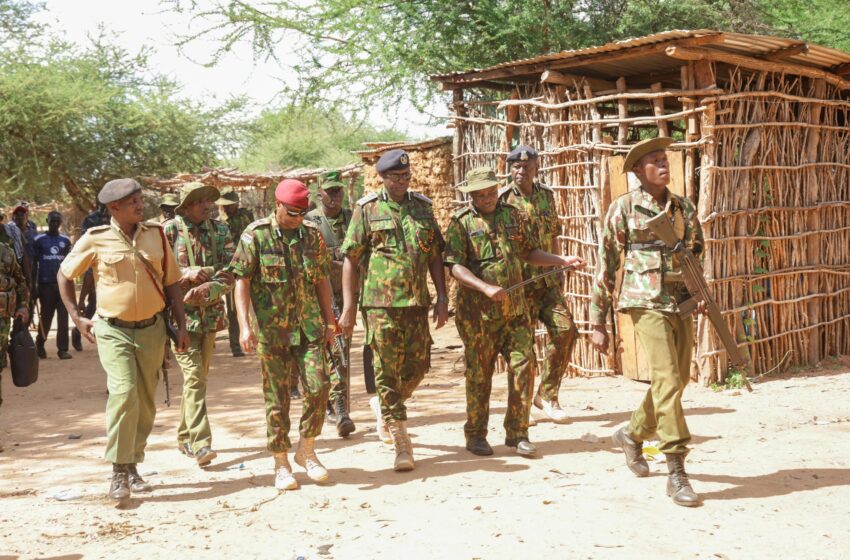
A violent attack in Kamari village, located in Tseikuru Sub-County in Kitui County, has left seven people dead and several homes destroyed in what authorities describe as one of the most serious security incidents in the region in recent years.
The victims, six men and one woman, were reportedly carrying out routine farming activities when they were ambushed by armed attackers believed to be a large group of approximately 40 camel herders. The assailants later fled toward the nearby Mwingi Game Reserve following the raid.
One survivor was rushed to Tseikuru Level IV Hospital where they remain in critical condition as medical teams continue emergency treatment.
The incident has intensified concerns over recurring violent clashes linked to resource competition between local farming communities and pastoralist groups operating in the area.
Also Read: Top Comoros Official Hospitalized in Nairobi Amid Rising Tensions in Moroni
Rising Insecurity in Kitui and Cycle of Resource Conflict
Security analysts have linked the Tseikuru attack to a wider pattern of retaliatory violence in parts of eastern Kenya where access to land, grazing areas, and water resources continues to trigger conflict.
These tensions often escalate during dry seasons when pastoralist groups move across counties in search of pasture, sometimes resulting in confrontation with settled farming communities.
Local leaders have repeatedly warned that without long-term resource management strategies, such incidents may continue to recur, affecting livelihoods and regional stability.
High-Level Police Response and Security Deployment
Following the attack, the National Police Service dispatched a senior security delegation to assess the situation and restore order in the affected area.
On Sunday, April 26, 2026, the Deputy Inspector General of the Kenya Police Service, Eliud Lagat, visited Kwa Kamari Police Station in Tseikuru Sub-County to conduct an on-ground security assessment.
He was received by the Sub-County Police Commander, Joakim Mecha, who provided a detailed briefing on the circumstances surrounding the attack and ongoing security concerns in the region.
The visit was also attended by senior officers from the General Service Unit, including the GSU Commandant Ranson Lolmodooni, highlighting the seriousness of the operation.
Government Condemnation and Call for Calm
During the visit, the Deputy Inspector General strongly condemned the attack, describing it as a brutal and unacceptable act of violence targeting civilians.
He delivered condolences from the Inspector General of Police Douglas Kanja to the families of the victims and assured residents that security agencies are actively pursuing those responsible.
Authorities emphasized that law enforcement agencies will not tolerate acts of banditry or retaliatory violence and pledged that those behind the attack will face prosecution once arrested.
Residents were urged to remain calm and avoid revenge attacks that could further escalate tensions in the region.
Community Cooperation and Intelligence Gathering
Security officials have called on residents of Tseikuru and surrounding areas to cooperate with police by providing credible intelligence that could assist in identifying the attackers.
Authorities stressed that community cooperation is critical in addressing insecurity, particularly in remote areas where armed groups may exploit difficult terrain and limited surveillance.
The National Police Service has assured residents that all information shared will be treated confidentially to encourage reporting and improve response effectiveness.
School Safety and Restoration of Normal Life
With the new school term approaching, the Deputy Inspector General reassured parents and learners that adequate security measures have been put in place to guarantee safe movement and learning.
Security patrols have been intensified in vulnerable areas to prevent further incidents and restore confidence among residents.
Officials emphasized that maintaining normal social and economic activities is key to preventing fear from disrupting daily life in the region.
Security Reinforcement in Tseikuru and Mwingi Region
Additional security personnel have been deployed across Tseikuru and surrounding areas, including routes leading to the Mwingi Game Reserve, where attackers are believed to have escaped.
The reinforcement includes coordinated operations between the Kenya Police Service and the General Service Unit aimed at tracking down suspects and preventing further incursions.
Authorities have maintained heightened alertness as investigations continue into the structure, motive, and identity of the armed group involved.
Also Read: Rio Ferdinand To Open International Doors For Arusha Through AFCON 2027
Key Issues Emerging From the Tseikuru Attack
| Issue | Impact |
|---|---|
| Resource-based conflict | Increased tension between communities |
| Armed banditry | Threat to civilian safety and farming activities |
| Security gaps in rural areas | Delayed response and limited surveillance |
| Community retaliation risk | Potential escalation of violence |
| Cross-border pastoral movement | Complicates enforcement efforts |
Conclusion Security Challenges and the Need for Long-Term Peace
The Tseikuru attack highlights ongoing security challenges in parts of Kenya where resource competition continues to drive cycles of violence.
While immediate security reinforcement has been deployed, long-term stability will depend on improved resource management, stronger intelligence networks, and sustained cooperation between communities and security agencies.
Authorities remain committed to restoring peace in Kitui County and ensuring accountability for those responsible for the deadly raid.