
TVET-CDACC and KNEC Practical Exams Begin as Kenya’s Demand for Technical Skills Grows

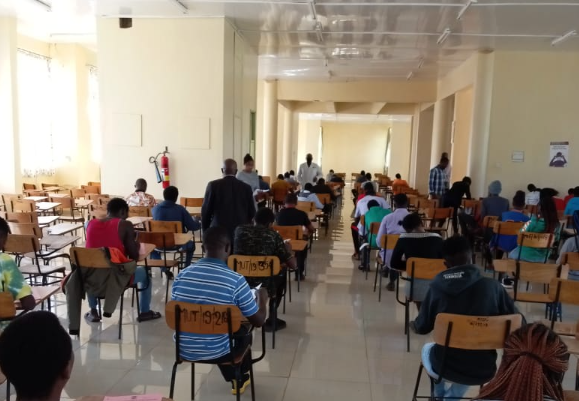
Thousands of technical and vocational trainees across Kenya have begun their November–December 2026 national assessments, placing renewed attention on the growing demand for practical skills in automotive engineering, electrical installation, marine technology, construction and other technical professions.
The Kenya National Examinations Council (KNEC) and the TVET Curriculum Development, Assessment and Certification Council (TVET-CDACC) opened their respective examination programmes on Monday, November 16, with candidates undertaking assessments designed to evaluate their academic knowledge and occupational competencies.
The examination period comes as employers increasingly seek workers who can demonstrate practical abilities, operate technical equipment and solve workplace problems without requiring extensive additional training.
Read Also: KNEC Grade 10 Assessment 2026: Guidelines, Timelines & School Requirements
Among the trades attracting attention are automotive technology, marine engineering, electrical and electronics technology, building technology, plumbing, masonry, refrigeration and air conditioning, carpentry and joinery.
The assessments are taking place across technical training institutions, national polytechnics and approved examination centres.
According to the November 2026 examination update published by Education News, KNEC’s technical practical examination window runs until November 27, while its wider November business and technical examination series continues until December 4, 2026.
The development highlights the importance of Technical and Vocational Education and Training (TVET) in preparing young Kenyans for employment opportunities in industries where practical competence is increasingly important.
It also comes as the government continues to expand teacher recruitment while universities face pressure to demonstrate how academic programmes translate into employment, innovation and economic development.
Automotive, Electrical and Construction Trades Lead Practical Assessments
The November–December assessment period covers a wide range of technical occupations that support Kenya’s manufacturing, construction, transport, energy and service industries.
Automotive trainees are undertaking practical evaluations involving vehicle maintenance, braking systems, electrical components, suspension systems and transmission technology.
These competencies are relevant to garages, vehicle assembly operations, transport companies, automotive dealerships and independent vehicle maintenance businesses.
Marine engineering candidates are also participating in assessments covering technical operations associated with marine machinery and vessel systems.
The skills are particularly important for Kenya’s maritime economy, where port operations, shipping, marine transport and fisheries require trained personnel capable of maintaining equipment and supporting safe operations.
Electrical and mechanical trainees are being assessed in areas including electrical and electronics technology, metal processing, refrigeration and air conditioning.
Construction-related examinations cover building technology, carpentry and joinery, masonry, plumbing and land surveying.
Other technical disciplines include Information Communication Technology, leather technology, agribusiness, fashion design, hairdressing, beauty therapy and food processing.
The diversity of the examinations demonstrates how TVET qualifications extend beyond traditional manual trades into specialised technical and service industries.
KNEC has published its November 2026 Technical Examinations Timetable, providing examination scheduling information for technical candidates and their training institutions.
The timetable is important for candidates preparing for practical sessions because different trades require specialised workshops, laboratories, tools and assessment arrangements.
TVET-CDACC Introduces Greater Focus on Demonstrable Competence
The TVET-CDACC assessment framework places particular emphasis on whether trainees can perform tasks to the standards expected in actual workplaces.
Unlike conventional examinations that primarily measure theoretical understanding, Competence-Based Education and Training (CBET) evaluates the ability to apply acquired knowledge in practical situations.
A trainee undertaking automotive engineering, for example, must demonstrate an understanding of vehicle systems and the ability to carry out relevant maintenance and repair procedures.
Similarly, an electrical installation trainee must demonstrate the ability to interpret technical instructions, handle equipment and undertake installation tasks in accordance with applicable safety standards.
The council uses different assessment methods, including practical demonstrations, projects, portfolios and written examinations.
According to the official TVET-CDACC competence assessment guidelines, assessment involves collecting evidence and determining whether a candidate has achieved the occupational standards required in a particular field.
The system also incorporates internal and external assessment arrangements to strengthen the credibility of certification.
Internal assessors evaluate trainees during their learning programmes, while external assessors drawn from industry or other approved institutions help verify whether candidates meet the required standards.
Read Also: KNEC Grade 10 Assessment 2026: Guidelines, Timelines & School Requirements
The council’s external verification process is intended to promote consistency and ensure that assessment decisions reflect the competencies expected by employers.
Another important development in the November–December 2026 series is the implementation of digital Portfolios of Evidence through the Edu-Bridge e-Portfolio system.
The digital arrangement enables institutions to track evidence of trainees’ acquired competencies alongside the written assessment process.
TVET-CDACC had earlier issued an official notice on the November–December 2026 assessment registration and e-Portfolio implementation.
The shift towards digital evidence management could improve the documentation of practical achievements and make it easier to verify the competencies demonstrated by individual trainees.
Why Technical Graduates Are Becoming Important in Kenya’s Job Market
Kenya’s employment market continues to face a difficult contradiction: thousands of young people graduate from universities and colleges every year, yet employers in specialised industries still report challenges finding workers with the practical abilities required for particular jobs.
The difference between academic qualifications and workplace readiness has therefore become an important issue in discussions about graduate employability.
A university degree can provide a strong theoretical foundation, analytical skills and specialised knowledge. However, some occupations require additional practical experience before a graduate can independently perform the responsibilities expected by an employer.
TVET programmes attempt to address this gap by integrating occupational training, practical exercises and competency assessments into the learning process.
An automotive technician who has demonstrated the ability to diagnose vehicle faults, repair mechanical components and maintain automotive systems can provide an employer with evidence of practical capability.
The same applies to electricians, refrigeration technicians, plumbers, welders, construction workers and marine engineering specialists.
These professionals can access employment opportunities through established businesses, manufacturing companies, construction contractors, transport operators, maintenance firms and self-employment.
Technical graduates can also establish small businesses offering specialised services to households and commercial clients.
Read Also: Pharmacy Board Looks to Shape Future of Pharmaceutical Practice
However, practical certification does not automatically guarantee employment. Employers still consider experience, professional conduct, safety awareness, communication skills and the ability to work within a team.
The growing importance of CBET should therefore not be interpreted as evidence that technical graduates are universally more employable than university graduates.
Rather, the shift highlights the increasing value employers place on demonstrable skills, particularly in occupations where practical performance is central to productivity.

