UASU Lecturers Strike 2026: Why CBA Deadlock Has Brought Public Universities Standstill

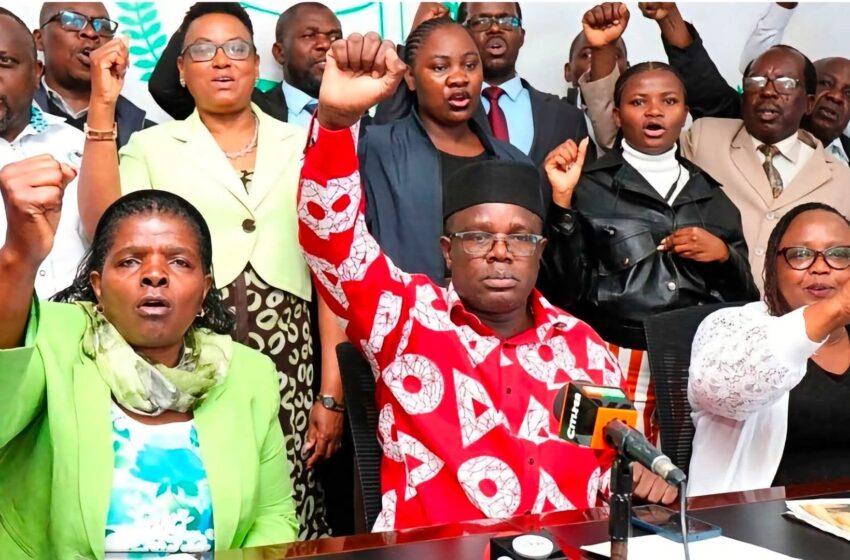
Photo: Courtesy
Public universities have entered another period of disruption after lecturers and other university workers began a nationwide strike over the stalled 2025–2029 Collective Bargaining Agreement (CBA).
The UASU university lecturers strike October 2026 follows the collapse of negotiations between the Universities Academic Staff Union (UASU), Kenya Universities Staff Union (KUSU), KUDHEIHA Workers Union and the Inter-Public Universities Councils Consultative Forum (IPUCCF).
The unions announced the industrial action after talks in Machakos failed to produce an agreement on salaries, allowances, medical benefits, staffing and implementation of outstanding provisions from the previous CBA.
PAY ATTENTION: Follow Kenya Frontline WhatsApp channel for more news
The dispute is therefore bigger than a disagreement over the next salary increase. It raises questions about how Kenya finances its public university system, how collective agreements are implemented and how institutions can maintain academic programmes when labour negotiations collapse.
UASU university lecturers strike October 2026 explained
UASU had issued a seven-day strike notice in September, accusing university councils, the Ministry of Education and the National Treasury of failing to honour commitments contained in a Return-to-Work Formula signed in November 2025.
The union said negotiations for the 2025–2029 CBA had not progressed sufficiently and that a financial counter-proposal had not adequately addressed its demands.
The deadlock became clearer when the IPUCCF presented its latest counter-offer.
The unions rejected the proposal, arguing that it did not adequately address remuneration, allowances, medical cover or recruitment of academic staff.
One of the most contentious issues is the proposed annual salary adjustment. The unions have criticised a proposed 4 per cent annual increment, arguing that it is below prevailing inflation and therefore insufficient to protect workers’ purchasing power.
UASU’s own proposals are considerably broader.
According to the union’s published demands reported by the Daily Nation’s breakdown of the proposed 2025–2029 CBA, academic staff are seeking an average six per cent annual salary increment.
The proposal would raise the highest salary notch for professors from KSh345,816 to more than KSh580,000 by 2028/29.
Salary and house allowance demands
House allowance has become another major component of the public university CBA deadlock Kenya.
UASU is seeking significant increases across academic grades. Its proposal would raise the monthly housing allowance for professors to KSh116,028 from KSh73,715.
Associate professors would receive KSh104,426, senior lecturers KSh92,822 and lecturers KSh87,020 under the union’s proposed structure.
The union is also proposing a standard commuter allowance of KSh60,000 per month for most academic grades.
Read Also: Pharmacy Board Looks to Shape Future of Pharmaceutical Practice
Existing commuter allowances vary according to designation, meaning the proposal would represent a substantial restructuring of remuneration beyond the basic salary.
Research funding is another part of the negotiations.
UASU’s proposal calls for government investment equivalent to two per cent of GDP annually in research and innovation, alongside research grants for academic staff.
These demands illustrate why the negotiations present a significant financial challenge for university councils.
The question is not simply how much lecturers should receive. It is how the additional obligations would be financed and whether universities can sustain them over the four-year CBA period.
IPUCCF and government funding constraints
The Inter-Public Universities Councils Consultative Forum IPUCCF represents the employer side in the negotiations.
University councils must balance negotiated employment obligations against their available budgets, government allocations and other institutional revenue.
The unions, however, have argued that salary obligations should be adequately funded through the National Exchequer rather than effectively being pushed onto universities that already face financial pressure.
That financing question has become one of the central fault lines in the negotiations.
Universities have growing student populations and substantial operational costs. Salaries are only one part of institutional expenditure, alongside infrastructure, laboratories, utilities, teaching materials, administration and research.
The result is a difficult policy problem: universities need competitive remuneration to retain academic staff, but additional employment costs require predictable funding.
The current negotiations therefore expose a structural tension between collective bargaining commitments and public-sector budget ceilings.
Staffing shortages add another layer
The CBA dispute also involves staffing.
UASU has argued that public universities have not recruited enough academic staff to match rising student enrolment.
The union says inadequate staffing increases workloads and can affect teaching, supervision, examination administration and research. The issue featured prominently in the unions’ rejection of the IPUCCF counter-offer.
That creates a second financial challenge.
Universities may need to employ more lecturers to reduce workloads at the same time they are being asked to finance salary and allowance improvements for existing employees.
A settlement that addresses remuneration without addressing staffing could therefore leave another part of the dispute unresolved.
Academic calendar faces another disruption
The timing of the strike is particularly significant because universities have already been working through complicated academic calendars.
The Daily Nation’s report on the September strike deadline noted that first-year students were settling into the 2026 academic calendar when the industrial dispute intensified.
A prolonged strike could affect lectures, examinations, marking, student supervision and graduation schedules.
Universities may eventually have to extend semesters or adjust examination timetables to recover lost instructional time.
Teacher-training programmes could also face knock-on effects. Students preparing to enter Kenya’s education system depend on universities maintaining teaching, assessment and graduation schedules.
Any significant delay could affect the pipeline of graduates entering teaching programmes, including those preparing to serve within the country’s evolving Grade 10 education structure.
Student disciplinary and academic appeal processes could face similar delays where hearings require participation by academic committees or university administrators.
Read Also: Kenyan marathoner remanded over Ksh8 million land fraud case
Previous disputes show legal risks
The industrial dispute also has a legal dimension.
Kenyan courts have previously considered university strikes in relation to labour law, collective bargaining and disruption of academic programmes.
A 2025 Employment and Labour Relations Court decision involving Kirinyaga University and UASU examined a dispute involving an earlier UASU picketing notice and issues surrounding previous CBA implementation. The case illustrates how university industrial disputes can eventually move beyond negotiations into the courts.
UASU itself maintains a public archive containing its 2021–2025 National CBA and previous agreements, providing an important reference point for understanding the commitments being cited in the current dispute.
What happens next?
The next stage of the Vice Chancellors Committee UASU salary negotiations will depend heavily on whether the two sides can narrow the financial gap.
UASU wants a settlement that addresses salary progression, allowances, staffing and other working conditions.
IPUCCF must consider those demands against the financial capacity of public universities and government funding arrangements.
The strike therefore represents a broader test of Kenya’s public university financing model.
A negotiated settlement could restore teaching and provide universities with greater certainty over employment costs. A prolonged dispute, however, risks further disruption to students and institutions already dealing with financial and staffing pressures.
Read Also: Top Comoros Official Hospitalized in Nairobi Amid Rising Tensions in Moroni
The central question is no longer simply whether lecturers deserve a new CBA.
It is how Kenya will finance the commitments contained in that agreement without pushing public universities into another cycle of funding gaps, delayed implementation and industrial action.