
Why Amnesty International Is Demanding Sanctions Against Senator Karen Nyamu


Nominated Senator Karen Nyamu has continued to draw severe public backlash following an unsettling incident in the Kenyan Senate that has sparked a nationwide advocacy campaign spearheaded by Amnesty International.
The global human rights organization, alongside an alliance of civil society actors, has launched a formal public petition demanding stringent accountability and disciplinary measures against the United Democratic Alliance (UDA) lawmaker. This escalating push for action stems from an open Senate session where a female Grade 10 student, visiting the legislative chamber under the School Voluntary Service Scheme, was subjected to public humiliation and objectifying remarks by the legislator.
The platform provided by the national house turned into a space of vulnerability for a minor who had entered Parliament to witness democracy in motion, igniting deep anger across the human rights fraternity.
Why is this incident a matter of national concern?
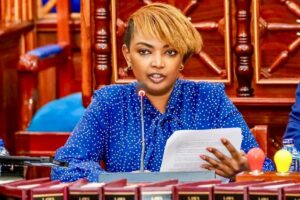
The core of the problem lies in how these degrading remarks compromise the strict leadership and integrity values expected within state corporations and public legislative halls. Amnesty International maintains that the Kenyan Senate serves as a vital national institution that should model exemplary character, public trust, and profound respect for foundational values.
By exposing a high school student to objectifying commentary during a live broadcasted parliamentary session, the lawmaker established an environment characterized by ridicule rather than civic education. Such behavioral trends risk turning away the younger generation from constructive democratic participation, significantly crippling public confidence in national leadership spaces. The civil society network stresses that parliamentary privileges must never be twisted to allow the harassment or degradation of visitors, let alone minor school students seeking education.
This incident directly violates key statutory frameworks embedded within the Kenyan Constitution, specifically provisions governing human dignity and children’s rights. Article 28 explicitly guarantees that every individual possesses an inherent right to dignity, while Article 53 grants comprehensive protection to children against abuse, inhumane treatment, and degrading conduct.
Crucially, Article 53(2) mandates that the best interests of the child must be treated with paramount importance in every matter involving a minor. Human rights lawyers remind public officers that these constitutional parameters are mandatory legal requirements rather than discretionary ethical suggestions. Furthermore, Chapter Six elements, specifically Articles 73 and 75, direct state officers to exercise authority in a professional manner that preserves public trust and honors the nation, conditions that are broken when a minor is publicly standard-shamed.
“I’ve signed a petition calling for accountability over the humiliation of a Grade 10 student in the Kenyan Senate. No child should ever be degraded in public institutions. Join me in demanding action and stronger protections for children’s dignity,” wrote former Chief Justice Willy Mutunga.
What specific actions are the petitioners demanding?

Compounding the severe legal friction are international human rights agreements that Kenya has formally ratified, including the United Nations Convention on the Rights of the Child and the UN Declaration on Human Rights Education and Training. These treaties bind the state to maintain learning spaces that are entirely free from intimidation, discrimination, and emotional harassment.
The situation deteriorated further inside the House when the lawmaker openly disputed the remediation efforts set up by the Senate leadership panel. Although pressured by the legislative leadership to deliver an unreserved apology to the victimized student, her family, and the general public, the senator read a pre-drafted statement while explicitly disavowing its contents on the floor. She asserted that the apology was merely written for her, an action that diminished accountability and illustrated a lack of remorse for the psychological harm caused.
To address this systemic failure, the petition rolled out by Amnesty International presents clear demands to enforce strict accountability mechanisms. The lobby group is rallying citizens to sign the petition to compel the United Democratic Alliance Secretary General to instantly initiate internal party disciplinary proceedings against the nominated senator.
Beyond internal party sanctions, the human rights network demands a formal public censure from the Senate plenary to unequivocally condemn the offensive remarks. Ultimately, the petition seeks the immediate strengthening and rigorous enforcement of a binding parliamentary code of conduct that strictly bars any form of objectification, humiliation, or sexualization of children within all public and political corridors, restoring honor to the legislative house.

