Why Kenyan Teachers Could Face a New Strike Ban

Teachers involved in administering Kenya’s national examinations could soon face restrictions on when they can exercise their right to strike under a proposed law before Parliament.
The Kenya National Educational Assessments Council Bill, 2026, seeks to replace the Kenya National Examinations Council with a new body that would oversee examinations, continuous assessments, certification and digital testing.
The Bill, sponsored by National Assembly Majority Leader Kimani Ichung’wah, proposes a broader overhaul of the country’s assessment system as Kenya continues its transition to the Competency-Based Curriculum.
PAY ATTENTION: Follow Kenya Frontline WhatsApp channel for more news.
One of its most striking provisions targets people involved in running national assessments, including teachers serving as centre managers, invigilators, examiners and other assessment officials.
Read Also:Pharmacy Board Looks to Shape Future of Pharmaceutical Practice
Clause 60 proposes limiting the constitutional right to strike under Article 41 during an assessment period where industrial action could affect the integrity, security or orderly administration of an examination.
Why does the Bill want to restrict teachers’ right to strike?
Under the proposed law, anyone engaged in the management, organisation or administration of a national assessment would not be allowed to go on strike during the assessment period.
The restriction would apply where the proposed council considers that industrial action could compromise the integrity or security of an assessment.
The council would also consider whether a strike could interfere with the rights of other people or disrupt the orderly conduct of an examination.
The provision could have a direct impact on thousands of teachers who are called upon to assist in national examinations each year.
Teachers often serve as centre managers, supervisors, invigilators, examiners and other officials, making them an important part of the examination machinery.
A strike during this period could therefore affect the administration of examinations involving large numbers of learners across the country.
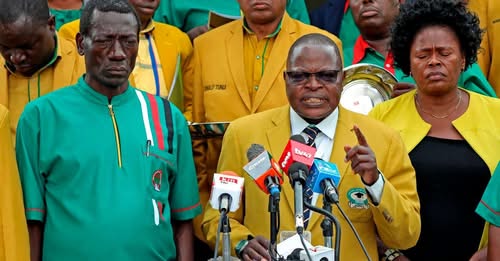
The proposal has already drawn opposition from the Kenya National Union of Teachers, which argues that examination duties should not be used to suspend a worker’s constitutional right.
“The proposal is fundamentally flawed. The right to withdraw labour cannot be suspended. Exam administration is work and our members’ right cannot be curtailed,” Knut secretary-general Collins Oyuu said.
Mr Oyuu said the union would restate its position when it submits its views on the Bill to Parliament.
The proposed restriction comes as the government seeks to transform assessment under the Competency-Based Curriculum.
Kenya is moving away from a system heavily centred on final examinations towards continuous, school-based and digital forms of assessment.
The proposed Kenya National Educational Assessments Council would be given responsibility for this wider assessment framework.
It would have powers to administer conventional examinations as well as e-assessments, which the Bill defines as digital, online or computer-based assessments.
Read Also: Top Comoros Official Hospitalized in Nairobi Amid Rising Tensions in Moroni
The council would also oversee certification and other national assessment functions.
The legislation goes beyond the proposed restructuring of the examination body, however, by introducing tougher criminal penalties for people involved in examination malpractice.
How tough will the new examination offences become?
The proposed law would make unauthorised possession of examination papers, materials or information a serious criminal offence.
A person found guilty could face up to 10 years in prison, a fine of Sh2 million, or both.
The same punishment would apply to someone who knowingly obtains unauthorised possession of examination material or information.
People who share examination papers or related information through mass communication channels could face up to five years in prison, a Sh5 million fine, or both.
The Bill also targets officials who mishandle examination materials.
Negligently or deliberately losing, misusing or handling assessment material in a manner that prejudices the fair conduct of an assessment could attract up to five years in prison, a Sh1 million fine, or both.
Forgery would carry an even heavier punishment.
Counterfeiting an assessment report, certificate or diploma could result in up to 10 years in prison or a Sh10 million fine, or both.
Candidates would also face tougher consequences if they are found guilty of malpractice.
The proposed council could disqualify an entire assessment taken by a candidate involved in malpractice.
The candidate could then be barred from sitting another assessment administered by the council for up to three years.
The Bill lists plagiarism, collusion and receiving unauthorised assistance among the offences candidates could face.
Using prohibited materials or accessing unauthorised internet browsers to obtain answers during an assessment would also amount to malpractice.
The council would have the power to withhold results while investigating suspected cases.
Impersonating another candidate could attract up to two years in prison or a Sh2 million fine.
Allowing another person to sit an assessment on behalf of a candidate would carry similar penalties.
School heads would also face greater legal responsibility under the proposed framework.
They would be expected to ensure candidate details are accurately captured and assessment procedures are followed.
A school head who registers non-existent candidates or negligently fails to register eligible learners could face prosecution.
Negligently losing examination materials could also result in criminal charges.
Assessment officers whose actions or omissions lead to an irregularity could face up to five years in prison, a Sh5 million fine, or both.
Another provision would give the proposed council greater control over sensitive examination information.
Clause 61 states that the council would not be required to release information, data, scripts or other assessment materials if disclosure could compromise an assessment, interfere with its administration or breach privacy.
The proposed council would also be allowed to establish and regulate e-assessment centres, marking centres and distribution centres.
The provisions point towards a more technology-driven assessment system in which digital platforms could play a greater role in administering and processing examinations.
The Bill therefore seeks to introduce changes at almost every level of the assessment process, from how examinations are conducted to how candidates, teachers and school administrators are held accountable.
Read Also: Kenyan marathoner remanded over Ksh8 million land fraud case
The proposed restriction on strikes is likely to be one of the most closely watched provisions as the Bill moves through Parliament.
Teachers’ unions and other stakeholders will have an opportunity to challenge or support the proposals during the legislative process.
If the provision remains unchanged and becomes law, teachers assigned to national assessments would face a new legal limitation on industrial action during examination periods.
That would create a significant change in how teachers’ constitutional labour rights interact with the government’s responsibility to protect the integrity and uninterrupted administration of national examinations.