
Will Justice Njoki Ndung’u Conquer The Hague? Inside Ruto’s High-Stakes ICC Diplomatic Blitz

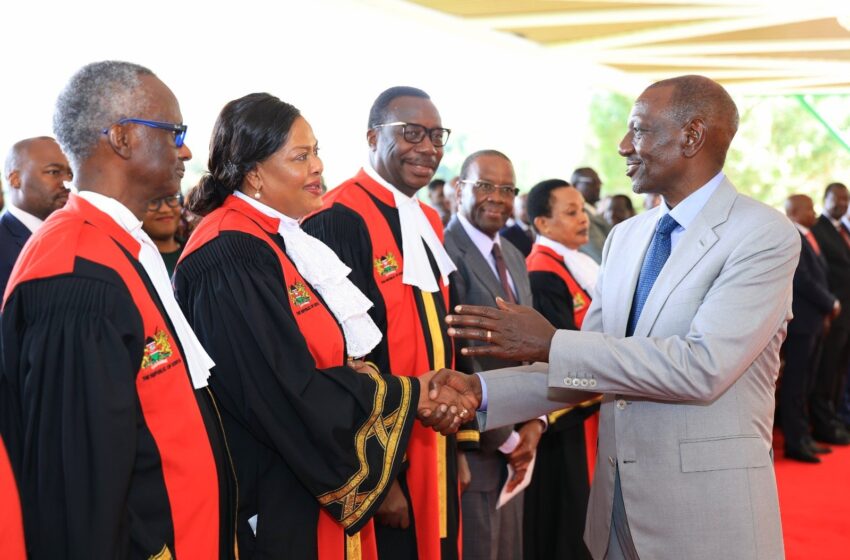
President William Samoei Ruto has mounted an aggressive and meticulously orchestrated diplomatic campaign for Supreme Court Judge Njoki Ndung’u, positioning her as Kenya’s premier candidate for the International Criminal Court (ICC).
The bid, which culminates in the December 2026 elections during the 25th Assembly of State Parties in New York, represents a significant pivot in Kenya’s engagement with the Rome Statute. By leveraging the Africa Forward Summit in Nairobi this week, the Head of State has transformed State House into a theater of judicial diplomacy, personally introducing Justice Ndung’u to influential global leaders.
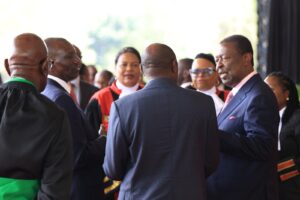
The strategy is clear and that is to secure early endorsements from both regional powerhouses and established Rome Statute signatories. Ruto’s high-level introductions included French President Emmanuel Macron, Côte d’Ivoire’s Alassane Ouattara, Liberia’s Joseph Boakai, and Sierra Leone’s Julius Maada Bio. The inclusion of France and Sierra Leone is particularly tactical, as both nations currently hold seats on the ICC bench and wield considerable influence within the 125-member Assembly of State Parties. By pitching Ndung’u directly to these counterparts, Nairobi is signaling its intent to return to the highest echelons of international criminal justice.
Does the Global Bench Need the Expertise of Njoki Ndung’u?
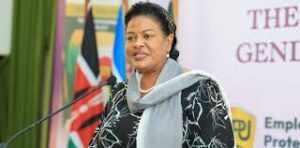
Justice Ndung’u enters a crowded field of six other formidable candidates from Ghana, Switzerland, Uganda, Tanzania, Colombia, and Japan. However, her resume offers a unique blend of legislative architecture and apex-level adjudication that few can match. An alumna of the University of Nairobi, where she earned her Bachelor of Laws (LLB), and the University of Leicester in the United Kingdom, where she secured her Master of Laws (LLM) in Human Rights and Civil Liberties, her academic foundation is rooted in the very principles the ICC seeks to uphold. Further, her Diploma in Legal Studies from the Kenya School of Law and specialized training in gender-based violence (GBV) justice systems have made her a leading voice in African jurisprudence.
Listed under Category A, Justice Ndung’u is recognized for her profound competence in criminal law and procedures, moving beyond theory into the practical application of justice for the most vulnerable. Throughout her career, she has authored and participated in landmark judicial orders that have significantly shaped the country’s policies, making her not just qualified but exceptional. Her experience as a judge of the Supreme Court of Kenya since its inception in 2011 provides her with a rare perspective on balancing national sovereignty with international legal standards.
Will the Legacy of Njoki Ndung’u Resonate Beyond Kenya’s Borders?
Before her elevation to the bench, she was a member of the Pan-African Parliament and the principal architect of Kenya’s Sexual Offences Act (2006), a landmark piece of legislation that redefined the protection of survivors. Her contributions extend to the continental stage, where she played a pivotal role in drafting the Maputo Protocol, the African Union’s primary instrument for women’s rights. This dual expertise in human rights advocacy and rigorous criminal adjudication distinguishes her as a transformative candidate who understands both the spirit and the letter of international law.
If successful, Justice Ndung’u will follow in the footsteps of Judge Joyce Aluoch, who served with distinction at The Hague from 2009 to 2018. Her election would not only be a personal victory for one of Kenya’s most brilliant legal minds but a strategic win for President Ruto’s foreign policy. As the campaign intensifies toward the 2026 vote, the focus remains on whether Ndung’u’s storied career, spanning from the trenches of human rights activism to the highest court in the land,will resonate with a global community seeking a balanced, experienced, and transformative voice on the ICC bench.