Allan Thigo Cremation Analysis Tracking Changing Funeral Trends In Kenyan Sports Culture

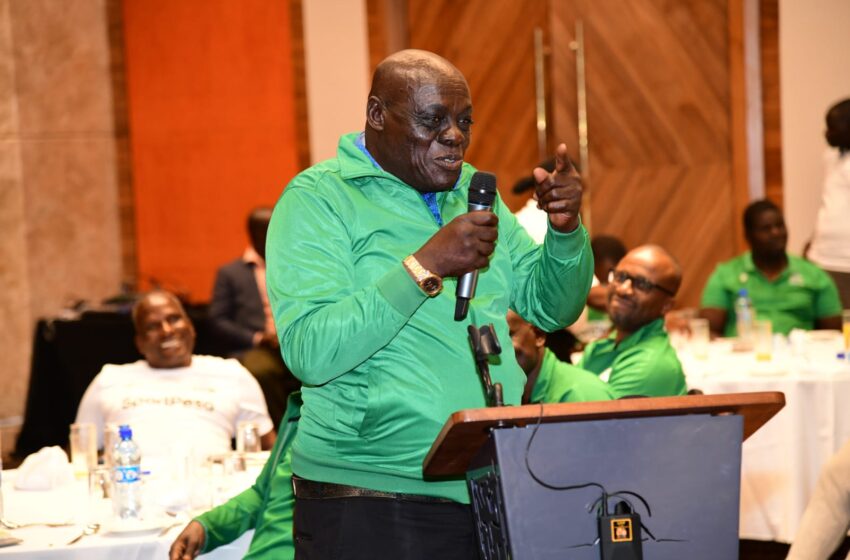
The structural landscape of Kenyan sports history experienced a profound, unconventional moment following the passing of Harambee Stars and Gor Mahia midfield maestro Allan Thigo. Renowned for his unparalleled tactical intelligence and commanding midfield presence, the footballing great chose a final send-off pathway that deliberately departed from traditional regional burial practices. The decision by his family to execute a swift cremation within 72 hours of his transition offers an ideal case study for examining evolving cultural practices, the logistics of estate management for public figures, and the preservation of sports history across East Africa.
The late midfielder passed away after a long, resilient battle with prostate cancer, a diagnosis he had quietly managed since 2021. Philip Thigo, the son of the legendary sportsman and a prominent digital strategy advisor, clarified that the swift timeline was not an accidental development or a product of logistical constraints. Instead, the 72-hour process directly fulfilled specific, unambiguous instructions left behind by the former national team player. Executed at the Hindu Crematorium in Kisumu, this departure from elaborate, multi-week public funerals challenges deep-seated domestic mourning traditions while highlighting changing individual preferences among the nation’s elite historic figures.
Read Also: How Plot to Suspend FKF President Hussein Mohammed Was Hatched
Evolving Cultural Paradigms Regarding Cremation vs Traditional Kenyan Funerals
Analyzing the socioeconomic and cultural implications of a high-profile cremation requires evaluating the historically entrenched funeral traditions of western Kenya, particularly within the Luo community where Gor Mahia enjoys massive, deep-rooted support. Traditional send-offs for iconic personalities typically involve extensive public planning committees, multi-week body preservation windows, large-scale financial mobilizations, and elaborate rural interments attended by thousands of community members, politicians, and sports enthusiasts.
| Send-Off Metric | Traditional Sports Hero Funeral | Allan Thigo Strategic Framework |
| Operational Timeline | 14 to 30 Days Post-Transition | Completed Within 72 Hours |
| Structural Focus | Massive Public Gatherings, Rural Interments | Controlled Memorialization, Private Execution |
| Financial Dynamics | Multi-Million Shilling Community Harambees | Minimal Institutional Infrastructure Strain |
| Primary Location | Multi-Venue Transit (Mombasa/Nairobi to Rural Home) | Centralized Facilities (Kisumu Crematorium) |
These extensive public arrangements often expose vulnerable families to severe financial strain, complex estate disputes, and intense physical exhaustion during the prolonged mourning window. By implementing a strict 72-hour cremation protocol, the Thigo estate successfully established an alternative framework that prioritized immediate dignity, family privacy, and total adherence to individual autonomy. This strategic shift points toward a growing modern trend across Kenya where public icons utilize clear estate directives to protect their families from the invasive pressures of large-scale public funerals.
Tactical Mastery and the Era of the Player-Coach
To fully understand why Allan Thigo was affectionately known by enduring titles like “The Professor” and “Ogango Wuon Pap” (the Owner of the Field), sports historians must analyze the precise tactical innovations he introduced to East African football during the 1970s and 1980s. Emerging as an elite talent for Kisumu Hot Stars before anchoring Gor Mahia for 13 highly successful seasons between 1970 and 1982, Thigo revolutionized the central midfield role through a rare combination of physical endurance, deep spatial awareness, and elite distribution intelligence.
His most remarkable historic achievement occurred during the 1976 Kenyan Premier League campaign, where he successfully undertook the dual responsibilities of player and head coach. Under his precise tactical leadership, K’Ogalo secured the domestic league championship entirely unbeaten—a monumental historic milestone that remains a gold standard in regional football development. His dual management capabilities were demonstrated once again in 1979, when he guided the club to the prestigious final of the Africa Cup Winners’ Cup (now known as the CAF Confederation Cup), establishing the foundational blueprint for Gor Mahia’s subsequent continental dominance.
Beyond his massive domestic club achievements, Thigo earned 86 international caps for the Kenya national team, Harambee Stars, scoring 88 goals for Gor Mahia during his top-tier career. He was a foundational pillar of the historic 1972 squad that secured Kenya’s inaugural qualification for the Africa Cup Nations (AFCON) finals in Cameroon. His exceptional field endurance earned him the iconic moniker “The 90-Minute Man,” a title highlighting his ability to dictate match tempos from the opening whistle to the final seconds without ever requiring substitution or tactical relief.
Read Also: Rio Ferdinand To Open International Doors For Arusha Through AFCON 2027
Sports Welfare Reform and Post-Career Policy Gaps
The passing of an icon like Allan Thigo inevitably redirects critical media attention toward the systemic structural gaps concerning retired athletes across East Africa. While high-profile international figures like FIFA President Gianni Infantino issued formal messages of condolence praising Thigo’s “creativity, vision, and human qualities,” local sports administrators frequently point out that the daily realities for aging athletic heroes remain precarious.
During the memorial service held at the Mama Grace Onyango Hall in Kisumu, prominent sports stakeholders, including former sports administrators, argued that Kenya must transition away from short-term reactive condolences toward sustainable institutional protection frameworks. Retired players frequently lack comprehensive medical cover, secure pension facilities, and structured post-career transition pathways, leaving them vulnerable to severe financial and health challenges in their later years.
The implementation of dedicated pension programs, specialized medical insurance schemes for veteran sports ambassadors, and formal integration into modern technical scouting networks represent essential interventions required to safeguard the welfare of retired legends. Moving beyond symbolic state awards toward institutionalized welfare frameworks ensures that the individuals who built the foundation of the national sports heritage receive adequate protection throughout their post-career lives.