AFC Leopards vs Gor Mahia: 3 Key Battles That Defined 99th Mashemeji Derby

AFC Leopards verses Gor Mahia is the definitive fixture of Kenyan football, a historical rivalry anchored by the fierce, unyielding competitive drive of the country’s two most decorated sports institutions. Powerhouses of this caliber convene on the pitch to settle matters where current league standings and previous form guides quickly fade into irrelevance, replaced entirely by raw tactical tension, intense systemic pressure, and the heavy psychological burden of regional bragging rights. Latest campaign developments show this historic fixture carried immense implications not just for local prestige, but for the immediate mathematical destination of the top-tier silverware.
AFC Leopards were silenced in the 99th Mashemeji Derby as Gor Mahia’s tactical discipline and superior composure in the final third secured a pivotal 1-0 victory at Nyayo National Stadium. Both sets of fans created a cauldron of noise that matched the intensity on the pitch in a result that marked a significant shift in the league momentum, as K’Ogalo moved six points clear at the summit, further cementing their status as favorites for the title. Crowded terraces showcased vibrant club colors, synchronized chants, and an underlying nervous energy ahead of kickoff, signaling the high-stakes nature of the encounter.
Analyzing the strategic deployment of both squads reveals how subtle adjustments in defensive lines and transitional speed can completely alter the flow of a high-profile match. Football analysts across the country debated for long stretches of the buildup whether structural continuity or raw individual brilliance would break the deadlock in these encounters. Ultimately, tactical blueprints executed by the reigning champions proved resilient enough to withstand periods of heavy attacking pressure, highlighting the critical importance of spatial awareness and mental fortitude when competing under intense external scrutiny.
AFC Leopards’ loss was a particularly bitter pill to swallow, especially for head coach Fred Ambani. This defeat was his first-ever reversal against the fierce rivals in both his distinguished playing and coaching careers. Technical bench leaders had successfully navigated the unique pressures of this derby for decades as both a robust player on the field and an astute tactician, making this surrender of his unbeaten personal record an agonizing layer of disappointment for the blue and white faithful.
Disappointment was palpable, as Ingwe had hoped to bounce back from their previous 3-0 loss to Kenya Police FC, but instead found themselves struggling to break down a resolute and well-organized defense. Entering the match on the heels of a heavy defeat against a corporate side had already put the technical team under considerable pressure to fix visible gaps in their defensive transitions and final-third productivity. Failure to find a breakthrough against their eternal rivals leaves the technical bench with deep questions regarding squad depth, attacking patterns, and the overall tactical direction of the team as they look to salvage their remaining seasonal objectives.
Gor Mahia, meanwhile, needed this win to regain their stride following a frustrating goalless draw against Bandari FC. Under the guidance of coach Charles Akonnor, the team displayed a renewed sense of purpose and tactical flexibility. Dropping vital points in their previous outing at the coast had temporarily slowed down their championship momentum, triggering intense internal reviews regarding their offensive efficiency and midfield coordination. This response witnessed at Nyayo National Stadium demonstrated an elite understanding of tournament management, proving that the technical staff had successfully diagnosed their previous attacking bottlenecks to restore peak operational efficiency when it mattered most.
By neutralizing the threat of the Ingwe midfield and maintaining structural integrity even during moments of chaos, Gor Mahia proved that they possess the championship mettle required to navigate the high-pressure environment of the Mashemeji Derby. Ability to remain calm under intense acoustic pressure from opposing fans allowed the green-clad outfit to stick firmly to their pre-match passing patterns rather than resorting to frantic, long-ball clearances. This collective psychological resilience serves as a core competitive advantage that routinely separates elite title contenders from standard top-tier clubs during the final stretch of a grueling domestic league calendar.
1. Midfield Control and Tactical Adaptability
Gor Mahia dictated the tempo for large portions of the match, particularly during the first half. By maintaining possession and effectively utilizing the flanks, specifically through Paul Ochuoga’s delivery, they created multiple high-danger opportunities. Wingbacks repeatedly pushed high up the pitch, overloading wide spaces and dragging the opposing defensive block out of position to create gaps in the central channels. AFC Leopards adjusted after the mid-match stoppage caused by external disturbances, but they struggled to transition that newfound defensive stability into effective offensive output.
Technical dynamics of the central midfield sector served as the primary barometer for the match’s overall competitive tempo. Engine rooms functioning with total spatial harmony allow a team to easily choke out the opposition’s supply lines before dangerous long balls reach the final defensive line. Gor Mahia’s midfield triangle operated with impressive positional fluidity, constantly rotating to pick up loose second balls and establishing a protective screen in front of their central defenders.
Tactical battles shifted frequently, forcing both benches to make critical adjustments. Gor Mahia’s ability to control the midfield battle allowed them to absorb pressure and launch decisive counters. Even items that temporarily forced them onto the back foot were handled cleanly, as their mid-low block provided a safety net, allowing them to wait for the right moment to regain control of the ball. This structural discipline meant that even when possession percentages fluctuated during the second half, overall spatial control of the pitch remained firmly in the hands of the league leaders.
Strategic substitutions played a massive role in the final outcome. Fresh legs introduced by coach Akonnor in the 75th minute directly influenced the flow of the game, providing the necessary spark to break the deadlock. Injecting dynamic energy into the wide areas completely stretched an already exhausted opposition backline that had spent over an hour absorbing continuous physical challenges. This willingness to adapt kept them in the driver’s seat, while Ingwe often seemed reactive rather than proactive in their tactical setup.
2. The Cost of Missed Opportunities
This match served as a stark lesson in clinical finishing, where a single moment defines the entire afternoon. Gor Mahia entered the game clearly the better side in terms of chances created, yet they survived a “triple scare” early on where they hit the woodwork and failed to capitalize on rebounds. Frantic opening sequences highlighted the fine margins that govern elite football matches, where a few inches to the left or right can completely rewrite the analytical narrative of a head coach’s structural blueprint. Near misses could have easily demoralized a lesser team, but K’Ogalo kept pushing.
Expected goals (xG) metrics mean very little in elite sports analytics if the attacking vanguard lacks the cold composure required to convert high-danger opportunities inside the penalty area. Standard league encounters might offer teams five or six clear looks at goal across ninety minutes, but a local derby reduces that margin significantly due to intense defensive crowding and desperate, last-ditch tackling.
AFC Leopards similarly squandered their golden moments, particularly when Samuel Ssenyonjo failed to convert a promising chance in the 36th minute. Missing a clear, unhurried opening in front of an open target during the first half fundamentally altered the psychological momentum of the entire team. Such wastefulness against a disciplined side is often punished, and this derby was no exception. Inability to turn possession into tangible goals remains the primary issue holding Ingwe back from consistent top-tier performance.
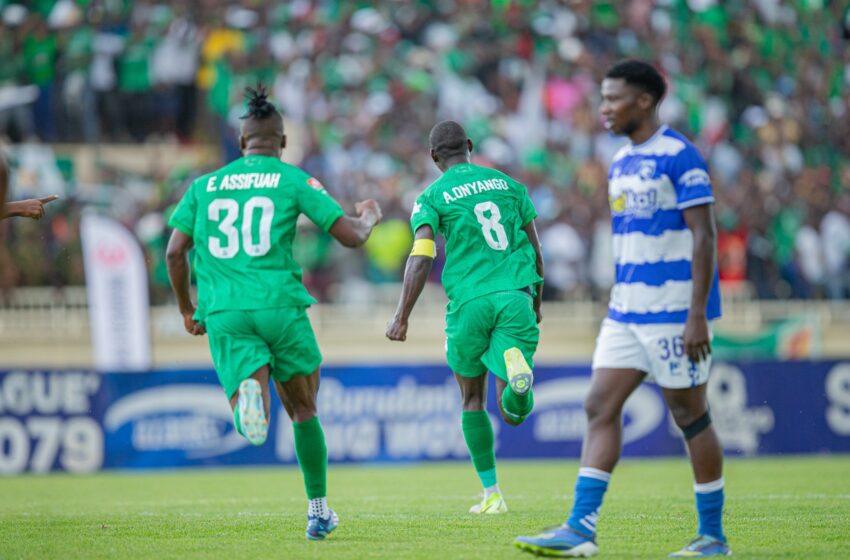
Ultimately, the match was decided by a single moment of precision. Gor Mahia’s captain, Alpha Onyango, demonstrated the composure that the rest of the attacking players lacked throughout the afternoon. His goal in the 81st minute was a result of patience and clinical execution, proving that in such high-stakes matches, the winner is usually the side that makes the most of their limited chances. Arriving late into the penalty box to meet a precise cutback demands a level of elite spatial awareness that only seasoned, international-caliber midfielders can consistently deliver under pressure.
3. Defensive Discipline Under Pressure
Final moments highlighted the gulf in defensive maturity between the two sides. Gor Mahia shifted to a disciplined defensive shell after securing the lead, focusing on protecting their narrow advantage. This tactical shift proved highly effective, as they successfully neutralized AFC Leopards’ desperate, frantic attempts to find an equalizer in the dying minutes of the game. Technical staff members quickly adjusted their formation, dropping wide midfielders into a temporary five-man backline to completely deny space in the channels.
Tactical Observation: Closing out a high-intensity derby requires temporary sacrifices in offensive style to secure critical defensive compactness during the final phase of play.
Leopards threw bodies forward in a bid to salvage a draw, but they simply could not break down a resolute backline that remained organized and alert. Defenders held their ground, clearing dangerous balls and forcing Leopards into desperate, long-range efforts that failed to trouble the goalkeeper. Every cross delivered into the penalty area was met with decisive aerial clearance, neutralizing the physical presence of the opposing target men before they could direct clean headers toward the goal frame. This execution offered a masterclass in how to close out a game against a determined opponent.
Building this kind of defensive solidity requires hundreds of hours on the training ground, establishing a deep, non-verbal understanding between the central defensive pairing and the defensive midfielders. Risk of structural failure drops dramatically when every player understands their exact covering assignments during defensive transitions, allowing a team to absorb sustained waves of direct, long-ball pressure without breaking their spatial lines.
Defensive firmness of this caliber not only protected the three points but also extended Gor Mahia’s lead at the top of the league table to six points. Moving two games clear of their nearest title rivals provides the technical staff with immense tactical flexibility heading into the final fixtures of the season. This cushion allows them to manage player fatigue, rotate key assets during congested matchdays, and maintain psychological dominance over the chasing pack.
Keeping a clean sheet in such a high-pressure encounter reinforced their defensive credentials. Squad members now sit in a strong position for their 22nd title, leaving the rest of the league to catch up while they focus on the final run-in. Record champions have firmly laid down a definitive marker with confidence soaring and their defensive block proving practically impenetrable, proving once again why their institutional experience remains the gold standard of Kenyan football.