Netherlands vs Morocco: Tactical Analysis – What Morocco Got Right Against the Dutch

IMAGE/BBC
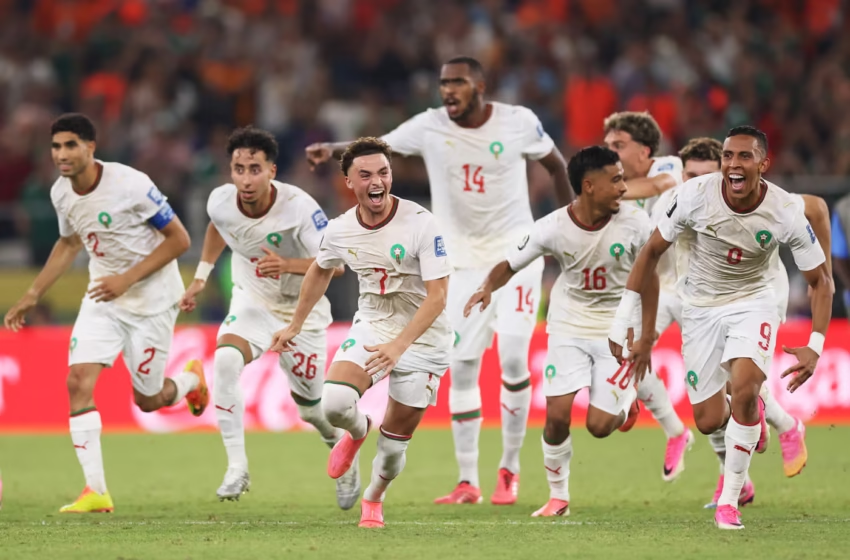
Morocco’s penalty shootout win against the Netherlands was far more than a typical World Cup underdog story. The Atlas Lions controlled large stretches of the game, kept their tactical shape even after going behind, and showed the kind of mental toughness needed to survive at this level.
Despite penalties settling the score, Morocco earned their spot in the next round through relentless pressure, sharp pressing, and a disciplined defensive block.
Mohamed Ouahbi’s coached side performance proves how far African football has come and confirms that this Morocco side is a genuine contender, but they are no longer just looking to compete; they are looking to win.
Morocco Controlled The Tactical Battle
The final score may suggest an evenly matched contest, but the flow of the game painted a different picture.
Morocco dictated possession in dangerous areas, forced the Netherlands deep into their own half and created the better scoring opportunities throughout normal time.
The Dutch spent long periods reacting instead of controlling proceedings.
Even when Morocco failed to convert chances, they maintained their structure and continued applying pressure without exposing themselves defensively.
That balance between attack and organisation became the defining feature of their performance.
Match Comparison
| Tactical Area | Morocco | Netherlands |
|---|---|---|
| Pressing | Excellent | Moderate |
| Chance Creation | High | Limited |
| Defensive Shape | Compact | Reactive |
| Set Piece Threat | Dangerous | Average |
| Mental Resilience | Outstanding | Declined Late |
Why Morocco’s High Press Frustrated The Netherlands
One of Morocco’s biggest strengths was their aggressive pressing strategy.
Whenever the Dutch attempted to build attacks from the back, Moroccan forwards and midfielders immediately closed passing lanes.
Rather than allowing Virgil van Dijk and his defensive partners time to organise possession, Morocco forced hurried passes that frequently ended promising Dutch attacks.
The pressing also prevented Netherlands midfielders from receiving the ball comfortably between the lines.
As a result, the Dutch increasingly relied on long balls instead of controlled build-up play.
Although those direct passes occasionally created moments of danger, they also surrendered possession far too often.
Achraf Hakimi Remained Morocco’s Biggest Tactical Weapon
Few full-backs influence matches quite like Achraf Hakimi.
Operating from the right flank, he constantly stretched the Dutch defensive line.
His overlapping runs created additional passing options while forcing Netherlands defenders to make difficult positional decisions.
Hakimi’s delivery from wide areas repeatedly troubled the Dutch defence.
He also contributed defensively by recovering possession quickly whenever Morocco lost the ball.
Even without scoring, his influence shaped almost every dangerous Moroccan attack.
Captaining the side during such an important match further demonstrated his growing leadership within the squad.
Netherlands Defensive Plan Worked Until The Pressure Became Too Much
Ronald Koeman surprised many observers by introducing a back five.
Initially, the approach limited Morocco’s ability to attack central spaces.
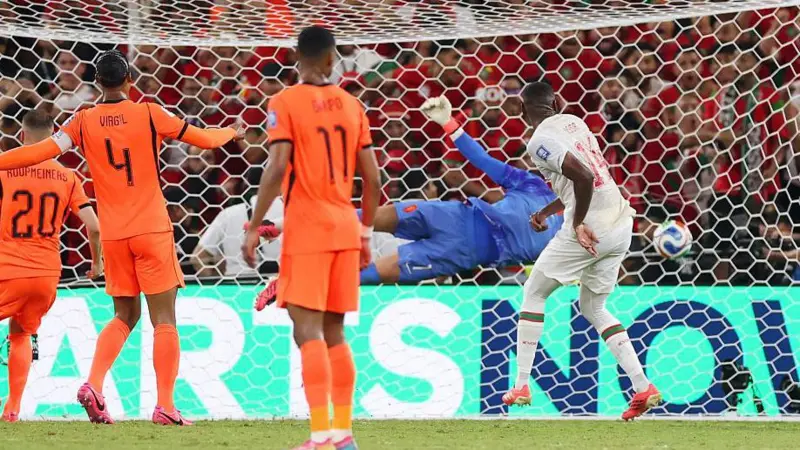
Goalkeeper Bart Verbruggen also produced several outstanding saves that kept the Dutch in the contest.
For long periods, those interventions disguised deeper tactical problems.
The Netherlands struggled to retain possession after winning the ball.
Instead of launching sustained attacks, they repeatedly invited Morocco back into dangerous positions.
Eventually, constant defensive work began to take its toll.
Goalkeeping Became One Of The Match’s Defining Stories
Although Morocco eventually progressed, both goalkeepers played crucial roles.
Verbruggen produced several excellent saves that prevented Morocco from taking control much earlier.
At the opposite end, Yassine Bounou once again demonstrated why he remains among the tournament’s most reliable goalkeepers.
His calm decision-making helped Morocco maintain confidence even after Cody Gakpo gave the Netherlands the lead.
During the penalty shootout, Bounou’s anticipation and positioning proved decisive.
His ability to read penalty takers reflected both preparation and experience rather than fortune.
Tactical Influence Of Key Players
| Player | Tactical Impact |
|---|---|
| Achraf Hakimi | Width, leadership and creativity |
| Yassine Bounou | Goalkeeping and penalty saves |
| Issa Diop | Defensive authority and equaliser |
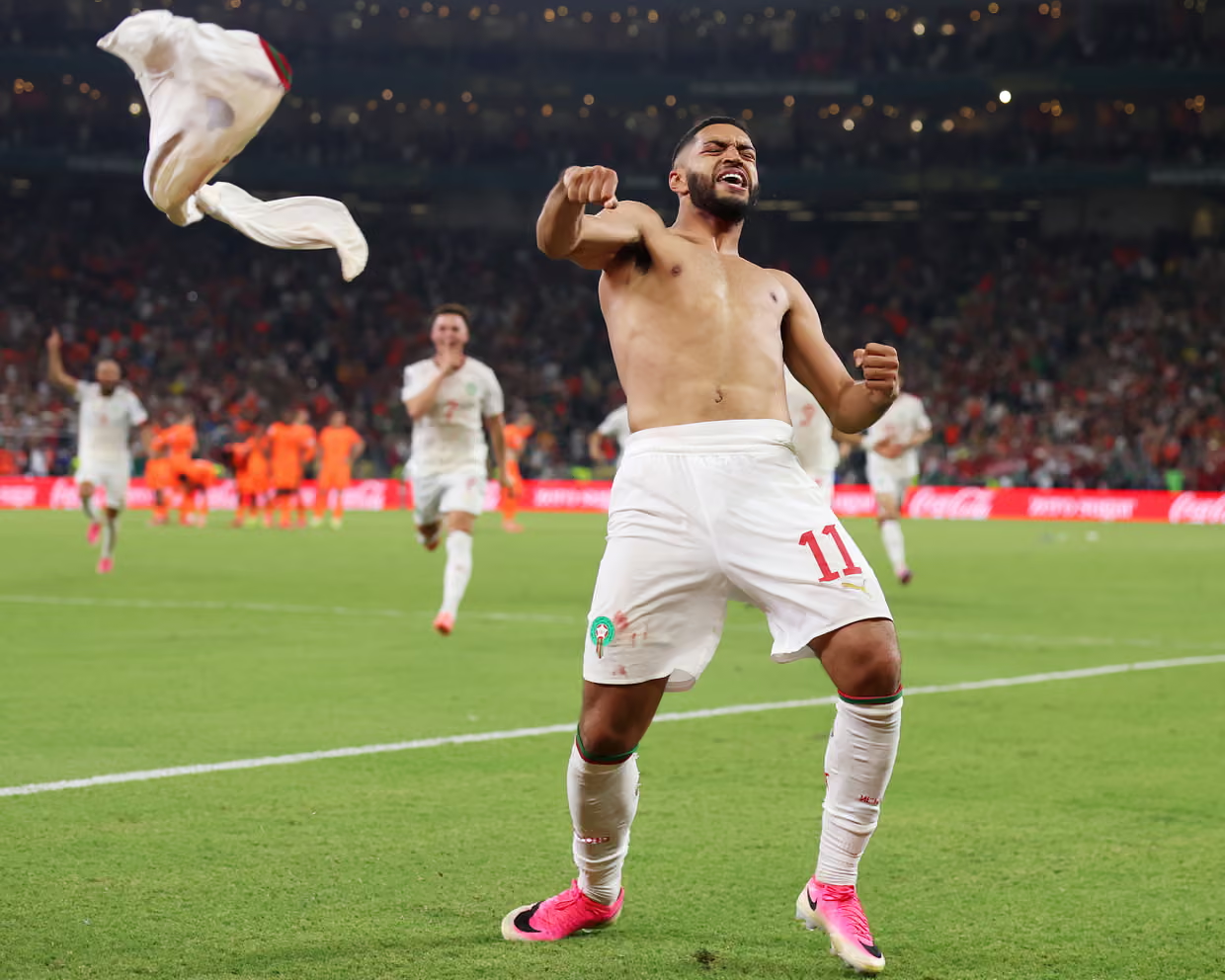
| Ismael Saibari | Midfield energy and winning penalty |
| Bart Verbruggen | Outstanding saves for Netherlands |
Morocco Refused To Panic After Falling Behind
Many teams lose tactical discipline after conceding late in knockout football.
Morocco did the opposite.
Instead of abandoning their structure, they continued attacking patiently while maintaining defensive balance.
The equaliser reflected persistence rather than desperation.
Crosses continued arriving into dangerous areas because Morocco trusted the process that had created chances throughout the match.
Issa Diop’s stoppage-time header simply rewarded pressure that had been building for much of the second half.
Why The Netherlands Could Not Build On Their Lead
Gakpo’s goal briefly appeared capable of changing the match.
However, the Netherlands struggled to shift momentum afterwards.
Rather than controlling possession and slowing the game’s rhythm, they remained pinned inside their own half.
Morocco continued dominating territory.
The Dutch rarely managed consecutive passing sequences capable of relieving pressure.
As fatigue increased, defensive concentration inevitably declined.
Against technically gifted opponents, constantly defending eventually becomes unsustainable.
Penalties Reflected Preparation Rather Than Luck
Penalty shootouts are frequently described as lotteries.
This contest suggested otherwise.
Morocco’s players approached their penalties with confidence despite the pressure.
Bounou displayed remarkable composure while studying each Dutch taker’s body language.
The Netherlands, meanwhile, appeared increasingly hesitant.
Several penalties lacked conviction, allowing Morocco’s goalkeeper to anticipate correctly.
Successful shootouts often depend upon preparation, confidence and psychological strength.
Morocco displayed all three qualities.
Where Ronald Koeman’s Tactical Decisions Fell Short
Koeman deserves credit for attempting to neutralise Morocco’s attacking strengths.
His defensive formation initially frustrated the North Africans.
However, the approach came at a significant cost.
The Netherlands sacrificed creativity in midfield.
Transition opportunities became increasingly rare because too many players remained occupied with defensive responsibilities.
Although substitutes injected fresh energy, they failed to alter the tactical balance.
Morocco continued dictating where the game was played.
Lessons From The Match
| Morocco Strength | Why It Made The Difference |
|---|---|
| Tactical discipline | Maintained structure under pressure |
| High pressing | Prevented Dutch build-up |
| Defensive organisation | Limited clear opportunities |
| Set-piece quality | Produced crucial equaliser |
| Mental resilience | Stayed composed until penalties |
Why Morocco Continue Raising African Football Standards
Morocco’s success reflects years of planning rather than one memorable evening.
Investment in coaching, youth development, modern facilities and tactical education has transformed the national team.
Their players combine technical quality with outstanding organisation.
Unlike previous generations that occasionally relied on individual brilliance, this Moroccan side functions as a complete collective.
Every player understands positional responsibilities while remaining capable of adapting during difficult moments.
That tactical maturity increasingly distinguishes Morocco from many established football nations.
What Canada Should Expect Next
Morocco’s next opponents will face a confident, organised and physically demanding side.
Canada cannot afford to allow Hakimi space on the right flank or concede unnecessary set pieces.
Breaking Morocco’s defensive structure will require quick ball movement and intelligent positioning.
Equally important will be limiting transitions, where Morocco continue to punish opponents with remarkable efficiency.
If the North Africans reproduce this level of tactical discipline, they will enter the next round with every reason to believe another famous victory is possible.
Looking Ahead
Morocco’s victory should not be remembered solely because it came through penalties. The shootout merely confirmed what the previous 120 minutes had already demonstrated. Morocco controlled more of the game, created the clearer opportunities and showed greater tactical consistency throughout the contest. Their disciplined defensive organisation, relentless pressing and unwavering belief ultimately proved stronger than the Netherlands’ defensive resilience. As the World Cup enters its decisive stages, Morocco have once again demonstrated that they belong among the tournament’s genuine contenders rather than its surprise package.