
African Streaming Market Shift 2026: Subscription Pressures, Canal+ Expansion, Creator Monetization

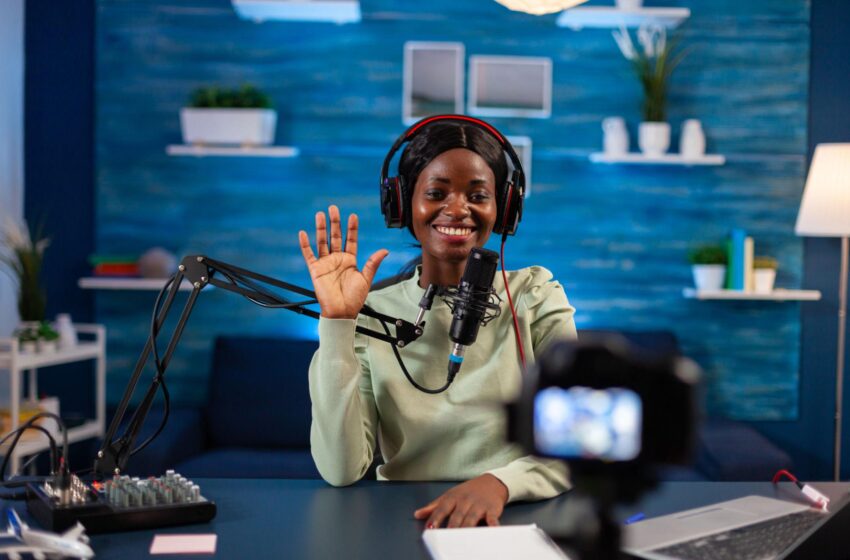
African blogger waving at audience
Africa’s streaming industry is entering a more demanding phase in 2026 as subscription platforms face tougher economics while creators increasingly build businesses around advertising, brand partnerships and direct audience engagement.
The continent remains one of the world’s promising growth markets for digital video. Rising smartphone ownership, expanding broadband networks and a young online population continue to push audiences towards streaming services.
Yet audience growth has not automatically translated into sustainable profits.
Recent developments involving Showmax, MultiChoice and CANAL+ have demonstrated the financial pressure facing subscription video-on-demand platforms. At the same time, YouTube, TikTok and other social platforms are creating alternative routes for African producers to reach audiences without relying entirely on monthly subscriptions.
The result is a market increasingly divided between large platforms seeking scale and independent creators looking for flexible ways to monetise attention.
Read Also: Top Comoros Official Hospitalized in Nairobi Amid Rising Tensions in Moroni
SVOD Faces A Tougher African Reality
Subscription video on demand, commonly known as SVOD, remains an important part of Africa’s digital entertainment economy.
Research published in 2026 estimates that the African SVOD market could generate about $3.3 billion during the year, with continued growth expected through 2031. The market is supported by smartphone adoption, improving connectivity and the expansion of streaming bundles through telecommunications companies.
Those figures point to opportunity, but the business model remains difficult.
African streaming audiences are highly price-sensitive. Consumers often have several competing entertainment options, including television, social media, free video platforms and locally produced digital content.
Monthly subscriptions therefore have to compete against household budgets that are already under pressure from food, transport, housing, electricity and mobile-data costs.
The problem becomes even more complicated when platforms spend heavily on original productions, sports rights, technology, marketing and distribution before achieving sufficient subscriber numbers.
A 2026 survey of African OTT operators found that only 35 percent considered their streaming infrastructure reliably stable. Connectivity was identified as a major barrier to expansion, while 42 percent of platforms surveyed were operating without a revenue model.
Such figures illustrate the gap between launching a streaming service and building a profitable streaming company.
Africa therefore presents a paradox. Millions of consumers want digital video, but converting that demand into predictable subscription income remains considerably harder.
Showmax Exit Signals A Major Market Reset
One of the clearest examples of the changing economics is the decision by MultiChoice to discontinue Showmax.
In March 2026, MultiChoice announced the planned withdrawal of the service following a review of its streaming operations. The company cited the increasingly competitive and capital-intensive nature of the global streaming industry, while also acknowledging that Showmax had experienced substantial annual losses.
The announcement represented more than the closure of a streaming brand.
Showmax had been positioned as one of Africa’s major home-grown competitors in the global streaming race. Its withdrawal demonstrates that strong brand recognition and a sizeable potential audience are not necessarily enough to sustain a standalone SVOD business.
The decision also reflects a broader shift towards consolidation.
Instead of maintaining numerous competing platforms with separate technology, content budgets and customer-acquisition strategies, larger media companies can increasingly combine content, distribution networks, television services and digital products.
MultiChoice is now operating within the wider CANAL+ group after CANAL+ took control of the company in September 2025. The combined footprint covers major African entertainment brands including DStv, GOtv, M-Net and SuperSport.
That scale could become one of the most important competitive advantages in Africa’s next streaming phase.
CANAL+ Builds A Pan-African Distribution Machine
CANAL+ expansion illustrates why consolidation is becoming increasingly important.
The company is no longer competing solely through a standalone streaming application. Its strategy combines traditional pay television, streaming, sports, local content, retail distribution, connected devices and partnerships with global technology companies.
A major development came in June 2026 when CANAL+ announced an expanded partnership with Samsung covering English- and Portuguese-speaking African markets.
The DStv Stream expansion on Samsung Smart TVs placed the streaming application on new Samsung Smart TVs across 18 African countries, including Kenya, Nigeria, South Africa, Tanzania and Uganda.
That approach reduces friction between consumers and content.
A viewer does not necessarily have to discover an application, download it, register separately and then search for content. Streaming services can increasingly become embedded directly into devices already used by households.
Distribution is becoming almost as important as content.
CANAL+ has also expanded its relationship with Netflix. Its 2025 agreement allowed Netflix content to be distributed through CANAL+ packages across 24 French-speaking sub-Saharan African countries.
The strategy demonstrates the value of aggregation.
Rather than asking customers to maintain numerous separate subscriptions, media groups can package multiple content propositions within a broader entertainment ecosystem.
That model could become increasingly important as consumers become more selective about which subscriptions they are willing to pay for.
Read Also: KNEC Grade 10 Assessment 2026: Guidelines, Timelines & School Requirements
Mobile Data Is Reshaping Viewing Habits
Streaming growth is also closely connected to Africa’s mobile-first internet economy.
Kenya provides a useful example.
The Communications Authority of Kenya’s 2026 OTT study says video streaming has become the primary driver of mobile data usage in the country. Streaming users consume nearly three times as much data as the average subscriber, according to the authority.
That development creates opportunities and challenges at the same time.
More video consumption means greater demand for broadband networks, mobile data packages and digital advertising. It also creates a huge potential audience for creators and streaming platforms.
Data costs, however, can determine whether a consumer watches a 30-minute programme, a two-hour film or several short videos during the day.
This helps explain the popularity of short-form video.
Creators can distribute clips that consume less data than long television-style programmes while still generating significant audience engagement.
The same mobile environment also makes advertising particularly important because audiences can access free content without committing to a monthly subscription.
The Creator Economy Changes The Equation
Independent creators are increasingly challenging the traditional relationship between content production and monetisation.
A television producer once needed access to a broadcaster. A film producer needed a distributor. A digital creator can now publish directly to a global audience.
YouTube has become one of the most important examples of this model.
The platform’s official YouTube Partner Program monetisation rules allow eligible creators to generate income through advertising, channel memberships, Super Chat, Super Thanks, Shopping and other features.
Creators who meet the higher YouTube Partner Program threshold can also access Watch Page advertising, Shorts Feed advertising and YouTube Premium revenue.
YouTube says eligible partners receive 55 percent of net advertising revenue from Watch Page ads, while its Shorts model distributes 45 percent of allocated Shorts advertising revenue to creators.
That creates a fundamentally different proposition from SVOD.
A creator does not need thousands of paying subscribers before generating revenue. A large audience can potentially be monetised through advertising, sponsorships, memberships, affiliate activity and commercial partnerships.
Kenya Shows The Growing Value Of Brand Partnerships
Creator monetisation is also moving beyond platform advertising.
Data reported by Business Daily’s coverage of Kenya’s TikTok creator economy showed that more than 200 Kenyan creators collectively earned over Sh45 million through brand collaborations during TikTok’s first year of commercial operations in the country.
The development is significant because it demonstrates that African creators do not necessarily need to depend on platform advertising alone.
Brands increasingly want access to communities rather than simply buying traditional advertising space.
A creator with a highly engaged audience around football, entertainment, technology, fashion, business or politics can become a media property in their own right.
Another 2026 analysis reported by Business Daily found that Kenyan creators were increasingly generating income through Instagram brand partnerships, highlighting a widening gap between audience popularity and actual monetisation.
The lesson is important.
Views are valuable, but commercial relationships determine how much of that value reaches creators.
YouTube Versus SVOD: Two Very Different Businesses
The difference between subscription streaming and creator-led video becomes clearer when the economics are compared.
| Model | Main Revenue Source | Main Challenge | Key Advantage |
|---|---|---|---|
| SVOD | Monthly subscriptions | Churn, pricing, content costs | Predictable recurring revenue |
| AVOD | Advertising | Requires large audiences | Free access encourages scale |
| YouTube Creator | Ads, memberships, sponsorships | Algorithm dependence | Low distribution barrier |
| TikTok Creator | Brand deals, commerce, platform tools | Audience monetisation | Strong engagement |
| TVOD | Pay-per-view/content purchase | Consumer payment friction | Users pay only when needed |
| Hybrid | Subscriptions + ads + transactions | Operational complexity | Multiple revenue streams |
SVOD platforms must convince consumers to keep paying.
Creators must instead convince audiences to keep watching.
That distinction is increasingly important in markets where disposable income remains constrained.
A consumer may cancel three entertainment subscriptions but continue watching free YouTube videos every day.
Africa Is Moving Towards Hybrid Streaming Models
The emerging solution may not be a choice between subscriptions and free content.
Hybrid models are becoming increasingly attractive.
Platforms can combine lower-cost subscriptions with advertising, pay-per-view events, mobile packages and partnerships with telecommunications operators.
A 2026 African OTT survey found that mobile money was widely used by consumers but remained under-supported by streaming platforms. The survey reported that 68 percent of Africans used mobile money as their primary payment method, while only 32 percent of OTT platforms supported it.
That gap represents a major opportunity.
Kenya’s experience with mobile payments demonstrates why payment infrastructure must be designed around local consumer behaviour rather than simply copied from Europe or North America.
A streaming platform that accepts familiar mobile-payment methods can potentially reduce one of the biggest barriers between audience interest and completed purchases.
Local Content Remains A Competitive Weapon
Content remains central to the streaming battle.
Global platforms can bring internationally popular movies and series to African audiences, but local storytelling gives regional services something that global libraries cannot easily replicate.
The 2026 African OTT survey found strong demand for local drama, series and films, with local content accounting for a substantial share of viewing performance. Sports also remained a major attraction.
That explains the importance of football rights, local-language programming and African original productions.
Sports are particularly powerful because they create appointment viewing.
A movie can be watched tomorrow.
A major football match cannot.
This gives sports rights holders and broadcasters a powerful tool for attracting audiences and encouraging subscriptions.
CANAL+’s SuperSport operation illustrates that strategy, particularly after the company secured extensive coverage of the 2026 FIFA World Cup across its African markets.
The Future Belongs To Scale And Flexibility
Africa’s streaming market is not collapsing.
It is changing.
Read Also: Kenyan marathoner remanded over Ksh8 million land fraud case
The 2026 evidence suggests that subscription video remains a substantial and growing business, but standalone platforms face intense pressure to demonstrate sustainable economics.
Consolidation is therefore likely to continue.
Large media companies have advantages in content acquisition, sports rights, distribution, retail networks, technology and customer relationships. Smaller platforms will need sharper niches, distinctive local content or flexible pricing to compete.
Independent creators occupy a different position.
They can operate with relatively low production and distribution costs, experiment quickly and build communities around specific subjects.
Their biggest challenge is monetisation rather than distribution.
That distinction could define the next stage of Africa’s digital media economy.
What The Streaming Shift Means For African Creators
The African streaming market of 2026 is increasingly moving away from the idea that one subscription model can serve every consumer.
Audiences want affordability, convenience, local content and flexible payment options.
Advertisers want measurable engagement.
Creators want direct access to audiences and multiple income streams.
Large media groups want scale.
These interests are beginning to converge around hybrid models combining subscriptions, advertising, mobile distribution, sports rights, local productions, brand partnerships and creator-led content.
The closure of Showmax is therefore not simply a story about one streaming service leaving the market.
It is a warning about the economics of African SVOD.
The expansion of CANAL+ shows the opposite side of the equation: scale, aggregation and distribution can strengthen the position of a major media group.
Meanwhile, the growth of YouTube, TikTok and other creator platforms shows that African video consumption is becoming increasingly decentralised.
The winners in the next phase may not necessarily be the companies with the biggest libraries.
They could be the platforms and creators that understand how African audiences watch, pay, share and discover content.