School Capitation Review 2026: President Ruto Directs Ministry Evaluation, Basic Education Funding Shortfalls, Unauthorised Fee Controls

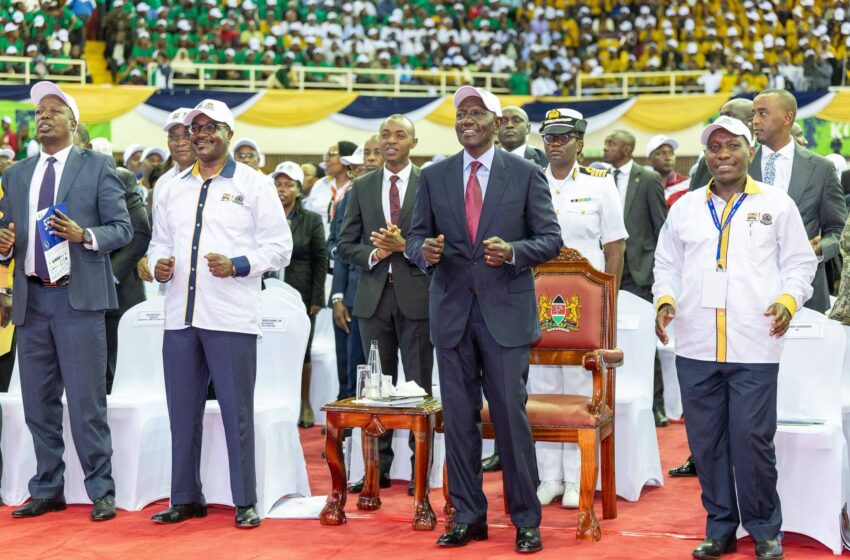
William Ruto . IMAGE/PPU
President William Ruto has ordered a fresh review of Kenya’s public school capitation rates, opening a new debate over whether government funding adequately reflects the rising cost of delivering basic education.
The directive was issued during the 2026 World Teachers’ Day celebrations at Kasarani Gymnasium in Nairobi, where the President announced that the existing funding levels require fresh evaluation after years of economic and structural changes in the education sector.
Ruto directed the Ministry of Education, the Teachers Service Commission (TSC) and other relevant stakeholders to review the amount allocated to learners in public primary, junior secondary and senior secondary schools.
Read Also: Top Comoros Official Hospitalized in Nairobi Amid Rising Tensions in Moroni
The announcement comes at a significant moment for Kenya’s education system. Schools are implementing the Competency-Based Education system, infrastructure requirements are increasing and institutions are dealing with higher costs of utilities, learning materials, maintenance and other operational needs.
At the same time, the government has maintained its position that public schools must follow approved fee structures and must not transfer funding pressures to parents through unauthorised levies.
Ruto Orders Review Of School Capitation Rates
President Ruto’s directive has put Kenya school capitation rates back at the centre of the national education debate.
Speaking during the World Teachers’ Day celebrations on October 5, 2026, the President said the existing funding benchmarks had been in place for years and needed to be reassessed.
According to reports on President Ruto’s school capitation review, the President noted that the last major review took place in 2015.
Ruto said the government must establish the resources required to provide quality education under the country’s changing curriculum and school structure.
The current annual allocation has generally been placed at approximately KSh22,244 per learner for secondary education, KSh15,000 for junior secondary and about KSh2,300 for primary education.
The President’s latest remarks put the focus on whether those amounts remain sufficient in 2026.
The review is expected to consider the actual cost of running schools, including teaching materials, administration, infrastructure maintenance, utilities and other operational expenses.
The exercise is also expected to take account of the transition to Senior School under the Competency-Based Education system.
A new funding formula could eventually emerge if the review establishes that the current allocations are inadequate.
Basic Education Funding Faces Rising Costs
The capitation debate is closely connected to the rising cost of operating public schools.
A fixed government allocation can lose purchasing power when prices increase.
Schools have to pay for electricity, water, sanitation, repairs, teaching materials, laboratory supplies, examinations and other services regardless of changes in their annual government allocation.
Senior schools face additional demands because of laboratories, specialised subjects, boarding facilities and the implementation of different pathways under the new education structure.
Kenya’s transition from the 8-4-4 system to Competency-Based Education has therefore created new demands for both infrastructure and recurrent expenditure.
The government has invested heavily in the transition.
President Ruto said more than 23,000 classrooms had been constructed while 1,600 laboratories were being equipped to support Senior School education.
Infrastructure investment, however, represents only one part of the cost.
A classroom can be built once, but electricity, water, maintenance, teaching materials and other services require continuous financing.
Read Also: KNEC Grade 10 Assessment 2026: Guidelines, Timelines & School Requirements
That reality has kept the debate over public school operational funding alive among education stakeholders.
KSh18.5 Billion Released For Term Three
The capitation review follows the government’s release of billions of shillings to support public schools during the final term of the 2026 academic year.
The government released approximately KSh18.5 billion in Term Three capitation, according to reports on the latest school funding disbursement.
The allocation covered different levels of basic education, including primary, junior secondary and secondary schools.
The Term Three capitation release was intended to support school operations during the nine-week term.
Education officials have also repeatedly instructed school heads to use capitation funds responsibly and ensure resources benefit learners.
The latest disbursement demonstrates the scale of government spending on basic education, but the amount received nationally does not necessarily mean every school has enough money to meet its operational needs.
Read Also: Kenyan marathoner remanded over Ksh8 million land fraud case
The question of adequacy therefore remains central to the review.
Large institutions with thousands of learners can face substantial financial pressure even when government allocations are released on time.
Capitation Shortfalls Put Schools Under Pressure
School administrators have raised concerns about gaps between expected annual allocations and actual amounts received during individual terms.
The pressure becomes more visible in schools with large enrolments.
A secondary school with 1,000 learners, for example, would have an annual allocation of more than KSh22 million at a capitation rate of KSh22,244 per learner.
Any delay, reduction or funding gap can therefore have a significant impact on the institution’s ability to meet its obligations.
Schools still need to pay suppliers, maintain facilities and provide basic services even when expected government funds have not arrived.
The resulting pressure can contribute to accumulated debts and difficulties in maintaining school programmes.
A detailed review could consequently look beyond the headline capitation figure.
Policymakers may need to examine how much money is allocated, how much reaches individual schools, when it arrives and whether the formula properly reflects the needs of different institutions.
The review could also assess whether funding should be adjusted periodically rather than remaining unchanged for many years.
Unauthorised School Levies Remain Prohibited
The capitation debate has another important dimension: school fees.
Public schools cannot introduce compulsory charges simply because administrators face financial difficulties.
Kenya’s Basic Education Act establishes the legal framework governing basic education, including fees and charges in public institutions.
The law is particularly important in protecting children from being excluded from education because of financial challenges.
Education officials have repeatedly warned school heads against imposing charges that have not been approved.
The government’s position is that capitation funds should be used for their intended purpose and schools should comply with approved fee structures.
Parents therefore have a legitimate reason to question charges described as compulsory where there is no clear legal or administrative approval.
The issue is especially sensitive when schools request additional payments for ordinary operational costs that government funding is intended to support.
2026 Fee Framework Brings Greater Clarity
The capitation debate comes against the background of changes to the public senior school fee structure.
The Ministry of Education introduced a new framework in 2026 intended to clarify the financial responsibilities of government, schools and households.
The framework is particularly relevant as learners transition into Senior School under the Competency-Based Education system.
Public day schools remain a major part of the government’s strategy to reduce the financial burden on families.
The fee framework also seeks to prevent institutions from creating unofficial charges that are presented to parents as mandatory government requirements.
A stronger capitation system could therefore work alongside the fee framework by providing schools with more predictable government resources.
That combination would potentially reduce the financial pressure that encourages some institutions to seek additional contributions.
Government Moves Against Illegal School Fees
The government has continued to strengthen its warnings against unauthorised school levies.
Education officials have indicated that school heads who impose illegal charges can face disciplinary action.
The legal position is also supported by previous decisions concerning school fees and the rights of learners.
Parents can refer to the Kenya Law framework on school fees and public basic education when assessing disputes involving unauthorised charges.
The enforcement question becomes particularly important if the government increases capitation.
Additional funding would need to be accompanied by stronger accountability to ensure schools use the resources appropriately.
Administrators would have greater resources to operate institutions, while government agencies would have stronger grounds to demand proper financial management.
Proposed Basic Education Law Could Raise Accountability
The government is also pursuing wider reforms to the legal framework governing basic education.
The proposed Basic Education Bill 2026 has attracted attention because of provisions dealing with school administration, financing and accountability.
Proposed penalties for certain violations involving unauthorised charges could increase pressure on school administrators to comply with approved fee structures.
Such measures would reinforce the principle that financial difficulties at school level should not automatically be transferred to parents.
A stronger enforcement system, however, needs to be matched with realistic government funding.
School heads cannot be expected to deliver expanding educational programmes without adequate resources.
The capitation review therefore presents an opportunity to address both sides of the problem: increasing funding where necessary while strengthening accountability.
TSC Role In The Capitation Review
The involvement of the Teachers Service Commission adds another important dimension to the review.
TSC is responsible for the management of teachers in Kenya’s public education system, including recruitment, deployment, promotion and professional development.
The commission’s official mandate places it at the centre of decisions affecting teacher availability and human resources in public schools.
Teacher numbers have a direct impact on school expenditure and learning quality.
President Ruto also announced plans to expand teacher promotions from the previously advertised 34,016 opportunities to 50,000 positions.
The government has further committed resources toward teacher promotions and implementation of the current teachers’ Collective Bargaining Agreement.
These commitments demonstrate that education financing goes beyond capitation.
A comprehensive funding review therefore needs to consider classrooms, teachers, laboratories, learning materials and operational expenditure as interconnected parts of the same education system.
New Capitation Formula Could Change School Financing
A revised capitation formula could result in more money being allocated per learner.
That would be the most straightforward outcome of the review, but policymakers could also consider more targeted funding.
Schools serving learners with special needs may require additional resources.
Institutions offering specialised subjects could also have higher operational costs.
Schools in remote areas may face additional logistical expenses compared with institutions located in urban centres.
A new formula could therefore introduce weighted allocations that recognise these differences.
Regular reviews could also become part of the system.
Such an approach would prevent capitation rates from remaining unchanged for many years while inflation reduces their real value.
Predictability would also help school administrators prepare realistic annual budgets.
Parents Await Impact Of Capitation Review
Parents are likely to follow the review closely because school financing directly affects household budgets.
An increase in capitation would not necessarily eliminate all education-related household expenses.
Families could still be responsible for uniforms, transport, personal effects and other approved costs depending on the institution.
Additional government funding could nevertheless reduce pressure on households if schools have enough money to cover ordinary operational expenses.
Parents also have an interest in transparency.
Knowing how much money a school receives, when it is released and how it is spent can help strengthen confidence in public education financing.
The government could use the review to introduce stronger public reporting requirements alongside increased allocations.
Such measures would make it easier to identify institutions experiencing genuine funding difficulties while also improving accountability.
Capitation Review Comes During CBE Transition
The timing of Ruto’s announcement is significant because Kenya is undertaking a major transformation of its education system.
Competency-Based Education has introduced new learning areas, assessment approaches and infrastructure requirements.
Junior Secondary education is also evolving as learners move towards Senior School pathways.
These changes mean that funding assumptions established more than a decade ago may no longer accurately reflect the cost of delivering education.
The capitation review could therefore become one of the government’s most important education policy exercises.
The ultimate objective should not simply be to increase the amount of money allocated to each learner.
A successful system should ensure that funds reach schools on time, are sufficient for their intended purpose and are properly accounted for.
School heads would benefit from more predictable resources.
Teachers could operate in better-supported institutions.
Parents could face less pressure from additional charges.
Learners would ultimately benefit if increased funding translated into functioning classrooms, adequately equipped laboratories, sufficient learning materials and improved teaching conditions.
President Ruto’s October 5 directive does not immediately change the existing capitation rates. It begins a process that could eventually reshape how Kenya finances public basic education.
The next stage will depend on the Ministry of Education, TSC and other stakeholders determining the real cost of delivering education and developing a funding model that matches those needs.
Until the review is completed and any new rates are formally approved, existing capitation arrangements and approved fee structures remain applicable.
The central question now is whether Kenya can build a funding system that keeps pace with the cost of education while protecting families from unauthorised school fees and ensuring every public shilling reaches the learner it is intended to support.