
KCSE, KJSEA 2026: KNEC Tightens Examination Security, Centre Management Rules

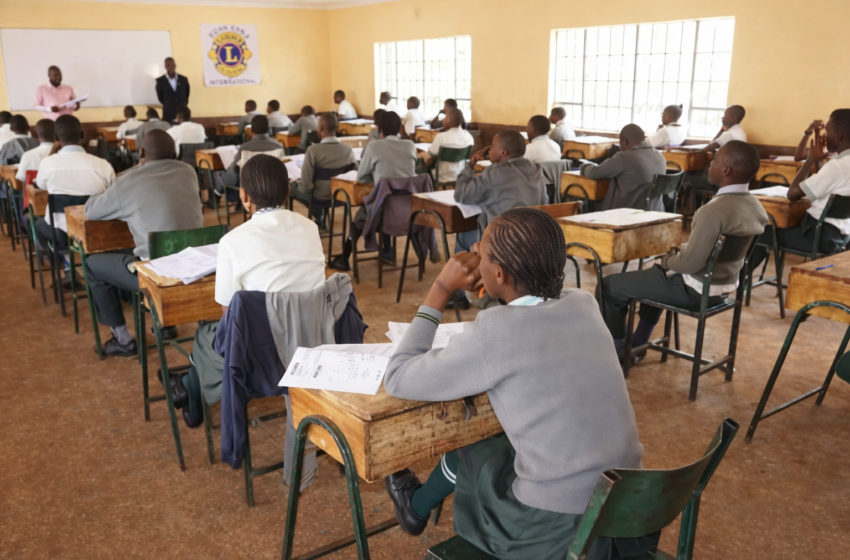
Kenya Junior School Education Assessment. IMAGE: Courtesy
The 2026 national examination season has entered a critical phase, with the Kenya National Examinations Council (KNEC) introducing tighter security measures, stricter supervision and enhanced accountability procedures to protect the integrity of assessments administered across the country.
The measures affect candidates sitting the Kenya Certificate of Secondary Education (KCSE), the Kenya Junior School Education Assessment (KJSEA) and the Kenya Primary School Education Assessment (KPSEA). Education authorities are coordinating the exercise through examination centre managers, supervisors, invigilators, security agencies and other contracted personnel.
According to The Standard’s report on the 2026 examination preparations, 3,634,846 candidates are expected to participate in the national examination and assessment cycle running from October 19 to November 20, 2026. KNEC has also deployed approximately 342,005 contracted professionals to support the exercise.
The scale of the undertaking has prompted the government to reinforce safeguards against examination malpractice, including impersonation, unauthorised access to examination papers, collusion and the use of prohibited electronic devices.
Read Also: KNEC Grade 10 Assessment 2026: Guidelines, Timelines & School Requirements
Education Cabinet Secretary Julius Ogamba has warned candidates and examination officials that violations will attract appropriate disciplinary and legal consequences. The emphasis is on ensuring that every learner is assessed fairly and that examination results reflect individual performance rather than access to leaked papers or unauthorised assistance.
KNEC Introduces Stronger Controls Over Examination Materials
One of the most significant security measures reported for the 2026 examination season is the deployment of smart padlocks on examination storage containers.
The technology enables KNEC’s command centre to monitor when secured containers are opened and closed, strengthening oversight of the movement and handling of examination materials.
According to The Standard’s examination security report, the system is intended to improve accountability and help authorities identify suspicious access to examination papers.
The technology complements established security procedures involving the storage, transportation and distribution of examination materials. Security officers oversee sensitive stages of the process, while authorised examination personnel are responsible for maintaining proper records and following the prescribed opening and handling procedures.
These safeguards are particularly important because examination papers must remain confidential until candidates are authorised to begin their respective sessions.
Any unauthorised access could compromise an entire examination, disadvantage candidates who follow the rules and undermine confidence in the credibility of the results.
The 2026 security arrangements also include restrictions on the use of mobile phones by examination personnel during sensitive operations. Reports indicate that centre managers, supervisors, invigilators and support staff are required to surrender their phones when examination papers are distributed, with the devices secured until the relevant session ends.
Such controls reduce opportunities for unauthorised communication and reinforce the principle that examination officials must remain focused on their assigned responsibilities.
Centre Managers Face Greater Accountability
Examination centre managers occupy a central position in the administration of national examinations. They are responsible for coordinating activities at their centres, protecting examination materials and ensuring that supervisors and invigilators follow the instructions issued by KNEC.
The council’s KCSE examination administration guide outlines the responsibilities of centre managers and other field officers involved in examination administration.
These responsibilities include maintaining secure storage arrangements, coordinating the work of examination personnel, confirming candidate attendance and ensuring that examination materials are handled according to established procedures.
Centre managers must also ensure that candidates are seated appropriately, examination rooms are prepared and unauthorised materials are kept outside the examination area.
Read Also: Top Comoros Official Hospitalized in Nairobi Amid Rising Tensions in Moroni
The Teachers Service Commission (TSC) and education officials play important roles in the recruitment, vetting and deployment of personnel involved in administering the examinations. Officials must meet the applicable professional requirements and demonstrate the integrity expected of people entrusted with confidential examination materials.
The 2026 examination security guidelines reported by Education News Kenya highlight the increased responsibility placed on centre managers to control access to school compounds and ensure that only authorised personnel participate in examination activities.
Centre managers must also be prepared to report irregularities promptly rather than attempting to resolve serious breaches without notifying the relevant authorities.
New Hosting Rules Affect Small Examination Centres
Another important administrative change concerns centres registering fewer than 30 candidates.
KNEC has introduced arrangements requiring many examination and assessment centres with fewer than 30 candidates to have their learners hosted at approved centres during the 2026 examination season.
The measure is intended to ensure that examination venues have adequate facilities, sufficient supervision and secure arrangements for the administration of national assessments.
According to Education News Kenya’s report on the 30-candidate rule, the requirements include infrastructure, registration and geographical considerations. Approved host centres are also subject to restrictions on the number of other centres they can accommodate.
The rule should not be interpreted as an automatic relocation of every centre with fewer than 30 candidates. The reported guidelines provide circumstances under which certain centres may retain their premises, particularly where combined candidature meets the applicable threshold for KPSEA and KJSEA.
The arrangements require school administrators to verify their centre status, coordinate with education officials and communicate any changes in examination venues to affected candidates and parents.
Proper communication is essential because learners must know where to report, when to arrive and which officials to contact if they encounter difficulties on examination day.
Key Examination Administration Rules for 2026
The principal responsibilities of examination officials and candidates can be summarised as follows.
| Area of administration | Main requirement | Impact on examination integrity |
|---|---|---|
| Centre management | Secure examination materials, prepare rooms and supervise authorised personnel | Reduces opportunities for unauthorised access and administrative errors |
| Examination security | Use prescribed storage procedures, security personnel and smart-padlock monitoring where deployed | Strengthens accountability in the handling of examination papers |
| Personnel conduct | Follow KNEC instructions, observe phone restrictions and report irregularities | Limits unauthorised communication and potential collusion |
| Candidate registration | Confirm registration details and attendance against official records | Helps prevent impersonation and registration discrepancies |
| Small examination centres | Follow approved hosting arrangements where the 30-candidate rule applies | Supports adequate facilities and supervision |
| Examination-room conduct | Avoid prohibited devices, unauthorised materials and communication with other candidates | Protects fairness and the credibility of results |
| Handling answer scripts | Stop writing when instructed and submit scripts through the prescribed process | Ensures proper collection and accountability for examination materials |
The applicable instructions may vary according to the assessment, paper and examination arrangements. Candidates and centre managers should consult the relevant KNEC examination and assessment administration documents rather than relying exclusively on general summaries.
Candidate Rules: Phones, Late Arrival and Examination Materials
Candidates are expected to follow the instructions issued by KNEC and the officials supervising their examinations.
The published KCSE guidance requires candidates to undergo the prescribed security checks and be seated before the scheduled start of a paper. The timetable and instructions determine the reporting time for each examination, and candidates should allow enough time to complete the required checks.
According to Pulse Kenya’s guide to the 2026 KCSE examination rules, candidates are generally required to be seated at least 15 minutes before the scheduled start of a paper. Late arrivals must explain their circumstances to the supervisor, and admission after the permitted period is subject to the applicable rules.
Candidates should not assume that late arrival automatically entitles them to additional time.
Mobile phones, smartwatches, earphones, tablets and other unauthorised electronic communication devices are prohibited in examination rooms. Candidates must also avoid carrying books, notes or other materials that have not been permitted for the paper.
Communication between candidates during an examination is prohibited unless expressly authorised under the applicable arrangements. Copying, receiving unauthorised assistance or attempting to communicate with people outside the examination room can constitute malpractice.
Candidates must also observe instructions concerning mathematical tables, calculators and other permitted equipment. Authorisation depends on the subject and the relevant examination regulations, so learners should confirm the applicable requirements before entering the examination room.
At the end of a paper, candidates must stop writing when instructed, ensure that their registration details are correctly recorded and surrender their answer scripts to the invigilator. Examination papers and answer booklets must not be removed from the examination room without authorisation.
Legal Consequences of Examination Malpractice
Examination malpractice can have consequences extending beyond the cancellation of an individual paper.
The Kenya National Examinations Council Act, 2012 establishes the legal framework for KNEC’s functions and addresses offences connected with the administration of national examinations.
Under the applicable regulations, a candidate found to have committed an examination irregularity may face cancellation of results in the affected subject. More extensive irregularities can lead to the cancellation of results for an entire examination centre, depending on the circumstances and the applicable procedures.
The published 2026 KCSE guidance also outlines criminal penalties for specific offences. These include unauthorised access to examination materials, malicious damage to examination materials and impersonation. The precise offence and penalty depend on the relevant statutory provision and the facts established in each case.
Centre managers, supervisors, invigilators and other officials are equally expected to observe the law. Participation in leaking papers, facilitating cheating or compromising examination materials can trigger disciplinary action and, where the evidence supports it, criminal proceedings.
The purpose of these penalties is to deter malpractice and protect candidates who prepare honestly for their examinations.
Multi-Agency Teams Support Examination Security
The examination season involves coordination between KNEC, the Ministry of Education, TSC, the National Police Service and national government administrative officers.
Security arrangements cover examination storage facilities, transportation routes and venues where papers are administered. Local administrators also support coordination and help address logistical challenges that could interfere with the exercise.
The Kenya News Agency’s report on examination security preparations describes preparations involving security agencies and education officials ahead of the 2026 KPSEA and KJSEA assessments.
The deployment of personnel is particularly important in remote areas, where transport challenges and shortages of qualified examination officials can complicate the administration of national assessments.
Effective coordination must ensure that security does not unnecessarily disrupt learning activities or disadvantage candidates who require approved special arrangements.
Officials must also remain alert to attempts to impersonate candidates, interfere with examination containers or circulate purported examination papers through messaging platforms and social media.
Parents and members of the public can support the process by reporting credible information about suspected malpractice through the appropriate official channels rather than circulating unverified allegations.
What Candidates and Schools Should Do Next
The 2026 examination security measures place a shared responsibility on candidates, teachers, centre managers, parents and education officials.
Candidates should confirm their examination timetables, prepare the required materials and arrive at the correct venue in good time. School administrators should verify centre arrangements, ensure that authorised personnel understand their duties and communicate any hosting changes to affected learners.
Read Also: KNEC Grade 10 Assessment 2026: Guidelines, Timelines & School Requirements
Examination officials must maintain confidentiality, follow KNEC procedures and report irregularities promptly. Parents should encourage learners to follow the rules and avoid seeking unauthorised assistance.
The strengthened security arrangements are designed to protect the credibility of national assessments at a time when millions of learners are progressing through different stages of the education system.
Ultimately, examination integrity depends not only on technology and security personnel but also on the conduct of everyone involved. Consistent enforcement, clear communication and respect for the rules will be essential to ensuring that the 2026 KCSE, KJSEA and KPSEA results fairly reflect candidates’ performance.