
Kenya Risks Another Amrouche-Style Compensation Crisis as McCarthy Future Hangs in Balance

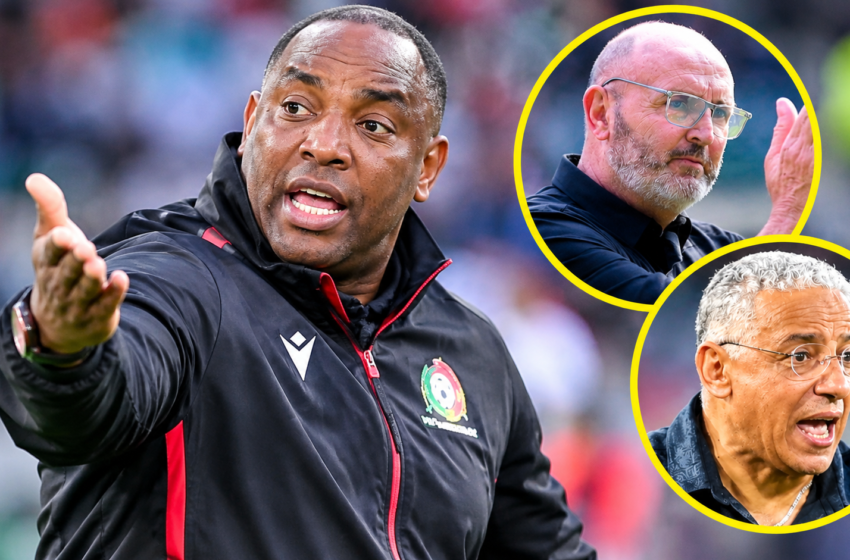
Kenyan football could be heading towards another expensive administrative crisis if Football Kenya Federation (FKF) decides to part ways with Harambee Stars head coach Benni McCarthy without properly addressing the contractual and financial issues surrounding his appointment.
The South African tactician has already warned that international football authorities could intervene over outstanding payments, raising fresh concerns about the country’s ability to manage its national team affairs ahead of the 2027 Africa Cup of Nations.
The situation brings back painful memories of former Harambee Stars coaches Adel Amrouche and Bobby Williamson, whose departures left FKF facing compensation claims worth more than KSh160 million.
McCarthy’s latest comments have taken the situation beyond ordinary disagreements between a coach and his employers. Speaking to SportyTV in November 2026, the former Manchester United first-team coach disclosed that he and members of his technical bench were still waiting for outstanding payments despite the players receiving some of their dues.
“The authorities, the Kenyan FA, will come good and they will have to pay. Obviously FIFA and CAF will intervene in these situations,” McCarthy said.
PAY ATTENTION: Follow Kenya Frontline WhatsApp channel for more news
The statement was particularly significant because it introduced the possibility of international football authorities becoming involved in another dispute involving Kenyan football. It also raised questions about whether FKF has fully appreciated the contractual and financial risks surrounding its relationship with the technical bench.
The Amrouche and Williamson mistakes
Kenya’s experience with Amrouche should have permanently changed how the federation handles foreign coaching appointments.
The Belgian-born Algerian was appointed Harambee Stars coach in February 2013 on a one-year contract. Following the team’s success at the 2013 CECAFA Senior Challenge Cup, FKF under former president Sam Nyamweya handed him an improved five-year agreement effective January 2014.
However, Amrouche’s relationship with the federation collapsed in August 2014 after CAF suspended him for six matches over alleged unsporting behaviour. FKF subsequently terminated his contract and appointed Scottish tactician Bobby Williamson as his replacement.
The decision eventually developed into a major legal dispute. Amrouche challenged his dismissal before FIFA, which initially awarded him approximately KSh65 million plus interest in 2017.
Dissatisfied with the award, Amrouche appealed to the Court of Arbitration for Sport (CAS), while FKF also challenged the compensation decision.
In September 2019, CAS awarded him KSh108.19 million, with an additional KSh1.18 million subsequently bringing the total compensation to approximately KSh109.37 million. FIFA later instructed FKF to settle the outstanding amount or risk disciplinary sanctions.
Williamson’s experience was equally damaging.
The Scottish coach took charge of Harambee Stars in August 2014 but was dismissed in 2016 following a change in FKF leadership. His departure was particularly controversial because he claimed he discovered through the media that he had been replaced.
“I remember meeting the president once, after elections, and he told me he had a lot to think about. A bit later, I discovered via the press that I had been replaced. No phone call, no letter, nothing and I found that disrespectful,” Williamson previously said.
Read Also: Pensions Amendment Bill 2026: Key Changes for Retired Public Servants & Civil Service Benefits
The Employment and Labour Relations Court subsequently ordered FKF to pay him approximately KSh55 million for wrongful dismissal.
Together, the Amrouche and Williamson cases exposed Kenya to compensation liabilities exceeding KSh160 million, excluding other legal expenses and the wider consequences for football development.
The federation could not afford another similar experience.
McCarthy’s FIFA and CAF warning changes the conversation
McCarthy’s comments should not be treated as an ordinary expression of frustration.
The coach has consistently maintained that he wants to leave Kenyan football in a better position than he found it. However, his recent remarks suggest that the outstanding payments involving his technical team have become an increasingly serious concern.
During the same SportyTV interview, he explained that players had been owed salaries, bonuses and allowances from several previous camps.
“Nobody wants to come to camp and then you go on strike because players, coaches and technical staff haven’t been paid,” he said.
According to McCarthy, the September camp was particularly difficult, with players reluctant to train until their outstanding payments were addressed. He revealed that the team managed only one proper training session before the Eritrea match after he convinced the players to honour their national team commitments.
The coach further explained that players eventually received some of their allowances following pressure on FKF and the Ministry of Sports, but the technical team remained unpaid.
His statement that FIFA and CAF could intervene is therefore important because employment disputes involving international coaches can potentially be referred to the relevant FIFA dispute resolution structures.
It does not mean that either organisation has already opened proceedings against FKF or that Kenya is automatically facing sanctions. However, the possibility of another formal dispute should concern the federation.
McCarthy’s September 2026 complaints about work permits had already exposed another administrative weakness. The coach questioned why foreign technical personnel had continued working without the necessary documentation being finalised.
“I don’t want to be questioned by authorities on why I am in another country illegally,” he said in remarks reported by The Star.
The responsibility for ensuring that foreign employees have the necessary documentation rests with the relevant employers and authorities.
Sacking McCarthy could create another expensive problem
McCarthy was appointed in March 2025 under a two-year agreement running towards the 2027 AFCON. His appointment was expected to provide Kenya with technical continuity as the country prepared for its biggest football hosting assignment in decades.
Removing him before the expiry of his agreement would therefore require careful consideration.
A dismissal does not automatically mean that FKF would have to pay every remaining salary. The financial consequences would depend on the contractual termination provisions, the circumstances surrounding the decision and whether the federation followed the applicable procedures.
Read Also: Benni McCarthy Breaks Silence on FKF Problems Over Unpaid Harambee Stars Dues
However, if FKF terminates the agreement without sufficient contractual grounds, it could expose itself to another compensation claim.
The federation must also consider the cost of recruiting another coach, assembling a technical team and rebuilding the national team’s preparations.
Kenya has already spent considerable resources addressing historical football liabilities. Repeating the Amrouche and Williamson mistakes would undermine efforts to redirect money towards player development, grassroots football and national team preparations.
There is a bigger question about the federation’s priorities. How can Kenya attract respected international coaches if contractual payments and basic employment requirements repeatedly become sources of controversy?
AFCON 2027 preparations cannot afford another disruption
The sporting implications could be just as damaging as the financial consequences.
Kenya will co-host the 2027 AFCON alongside Uganda and Tanzania. The tournament offers Harambee Stars an opportunity to compete on home soil and establish themselves among Africa’s stronger national teams.
Although the three host nations have automatic tournament places, Kenya is participating in the qualifying campaign to gain competitive experience.
Harambee Stars are in Group D alongside South Africa, Guinea and Eritrea. These matches provide valuable opportunities for McCarthy to assess players, strengthen combinations and identify weaknesses before the continental tournament.
A coaching change at this stage could disrupt the technical programme.
A replacement would need to understand the local football environment, evaluate domestic and overseas-based players, establish a tactical identity and build relationships with the existing technical structures.
McCarthy has been working to broaden the national team selection pool, including giving opportunities to emerging talents and overseas-based players.
The bigger challenge is converting that talent into a competitive team capable of facing established African football nations.
Changing coaches without a convincing sporting or contractual justification could therefore set Kenya back.
FKF must choose professionalism over confrontation
None of this means McCarthy should be immune from criticism.
His results, tactical decisions, player selections and public statements should remain open to scrutiny. The federation has a responsibility to ensure that national team coaches deliver on their contractual obligations.
However, accountability must work in both directions.
FKF must ensure that salaries, allowances, work permits and other contractual commitments are handled professionally. If disagreements arise, they should be resolved through established procedures rather than public confrontations and threats of dismissal.
The government also has a responsibility to support the national team’s preparations, particularly given the importance of AFCON 2027.
Kenya has already witnessed how coaching disputes can develop into international legal battles. Amrouche’s compensation case and Williamson’s employment dispute should have provided sufficient lessons.
The federation must avoid creating another situation in which football development resources are diverted towards settling liabilities arising from administrative mistakes.
Ultimately, McCarthy’s future should be determined by a fair assessment of his performance, his contractual obligations and the interests of Harambee Stars.
Kenya cannot afford to turn AFCON 2027 preparations into another chapter of football administration controversies.
Read Also: Netflix, Showmax Under Scrutiny? Kenya Tightens Rules on Streaming Content & Local Productions
The country has an opportunity to rebuild its football reputation before an international audience. That ambition requires stability, professionalism and responsible leadership.
The biggest danger is not simply losing Benni McCarthy. It is losing another coach through an avoidable dispute, spending millions on compensation and finding ourselves rebuilding Harambee Stars when the country should be preparing to make history at AFCON 2027.

