
Benni McCarthy AFCON 2027 Reality Check Can Harambee Stars Compete at Home Tournament

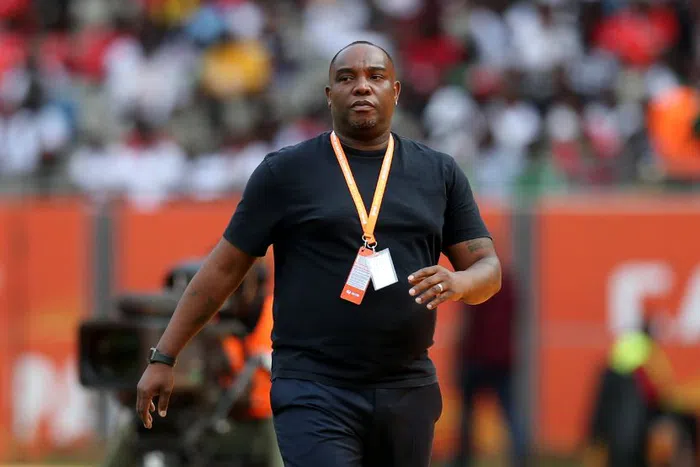
Harambee Stars head coach Benni McCarthy has urged Kenyan football fans to temper expectations as excitement continues to build ahead of the 2027 Africa Cup of Nations.
Kenya, which will co-host the tournament alongside Uganda and Tanzania, has already secured automatic qualification. This historic moment has generated national optimism, with many supporters hoping the team could deliver a deep run on home soil.
However, McCarthy believes that while progress is being made, expectations must remain grounded in the current strength of the squad and the realities of African football competition.
The former South African international has emphasized that development takes time, especially for a team still building its identity at continental level.
Growing Optimism Around Harambee Stars Performance
Since McCarthy took charge of the national team, there has been noticeable improvement in structure, discipline, and tactical awareness.
One of the most impressive performances came during the African Nations Championship, where Kenya advanced to the quarterfinal stage and surprised several stronger opponents.
Placed in a challenging group featuring Morocco, DR Congo, Angola, and Zambia, Harambee Stars topped the group unbeaten while conceding only one goal.
The team’s ability to compete against established African football nations was widely viewed as a sign of progress in tactical organization and mental resilience.
Although the journey ended in a penalty shootout loss to Madagascar, the performance was still regarded as one of Kenya’s strongest recent continental outings.
A further third-place finish in the 2026 FIFA Series added to the sense that the team is gradually improving under structured leadership.
Kenya Still Faces Structural Challenges in African Football
Despite visible progress, McCarthy has highlighted key structural limitations that continue to affect the national team’s competitiveness.
A significant portion of players still compete in the domestic league, which lacks the intensity and exposure of top African and European competitions.
Key gaps affecting Harambee Stars competitiveness
| Area | Challenge |
|---|---|
| Domestic league strength | Limited high-intensity competition |
| International exposure | Few players in elite leagues |
| Squad depth | Limited rotation options |
| Tactical experience | Less exposure to elite systems |
| Player development pathways | Still evolving structure |
These factors, according to analysts, contribute to the gap between Kenya and Africa’s top-tier football nations.
AFCON 2027 Pressure and Rising Public Expectations
With Kenya set to co-host AFCON 2027, public expectations have increased significantly.
Some fans have expressed hopes that Harambee Stars could reach the semi-finals or even challenge for the title. However, McCarthy has warned that such expectations do not reflect the competitive reality of African football.
He stressed that the tournament will feature some of the strongest national teams on the continent, all with deeper squads and higher levels of international experience.
Africa’s Elite Teams Set the Competitive Benchmark
Kenya will face stiff competition from established football powerhouses such as Senegal, Egypt, Ivory Coast, and Morocco.
These nations benefit from:
- Strong domestic leagues
- Players in top European clubs
- Consistent tournament experience
- Advanced football infrastructure
Comparison of AFCON 2027 contenders
| Nation | Strength Level | Key Advantage |
|---|---|---|
| Senegal | Elite | European-based squad depth |
| Egypt | Elite | Tactical discipline and experience |
| Ivory Coast | Elite | Youth talent and technical ability |
| Morocco | Elite | Strong tactical systems |
| Kenya | Developing | Home advantage and growing structure |
This gap highlights why gradual development remains essential for Kenya’s long-term success.
What McCarthy Means by Realistic Progress Targets
Instead of targeting immediate title contention, McCarthy believes that reaching the knockout stages would represent meaningful progress.
Advancing beyond the group stage would demonstrate that Kenya is moving in the right direction competitively.
He has repeatedly emphasized that football development is a process that requires patience, infrastructure investment, and consistent player development systems.
Coaching Philosophy and Long-Term Vision for Kenya
McCarthy’s appointment was based on a long-term vision of building a competitive national team capable of performing at continental level.
His experience in European football, including coaching exposure at elite clubs, has influenced his structured approach to team development.
Rather than focusing on short-term expectations, the emphasis is on:
- Tactical discipline
- Fitness improvement
- Squad cohesion
- Mental resilience
This approach reflects a broader trend in modern international football management.
The Reality of Hosting AFCON 2027
Co-hosting a major continental tournament brings both opportunity and pressure.
While home advantage can inspire performance, it also increases scrutiny and expectation from fans and media.
For Kenya, Uganda, and Tanzania, AFCON 2027 represents not only a sporting event but also a chance to showcase infrastructure, tourism potential, and regional cooperation.
However, sporting success will still depend on preparation, squad quality, and tactical execution.
Why Balanced Expectations Matter in Football Development
Football analysts argue that unrealistic expectations can sometimes hinder long-term development.
Setting achievable targets allows teams to build confidence gradually while avoiding pressure that can destabilize young squads.
Also Read; Top Comoros Official Hospitalized in Nairobi Amid Rising Tensions in Moroni
McCarthy’s message aligns with this philosophy, emphasizing steady progress rather than immediate success.
Kenya’s Football Journey Still in Development Phase
Benni McCarthy’s assessment of Harambee Stars ahead of AFCON 2027 reflects a broader reality in African football development.
While Kenya has made clear progress in recent years, the gap between emerging teams and established continental giants remains significant.
The focus now is on structured growth, tactical improvement, and long-term planning rather than short-term expectations.
As AFCON 2027 approaches, Kenya’s challenge will be balancing national excitement with realistic sporting ambition.