
Beyond Pitch: Why Global Development is Next Frontier for Elite Football Clubs

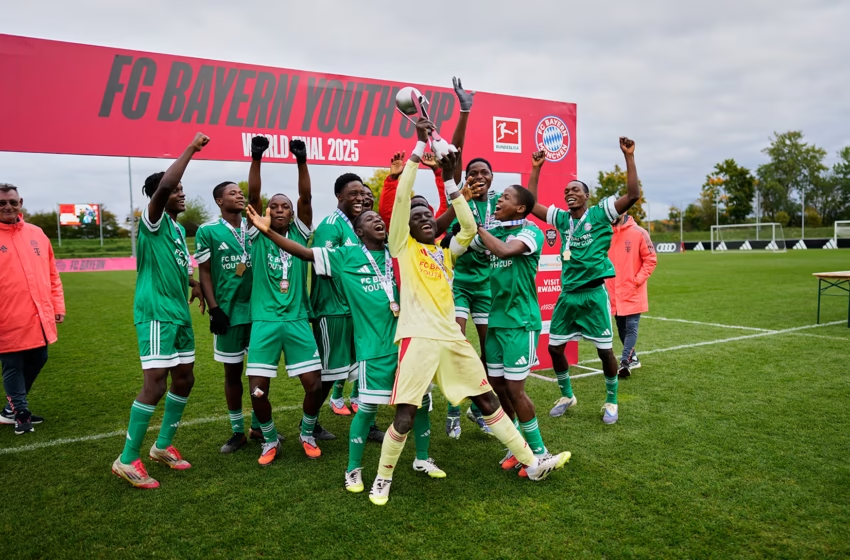
Football operates far beyond the white lines of the pitch, transforming modern sports organizations into sprawling multinational enterprises. Elite European institutions like Real Madrid, Bayern Munich, and Manchester City constantly hunt for untapped commercial landscapes.
Traditional domestic markets offer limited growth, pushing corporate strategies toward aggressive international expansion. True dominance requires deeply rooted emotional equity inside emerging territories, rather than superficial summer promotional tours. Modern commercial strategy prioritizes structural community investment across Africa, Asia, and North America over brief corporate visits.
Establishing localized talent pathways serves a dual objective: unearthing future athletic stars and capturing permanent regional devotion. Nurturing grassroots talent turns remote communities into fiercely loyal fan bases, expanding the consumer ecosystem.
Read Also: Rio Ferdinand To Open International Doors For Arusha Through AFCON 2027
Corporate philanthropy harmonizes with commercial ambition, creating an effective mechanism for entering new markets. Elite institutions bypass transactional advertising, opting instead to embed their identity directly into global youth development infrastructure.
The Evolution of International Academies
Historically, clubs approached foreign markets through simple retail operations or sporadic friendly matches. Today, organizations establish permanent physical footprints via networks of satellite training centers. Manchester City utilizes the City Football Group framework to acquire affiliate organizations and embed standardized training methodologies worldwide. Real Madrid deploys technical clinics across diverse nations, standardizing elite European pedagogy for young players globally. These facilities act as permanent brand outposts, establishing a continuous corporate presence in remote regions.
Building local facilities builds authentic consumer trust that traditional marketing campaigns cannot replicate. Parents, local coaches, and civic leaders form deep bonds with an institution that actively invests in domestic youth development. The technical framework creates a robust talent pipeline, granting the parent organization priority access to elite local prospects. Early structural integration reduces future player acquisition costs while building unmatched regional goodwill.
Furthermore, these academies reshape local media landscapes, driving significant digital engagement. Every young athlete entering a structured system becomes an active brand ambassador within their community. Local news channels follow the progress of domestic talent, creating organic media exposure for the European parent club. Local visibility attracts regional corporate partners eager to align with elite youth initiatives, unlocking fresh commercial revenue streams.
Philanthropy as a Strategic Market Entry Mechanism

Foundations provide an alternative, highly effective pathway into highly sensitive socio-economic regions. Real Madrid operates extensive social-sports projects worldwide, focusing on marginalized populations across Africa and Latin America. These programs utilize sport to deliver education, healthcare support, and social integration. Strategic philanthropy cultivates a benevolent corporate image, neutralizing standard criticisms directed at aggressive foreign commercial expansion.
Emphasizing human development allows clubs to cultivate intense brand loyalty among non-traditional consumers. Parents see direct improvements in community welfare, associating the club crest with societal advancement. Genuine civic engagement builds resilient brand equity that shields organizations from standard commercial volatility. When a club encounters periods of poor on-field performance, deeply rooted communal ties preserve consumer loyalty.
Social initiatives facilitate seamless relationships with regional governments and regulatory bodies. Public officials welcome foreign investment that aligns with municipal public health and educational mandates. Smooth bureaucratic relations ease future commercial expansions, including retail distribution networks, localized media licensing, and regional corporate sponsorship deals. Corporate responsibility serves as the ultimate foundational anchor for long-term commercial infrastructure.
Targeted Regional Realities: Africa, Asia, and North America
Every emerging continent presents distinct strategic challenges and commercial rewards for European sports institutions. Africa possesses unmatched raw athletic potential combined with an obsession for European competitions. Clubs establish operations to secure elite talent while capturing the loyalty of a massive youth demographic. Investing in local talent pipelines allows organizations to position themselves as true facilitators of African athletic advancement.
Asia offers highly sophisticated digital economies alongside immense commercial monetization potential. Bayern Munich leverages regional offices in places like Shanghai and Bangkok to manage specialized youth tournaments and campus partnerships. The German champions tailor operations to align with national sports development agendas, securing deep institutional support. This collaborative approach opens access to major regional corporations, technology partners, and massive digital broadcasting markets.
North America demands a unique commercial strategy, driven by the massive growth of youth soccer and upcoming global tournaments. Major European organizations recognize the intense competition for consumer attention within the United States and Canada. Expanding academy networks across these affluent regions secures engagement with suburban demographics possessing immense purchasing power. Youth player registration fees, elite camp programs, and localized corporate partnerships generate immediate, highly sustainable revenue streams.
Quantifying Long-Term Brand Equity
Evaluating global development initiatives requires metrics extending far beyond traditional short-term balance sheets. Standard financial reports often struggle to capture the accurate value of sustained community goodwill. True returns materialize through lifetime fan value, digital engagement metrics, and international broadcast consumption. A child trained in a satellite academy remains a loyal consumer for decades, purchasing merchandise and subscribing to streaming services.
Global corporations seeking advertising partnerships prioritize sports properties with authentic international footprints. A club demonstrating deep structural engagement in multiple continents commands a premium during major sponsorship negotiations. Partners value the ability to run integrated marketing campaigns leveraging both elite European stars and localized community initiatives. Multi-continental presence diversifies corporate revenue, insulating clubs against localized economic downturns.
Digital ecosystems amplify the commercial value of international development networks. Content capturing human-interest stories from satellite academies generates exceptional engagement across social media platforms. Global audiences eagerly consume narratives tracking a young player’s journey from a local academy to elite European competition. Authentic storytelling drives digital monetization, attracts tech-focused sponsors, and reinforces the club’s status as a global community leader.
The Sustainable Future of Sport Enterprises
The hyper-competitive sports landscape punishes organizations relying solely on domestic fan bases. Expanding international development programs represents a necessary evolution for clubs aiming to retain elite global status. Merging commercial ambition with authentic grassroots development creates a highly resilient business model. Organizations operating successful international academies secure an enduring competitive advantage over inward-looking rivals.
Eventually, the distinction between foreign corporate entity and local community institution fades completely. Elite clubs become integral components of global civic society, woven into the daily lives of millions across different continents. Sustainable growth belongs to organizations recognizing that human development and commercial expansion are fundamentally connected. Football clubs ensure their relevance for generations to come by investing heavily in the global communities that fuel their success.