CBK KSh50 Billion Treasury Bond Issue: September 30 Bidding Deadline, DhowCSD Rules & Yield Performance
- Business
Stephen Thumbi
- September 28, 2026
- 0
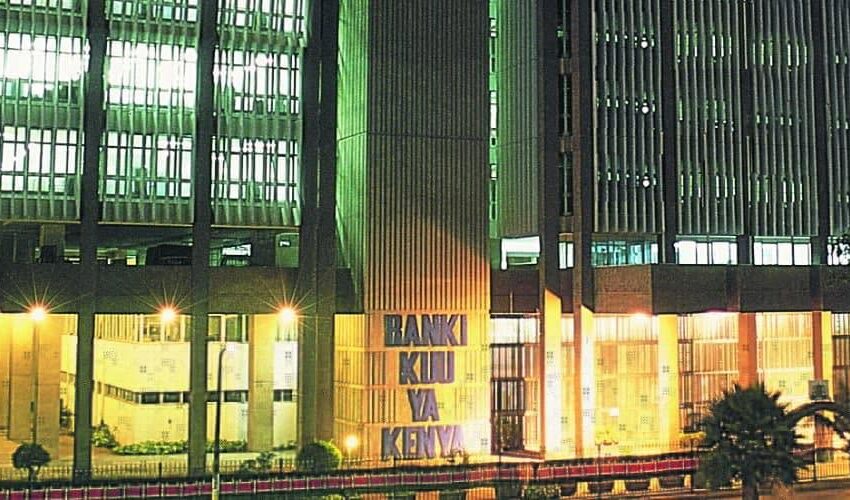
The Central Bank of Kenya (CBK) has reopened two long-term Treasury bonds, giving investors until September 30, 2026, at 10am to submit bids for government securities carrying fixed coupons of up to 12.873%.
The offer involves FXD3/2019/015 and FXD1/2019/020, two bonds originally issued in 2019 and now being reopened to raise funds for budgetary support.
There is, however, an important distinction around the size of the issue.
PAY ATTENTION: Follow Kenya Frontline WhatsApp channel for more news
Some reports have described the exercise as a KSh100 billion Treasury bond sale, based on KSh50 billion associated with each security. The official CBK prospectus for the September 24–30 reopening states an amount of KSh50 billion for the offer. The prospectus identifies the two securities, their remaining maturities, coupon rates and a combined KSh50 billion target.
The reopening comes as the government continues to rely on domestic borrowing to support its financing requirements.
For investors, the attraction is the relatively high fixed coupon. For banks and other institutional investors, the bonds also have liquidity and collateral functions that make them useful beyond their regular interest payments.
Read Also: Pharmacy Board Looks to Shape Future of Pharmaceutical Practice
Two Treasury Bonds, Two Different Maturity Profiles
The first security, FXD3/2019/015, was originally issued as a 15-year fixed-coupon Treasury bond.
It now has approximately 7.8 years remaining to maturity and carries a coupon rate of 12.34%. Its maturity date is July 10, 2034.
The second, FXD1/2019/020, was originally issued as a 20-year bond and has approximately 12.5 years remaining.
It carries a higher coupon of 12.873% and matures on March 21, 2039. CBK’s prospectus confirms that both securities carry a 10% withholding tax on interest.
| Feature | FXD3/2019/015 | FXD1/2019/020 |
|---|---|---|
| Original tenor | 15 years | 20 years |
| Remaining maturity | 7.8 years | 12.5 years |
| Coupon | 12.34% | 12.873% |
| Maturity | July 10, 2034 | March 21, 2039 |
| ISIN | KE6000001328 | KE5000009984 |
The difference in maturity means investors are not simply choosing between two coupon rates.
They are also choosing how long they want their money exposed to the government security and the potential price movements that come with longer-dated bonds.
Coupon Rate Is Not the Same as Investment Yield
The 12.873% figure attached to FXD1/2019/020 is a coupon rate rather than a guarantee that every investor will earn exactly 12.873% as a yield.
That distinction matters because Treasury bonds can be purchased at prices above or below their face value.
The coupon is calculated on the bond’s face value, while the investor’s effective yield depends on the price paid for the security and the cash flows received over its remaining life.
CBK is using a multi-price auction for the reopening. Under this structure, successful competitive bidders can receive securities at different accepted yields depending on their bids.
Retail investors using the non-competitive route do not specify a yield in the same way competitive bidders do.
That makes understanding the distinction between coupon, price and yield important before committing money.
What the September 30 Deadline Means
The sale opened on September 24 and runs until September 30, 2026.
All bids must reach CBK electronically by 10am on September 30, with the auction taking place on the same day.
Successful investors are scheduled to settle their purchases on October 5, 2026. CBK says successful bidders can obtain their payment key and amount payable through the DhowCSD Investor Portal or application.
The timing makes September 30 an important date for anyone intending to participate.
A bid submitted after the stated deadline would not meet the terms of the offer.
How Investors Can Bid Through DhowCSD
The reopening also highlights the increasing role of CBK’s digital securities infrastructure.
Individuals and corporate investors can access government securities through the DhowCSD portal and mobile application without necessarily going through an intermediary. CBK also allows investors to participate through commercial and investment banks acting as custodians.
The process begins with an active DhowCSD account.
Read Also: Top Comoros Official Hospitalized in Nairobi Amid Rising Tensions in Moroni
Once logged in, an investor can access the auction section, select the available security and create a bid.
CBK’s DhowCSD instructions provide the following basic sequence:
- Log into the DhowCSD portal or mobile application.
- Select the relevant auction or securities section.
- Choose the Treasury bond being offered.
- Select either a competitive or non-competitive bid.
- Enter the required face value.
- Select the CSD account and source of funds.
- Accept the applicable terms.
- Confirm and submit the bid.
CBK’s DhowCSD guidance explains that non-competitive bids require the investor to enter the face value, while competitive bidders enter both the amount and their preferred yield.
Retail Investors Can Start With KSh50,000
The minimum amount makes the reopening accessible beyond large institutional investors.
CBK has set the minimum non-competitive bid at KSh50,000, while the maximum for a non-competitive bid is KSh50 million per CSD account per tenor.
Competitive bids have a much higher entry point, with a minimum of KSh2 million per CSD account per tenor.
The KSh50,000 threshold is therefore particularly relevant to individual investors who want exposure to government securities without entering the competitive auction process.
Investors should nevertheless distinguish accessibility from suitability.
A Treasury bond locks the investor into a long-term government security, although the bond can subsequently be traded in the secondary market once trading begins.
Secondary Trading Creates an Exit Route
One of the most important features of the reopening is that investors do not necessarily have to hold the bonds until their 2034 or 2039 maturity dates.
The CBK prospectus states that secondary trading begins on October 5, 2026, with transactions conducted in multiples of KSh50,000.
The securities will also be listed on the Nairobi Securities Exchange.
Secondary trading allows investors to sell an existing government bond before maturity.
But the price at which a bond changes hands can differ from its face value.
If market yields rise after an investor buys a fixed-rate bond, the price of the existing bond can fall because newer securities may offer more attractive returns.
The reverse can happen when market yields decline.
That relationship between bond prices and market yields is central to understanding Treasury securities beyond their headline coupon rates.
Recent Yield Performance Gives Investors Context
The September reopening also comes against a backdrop of elevated yields in Kenya’s government securities market.
CBK’s September 25 weekly bulletin shows that the September 2 reopening of FXD3/2019/015 attracted KSh57.10 billion in bids against the amount offered, with KSh41.14 billion accepted and an average interest rate of 12.76%.
The September 16 reopening involving FXD1/2019/020 and FXD1/2026/030 generated KSh37.60 billion in bids, with KSh16.72 billion accepted for the two securities combined and average interest rates of 13.61% and 14.24%, respectively.
Those figures provide useful market context, but they should not be treated as the yield an individual investor is guaranteed to receive in the September 30 auction.
The final outcome depends on the bids received and accepted by CBK.
The earlier auction results also demonstrate that demand for government paper can vary considerably between issues.
Why Banks Pay Attention to the Bonds
Treasury bonds have another role beyond investment returns.
The reopened securities qualify for statutory liquidity ratio requirements for commercial banks and non-bank financial institutions, according to the CBK prospectus.
That makes government securities relevant to financial institutions managing their regulatory liquidity positions.
A bank can hold qualifying government securities as part of its liquidity portfolio rather than treating the investment purely as a return-generating asset.
The bonds can also be pledged as collateral.
CBK states that investors can pledge government securities as collateral to access loans from regulated financial institutions. If a pledge is not cancelled at least five days before maturity, the securities can automatically settle to the lender’s account under the stated rules.
This gives the securities a second function: they can potentially support access to credit while remaining part of an investor’s broader financial portfolio.
CBK Also Provides a Rediscounting Facility
Investors have another mechanism through CBK, although it is described as a last-resort option.
The Central Bank says it will rediscount the bonds at three percentage points above the prevailing market yield or coupon rate, whichever is higher.
Rediscount instructions are submitted through the DhowCSD portal or application under the relevant instructions section.
Rediscounting should not be confused with ordinary secondary-market trading.
In secondary trading, an investor sells the bond to another market participant.
Rediscounting involves the Central Bank’s facility and is governed by the terms set out in the prospectus.
What Investors Need to Watch
The September 30 auction brings together several factors that investors need to understand before submitting bids.
The first is maturity.
FXD3/2019/015 has around 7.8 years remaining, while FXD1/2019/020 stretches to approximately 12.5 years.
The second is coupon.
Read Also: Kenyan marathoner remanded over Ksh8 million land fraud case
The two securities offer fixed coupons of 12.34% and 12.873%, respectively, before applicable tax.
The third is auction price and yield.
The coupon alone does not determine an investor’s effective return when a bond is purchased through an auction or later traded in the secondary market.
The fourth is liquidity.
Investors have access to secondary trading once the securities are listed, although selling before maturity exposes them to prevailing market prices.
The final consideration is the investor’s own time horizon and cash-flow requirements.
A government bond can provide regular interest payments, but a long-dated security should not automatically be viewed as equivalent to cash that can be withdrawn at any time.
September 30 Becomes the Key Date
CBK’s reopening gives both retail and institutional investors another opportunity to participate in Kenya’s domestic government securities market.
The two bonds offer different maturity profiles, fixed coupons and access to secondary-market trading through the NSE.
The KSh50,000 minimum for non-competitive bids also lowers the entry point for individual investors, while the KSh2 million competitive minimum keeps the competitive route more institutionally oriented.
The most immediate deadline is September 30 at 10am.
Investors using DhowCSD need an active account and must complete the electronic bidding process before the deadline.